
How to Choose a Waterproof Bag Manufacturer That Fits Your Brand
Choosing a waterproof bag manufacturer comes down to five verifiable tests: seam construction (RF or hot-air welding, not stitching), ingress proof (IPX6–IPX8 or 20,000 mm hydrostatic head), audit paperwork (BSCI, ISO 9001:2015, SGS capacity verification), sampling speed (6–10 days is the professional norm) and MOQ transparency (500 pieces with a paid trial is standard). This guide walks each test with the exact questions to ask, the documents to demand and the red flags that disqualify a factory before you wire a 30% deposit.
Table of Contents
- What 'Choosing a Manufacturer' Really Means
- The 12-Criterion Evaluation Framework
- Materials, Construction and Waterproofing
- Customization and Branding Options
- OEM Process, MOQ and Cost Drivers
- Quality Control, Testing and Certification
- Sourcing, Lead Times and Logistics
- Working With an Experienced OEM Partner
- Buyer Expectations and Market Context
- Common Pitfalls and How to Avoid Them
- Frequently Asked Questions
- People Also Ask
- Conclusion
Introduction
To choose a waterproof bag manufacturer, audit five hard signals before any quote: real welded-seam capability, verifiable certifications (BSCI, ISO 9001, SGS test reports), a published MOQ of 500 pieces per style, a 6–10 day sampling window, and factory-level (not trading-company) pricing. Judge samples on hydrostatic head and seam-flex testing, not on looks. A competent partner will send video of the welding line and an AQL 2.5 inspection report on request. Independent third-party verification follows published references: SGS independent testing (SGS); ISO 9001 quality management (ISO); amfori BSCI social audit (amfori). For a deeper dive, explore our related guides on Waterproof Bag Production Timeline: Sample to Delivery, Waterproof Bag Prototyping Methods: From Idea to Sample, Waterproof Bag Bulk Order Process: From PO to Container.
For a brand, distributor or private-label buyer, how to choose a waterproof bag manufacturer is not a one-off purchase but a supply-chain decision that directly affects margin, on-shelf reliability and warranty returns. This guide walks through the technical, commercial and operational questions that separate a competent supplier from a partner, drawing on the production discipline QUANZHOU JUNYUAN BAGS applies to A 12-criterion audit framework for vetting OEM waterproof ba programs for outdoor, promotional and industrial buyers worldwide.
Production and QC for this category run within JUNYUAN BAGS, which issues audited capacity, social-responsibility and certification documentation to brand buyers.
Since 2014, QUANZHOU JUNYUAN BAGS has operated an affiliated factory of 4,950 square metres with 7 production lines, 149 sewing machines (126 sewing stations) and 137 employees. Verified by SGS, monthly output reaches 200,000 pieces, and finished goods are shipped DDP to buyers in more than 100 countries. Certifications held include BSCI, ISO 9001:2015, CE, CPC, RoHS and SGS testing reports.
Key Takeaways
- Judge suppliers on welded-seam capability and test reports, not catalogue beauty.
- A genuine factory quotes MOQ 500 pcs, samples in 6–10 days, bulk in 35–50 days.
- Require BSCI, ISO 9001:2015 and SGS-verified output (200,000 pcs/month) in writing.
- Treat a 30-second dunk sample as a starting point, not proof of waterproof performance.
- Separate manufacturers from trading companies by asking for line video and cost breakdowns.
- Always run a pre-shipment inspection (PSI) against AQL 2.5 before container loading.
Understanding What 'Choosing a Manufacturer' Really Means
Choosing a waterproof bag manufacturer is a supply-chain architecture decision, not a price decision. The partner you pick determines your material access, your minimum order quantity, your lead-time reliability, your compliance exposure and the consistency of every reorder for the next three to five years.
Demand for A 12-criterion audit framework for vetting OEM waterproof ba has grown because end customers now expect gear that survives full immersion, mud, salt spray and repeated temperature swings rather than merely shedding a light drizzle. Buyers therefore increasingly specify sealed-seam construction, laminated fabrics and tested ingress protection instead of relying on a surface DWR coating, which wears off within months of use. Suppliers that understand this distinction engineer the bag around the seam and the closure first, and choose the shell fabric second.
Most buyer regret in this category comes from selecting on unit price alone and discovering six months later that the supplier is a reseller, that seam quality drifts between lots, or that the factory cannot produce the second SKU you need. This guide gives you the audit checklist that prevents those outcomes.
The 12-Criterion Evaluation Framework
Score every shortlisted supplier on a 0–2 scale across the criteria below. Treat any supplier that scores below 18 of 24 as a backup, not a primary partner.
- Welded-seam capability: Can they RF/hot-air weld TPU/PVC in-house, or do they outsource seams?
- Verified capacity: Do they show SGS-verified monthly output and active lines (target 200,000 pcs/mo)?
- MOQ fit: Is MOQ 500 pcs per style, and can they hold that on repeat orders?
- Sampling speed: Do sealed development samples arrive in 6–10 working days?
- Certifications: BSCI, ISO 9001:2015, CE, CPC, RoHS — produced on request, not promised.
- QC system: Documented AQL 2.5 inline + pre-shipment inspection process.
- Material access: Stock TPU, recycled PET, EVA, nylon with denier/coating specs on file.
- Export track record: DDP shipping to 100+ countries with known HS codes and compliance docs.
- Communication: Quoted within 24 h, English-capable engineer, not only sales.
- Tooling transparency: One-off mould/tooling costs itemised, not hidden in unit price.
- After-sales: Warranty policy, defect replacement ratio, reorder priority.
- Financial stability: Operating since 2014+, affiliated plant 4,950 m², 137 staff.
Weigh criteria 1–4 (capability, capacity, MOQ, sampling) twice as heavily as price; a cheaper unit from a supplier that misses Christmas stock dates costs far more than the saving.
Materials, Construction and Waterproofing
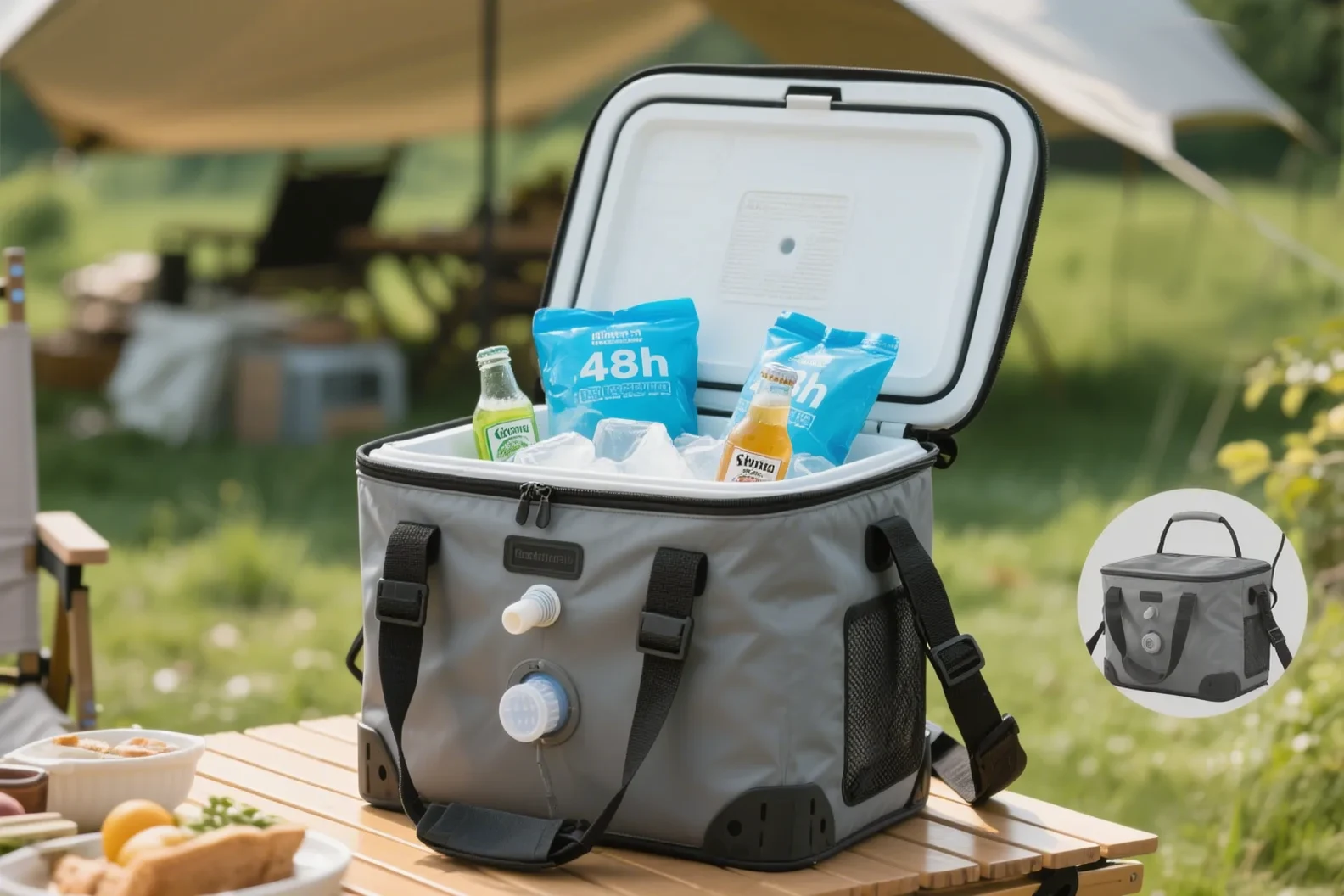
Materials for waterproof bags are not interchangeable, and a manufacturer’s willingness to specify them precisely is itself a selection signal. Ask for the exact laminate: 500D TPU-laminated polyester, 840D recycled PET, or PVC-free TPU film, with coating weight in g/m².
The choice between TPU and PVC laminated polyester, between recycled PET and virgin nylon, and between RF (radio-frequency) welding, hot-air welding and high-frequency seam tape changes both the hand-feel of the finished bag and its warranty performance. TPU laminates bond flexibly at low temperatures, are PVC-free and satisfy REACH and Prop 65 requirements; PVC builds are cheaper and marginally heavier but are falling out of favour with EU and North American retailers. A reputable factory will specify fabric denier, coating weight (in g/m²) and seam-burst pressure on the technical sheet rather than leaving them to chance.
A factory that answers ‘we use waterproof fabric’ without denier, coating weight or seam-weld method has not engineered the product; a strong candidate will hand you a one-page spec sheet before you ask.
| Criterion | Weight | Pass threshold | Red flag |
|---|---|---|---|
| In-house RF/hot-air welding | 3x | Video of live line | Outsourced seams |
| MOQ per style | 2x | 500 pcs | MOQ 10–100 pcs (reseller) |
| Sampling lead time | 2x | 6–10 working days | >20 days |
| Verified monthly capacity | 2x | 200,000 pcs/mo (SGS) | Unverified |
| Certifications on file | 2x | BSCI/ISO9001/SGS | Promised, not issued |
| AQL 2.5 PSI report | 2x | Sample report shown | ‘We check quality’ |
| Bulk lead time | 1x | 35–50 days | >60 days |
Seam quality is where waterproof bags actually succeed or fail. Heat-welded seams eliminate needle holes entirely, which stitched-and-taped seams cannot; even a well-taped stitched seam can leak after flex fatigue. For A 12-criterion audit framework for vetting OEM waterproof ba, buyers should ask for a documented hydrostatic-head test and a submersion cycle test rather than a generic ‘waterproof’ claim.
Customization and Branding Options
Beyond the shell fabric, buyers customise A 12-criterion audit framework for vetting OEM waterproof ba through hardware, closures, trim and branding. Standard levers include roll-top or zip closures, matte or glossy TPU film, custom zipper pulls, embossed or woven logos, heat-transfer labels and colour-matched webbing. Each change has a small cost and a lead-time implication, and a good factory maps these on a quotation sheet so the brand manager can trade features against margin before sampling.
Logo application matters because a badly printed mark is the first defect a customer notices. Screen printing, heat-transfer, rubber/PVC patches, woven labels and embroidery each suit different films: screen print works on smooth TPU, embroidery needs a woven base layer, and heat transfer handles complex multi-colour logos without adding seam risk. QUANZHOU JUNYUAN BAGS advises buyers on the lowest-risk method for each artwork and provides pre-production branding approvals before bulk starts.
Because packaging is part of the brand experience, buyers also customise polybag artwork, hangtags, instruction cards and carton labels. These are low-cost but high-impact touches, and easy to forget until the sample stage. Locking them into the tech pack early keeps the 35–50 day bulk timeline on track.
OEM Process, MOQ and Cost Drivers
Map the supplier’s OEM flow against your own launch calendar. Confirm the number of free sample revisions, who owns shipping of samples, and whether tooling fees are refundable at volume breakpoints.
The standard OEM flow runs from tech pack and reference sample, through a sealed prototype, through first-article approval, to bulk production and pre-shipment inspection. At QUANZHOU JUNYUAN BAGS, development samples are delivered in 6–10 working days and approved bulk orders ship in 35–50 days; the minimum order quantity is 500 pieces per style, which keeps tooling and screen-plate costs amortisable for both new and repeat buyers. Tooling for custom moulds, custom zipper pulls or embossed logos is quoted separately and is usually a one-off cost that does not recur on reorders.
| Signal | Real factory | Trading company |
|---|---|---|
| Unit price at 500 pcs | Factory-tier, stable | Marked up 10–25% |
| Line video / audit | Provides on request | Avoids or stock footage |
| Sample revisions | Free, fast (6–10 days) | Slow, billed |
| Cost breakdown | Itemised (fabric/labour/tooling) | Single lump sum |
| Reorder consistency | Same lot, same line | Lot-to-lot drift |
| Compliance docs | Issued by the plant | Bought from third parties |
At QUANZHOU JUNYUAN BAGS the flow is: tech pack review (1–2 days) → sealed sample (6–10 working days) → sample approval → bulk PO (35–50 days) → PSI → DDP delivery. Ask any candidate to give you the same timeline in writing.
Quality Control, Testing and Certification
Quality control is where cheap and premium manufacturers diverge most visibly. Ask to see a real (redacted) AQL report from a recent production run, not a marketing slide.
Production is controlled against an AQL 2.5/4.0 sampling standard for major and minor defects, with inline checks at cutting, welding, assembly and final packing stages. A pre-shipment inspection (PSI) verifies carton quantities, labelling, barcodes, drop tests and a random submersion check before container loading. Buyers in regulated channels should additionally require material test reports: REACH and RoHS for chemicals, CPC for children’s products, CE for the EU market, and Oeko-Tex Standard 100 where skin contact is expected. QUANZHOU JUNYUAN BAGS holds BSCI and ISO 9001:2015 audits and provides SGS third-party testing reports on request.
| Step | Timing | Deliverable | Your action |
|---|---|---|---|
| Tech pack review | Day 0–2 | Feasibility & cost | Confirm spec |
| Sealed sample | Day 6–10 | Physical prototype | Test submersion |
| Sample approval | Day 11–14 | Signed-off sample | Lock spec |
| Bulk production | Day 15–65 | 500 pcs finished | Inline QC visit/video |
| Pre-shipment insp. | Day 64–68 | AQL report | Approve loading |
| DDP delivery | Day 69–90 | Goods to door | Receive & relabel |
Confirm they run inline checks at four stations — cutting, welding, assembly, packing — and that final inspection includes a random submersion test and carton-drop test before loading.
Sourcing, Lead Times and Logistics
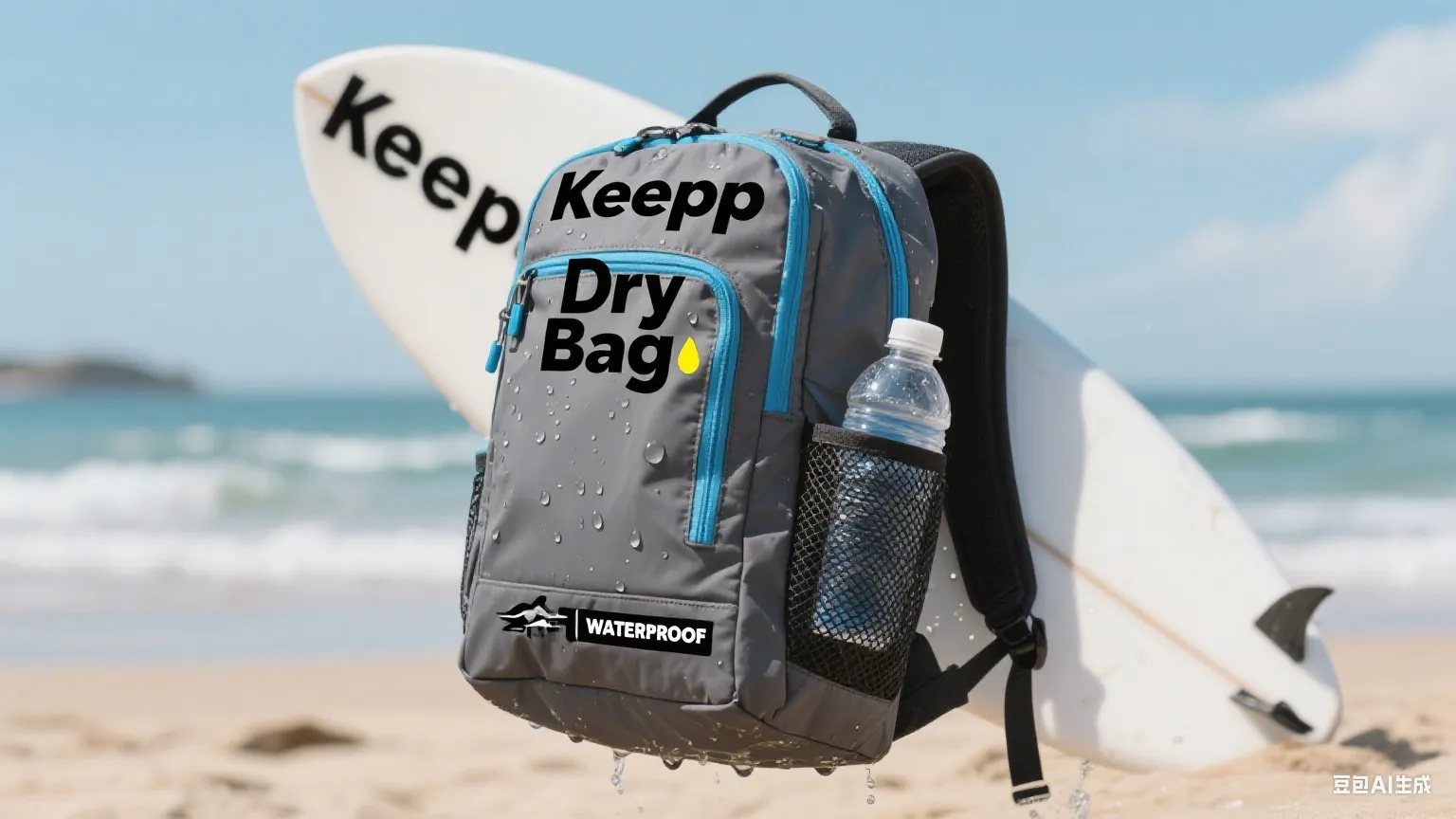
Sourcing risk is concentrated at the port and at the label. Confirm the supplier handles HS classification, commercial invoice, packing list and compliance certificates for your destination market.
Logistics for A 12-criterion audit framework for vetting OEM waterproof ba programs usually runs by sea LCL or FOB, with DDP available to 100+ countries through the factory’s forwarder network. Buyers should build a two-week buffer for custom packaging and labelling, and confirm whether carton dimensions and gross weight are fixed before booking containers, because waterproof bags pack inefficiently if the fold pattern is not optimised. Reorder forecasting matters: a supplier running 7 lines at 200,000 pieces per month can turn a repeat PO in under 35 days, whereas a trading company that re-buys from a mill each time may take twice as long.
A factory exporting DDP to 100+ countries already knows EU REACH, US CPC and Prop 65 documentation; a smaller trader will learn it on your dime and your deadline.
Working With an Experienced OEM Partner
An experienced OEM partner changes the economics of A 12-criterion audit framework for vetting OEM waterproof ba in ways a quotation alone cannot show. They flag design-for-manufacturing issues before tooling, suggest cost-neutral material substitutions, and pre-book fabric so reorders are not delayed by mill lead times. Over a three-year program these small interventions compound: fewer sample iterations, fewer QC escapes, and fewer stock-outs during peak season.
At QUANZHOU JUNYUAN BAGS, the account team includes an engineer who reads the tech pack, not only a sales coordinator. That engineer owns the sample, the first-article approval and the production handoff, so the buyer deals with one owner from brief to delivery. With 7 lines, 137 staff and 200,000 pieces of monthly capacity (SGS-verified), repeat orders are scheduled rather than squeezed between other customers. The affiliated factory, operating since 2014, ships DDP to 100+ countries and holds BSCI, ISO 9001:2015, CE, CPC, RoHS and SGS documentation that retail buyers can pass straight to their compliance team.
For a new brand, the partner’s responsiveness during sampling is the best predictor of production behaviour. A factory that answers engineering questions within 24 hours and delivers the sealed sample in 6–10 working days will communicate the same way during the 35–50 day bulk run. Watch for that discipline in the pilot order, and scale the programs that demonstrate it.
Buyer Expectations and Market Context
Retail buyers today measure waterproof bags against a higher bar than they did five years ago. Ingress-protection claims are expected to be backed by a testable rating rather than marketing copy, sustainability credentials (recycled PET, PFC-free DWR, PVC-free TPU) are requested in RFQs, and supply-chain transparency — audit reports, factory addresses and worker-welfare compliance — is routinely checked by brand owners and by large retailers’ compliance teams. A supplier that cannot produce BSCI and ISO 9001 documentation is increasingly locked out of the shelf, not merely a risk to manage.
Cost pressure has not disappeared, but it has moved upstream: brands now compete on warranty cost and return rate rather than on the lowest factory unit price. A bag that fails after two seasons generates reverse-logistics cost, replacement cost and a one-star review that far exceeds the few cents saved on a weaker weld. This is why the most sophisticated buyers specify seam-burst pressure, hydrostatic head and flex-cycle endurance on the tech pack, and why they treat the pre-shipment inspection as non-negotiable.
For buyers evaluating A 12-criterion audit framework for vetting OEM waterproof ba, the practical takeaway is to shortlist suppliers on total program economics — sample speed, defect rate, reorder reliability and landed DDP cost — rather than on unit price alone. A factory running 7 lines at 200,000 pieces per month (SGS-verified) with a documented AQL 2.5 process will usually win that comparison once warranty and stock-out costs are included.
Common Pitfalls and How to Avoid Them
The classic trap is awarding the pilot order to the lowest quote, then discovering the supplier cannot repeat it. Avoid this by making the first PO a capped test order (500 pcs) rather than a full container.
The most expensive mistakes in how to choose a waterproof bag manufacturer programs are not price mistakes but specification mistakes: buyers approve a sample that passes a 30-second dunk test but never run a pressure or flex-cycle test, then face warranty claims six months later. Others accept a low MOQ from a trading company without realising the factory behind it changes between orders, so fabric lot-to-lot colour and seam width drift. Asking for video of the welding line, the AQL inspection report and the material test certificates before deposit usually separates genuine manufacturers from resellers within one or two email exchanges.
Second trap: accepting a sample that looks right but was hand-finished by a sample-room technician, then receiving bulk that was welded on a different line. Resolve this by requiring a first-article sample from the actual production line.
Frequently Asked Questions
Q1. How do I verify a waterproof bag manufacturer is a real factory?
Ask for live video of the RF welding and cutting lines, a business licence matching the factory address, and an SGS or third-party audit report. Real factories provide these; trading companies deflect or reuse stock footage. Cross-check the 4,950 m² plant address and headcount (target 137 staff) against the audit.
Q2. What MOQ should I expect from a genuine waterproof bag factory?
A genuine factory normally quotes MOQ 500 pieces per style. Sub-100-piece MOQs almost always indicate a reseller buying finished stock, which means no customisation, no seam control and lot-to-lot inconsistency.
Q3. How long does waterproof bag sampling take?
Sealed development samples take 6–10 working days at an experienced factory, including welding and sealing. Anything quoted beyond 15 days usually means the supplier outsources production.
Q4. Which certifications must a waterproof bag manufacturer have?
At minimum expect BSCI (social compliance), ISO 9001:2015 (quality system) and SGS material test reports. Add CE for the EU, CPC for children’s products, RoHS/REACH for restricted chemicals, and Oeko-Tex 100 for skin-contact lines.
Q5. What should I test on the sample before approving bulk?
Run a hydrostatic head test, a cold-flex test (fold at -10°C), a seam-pull test and a timed submersion. Do not rely on a visual inspection; needle-hole leakage only shows under pressure.
Q6. Is it cheaper to go through a sourcing agent?
An agent adds 5–15% but can save time for first-time buyers. For repeat programs above 1,000 pcs per order, buying direct from an affiliated factory like QUANZHOU JUNYUAN BAGS is cheaper and gives better spec control.
Q7. How do I avoid lot-to-lot quality drift?
Lock the tech pack and approved sample in writing, specify fabric lot and seam width tolerances, and require a first-article sample from the production line before bulk starts.
Q8. Can I visit the factory before ordering?
Yes — and you should. A factory that discourages visits or offers a ‘showroom’ instead of the production floor is a warning sign. Video audit is the minimum if travel is not possible.
Q9. What payment terms are standard?
Most factories work on 30% deposit, 70% balance against copy of B/L, or 70% before shipment with a PSI. Be cautious of 100% upfront demands or suppliers refusing any inspection right.
Q10. How do I compare quotes fairly?
Normalise every quote to the same spec: same fabric denier, same weld method, same packaging, same Incoterm (FOB vs DDP). A quote that looks 20% cheaper usually quietly drops one of these variables.
Q11. Should I choose a TPU or PVC specialist?
For EU/North American retail, prefer TPU-laminated, PVC-free construction that meets REACH and Prop 65. PVC remains acceptable for cost-sensitive promotional goods, but verify phthalate reports either way.
Q12. How long should the relationship last?
Plan for a 3–5 year partnership. The learning curve on tooling, seam tuning and packaging pays back only on repeat orders; switching factories every season throws away that investment.
People Also Ask
How much does it cost to manufacture waterproof bags?
Unit cost at 500 pcs depends on size, fabric and welding; promotional dry bags start low, while taped-backpack builds rise with hardware. Tooling and screen plates are a separate one-off cost. Request itemised quotes normalised to identical specs.
Where is the best place to manufacture waterproof bags?
Quanzhou and Xiamen in Fujian, China form a deep cluster of TPU/PVC lamination, RF welding and bag-sewing capacity, with DDP logistics to 100+ countries. Vietnam is emerging but has shallower waterproof-seam sub-suppliers.
What is the minimum order for custom waterproof bags?
Genuine factories set MOQ at 500 pieces per style, which covers fabric roll minimums and welding setup. Anything below suggests resold stock rather than true OEM.
How do I know if a supplier is a trading company?
Trading companies quote single lump sums, cannot show live line video, and drift on reorders. Factories provide itemised cost breakdowns and audit reports.
How long does manufacturing take from sample to delivery?
Expect 6–10 days for the sealed sample, 35–50 days for bulk, plus sea freight. A capped 500-piece pilot typically reaches your door in 60–90 days door-to-door.
Conclusion
Choosing the right waterproof bag manufacturer reduces your warranty rate, protects your launch calendar and compounds margin on every reorder. Score suppliers on welded-seam capability, verified capacity, MOQ fit and certifications before price, and always run a capped 500-piece pilot with a pre-shipment inspection. Treat the first order as a relationship test, not a one-off buy.
To discuss how to choose a waterproof bag manufacturer for your own program, request a sample from QUANZHOU JUNYUAN BAGS. Our affiliated factory has produced waterproof bags since 2014, runs 7 production lines with 137 staff across 4,950 m², and ships 200,000 pieces per month (SGS-verified) to buyers in 100+ countries. MOQ is 500 pieces per style, samples take 6–10 working days, and bulk production runs 35–50 days. See our OEM waterproof bags process, learn about the waterproof bag manufacturer criteria, review our factory profile, or contact us for a quotation.