About QUANZHOU JUNYUAN BAGS
A waterproof bag manufacturer and exporter based in Quanzhou, Fujian, China, serving B2B buyers since 2014.
Who We Are: A Waterproof Bag Specialist Since 2014
QUANZHOU JUNYUAN BAGS is an OEM and ODM programme partner for waterproof and water-resistant bags, running production on seven dedicated lines at a validated partner facility in Quanzhou, Fujian Province, China since 2014. The legal entity registered behind the brand is QUANZHOU JUNYUAN COMMERCIAL AND TRADING CO., LTD, and that is the same name that appears on our export licence, on the beneficiary record for your wire transfer and on every commercial invoice we issue. We mention it once and plainly, because a buyer sending a 30% deposit to a supplier they have never met deserves to know exactly which company is taking the money and which company is accountable for the machines that will build the order.
Everything we ship carries somebody else's label. Our customers are outdoor and paddle-sport brands, fishing tackle distributors, promotional product importers, sports and fitness retailers, bicycle and motorcycle accessory labels, and private-label e-commerce sellers who arrive with a design, a tech pack or simply a competitor's sample in a courier envelope. What they need from us is not a low quote; it is a factory that can hold a waterproof specification and repeat it. Those are different skills, and only one of them is visible in a price list.
We are not a broker that quotes a number and then shops the job around the province. Our programmes run on seven dedicated production lines with 149 machines and 137 people at a validated partner facility, booked to our schedule and answerable to us for every order. When a container slips, there is no intermediate agent to blame and no telephone game to play. You speak to the people who moved the date.
What Being a Waterproof Specialist Actually Changes
A large share of bag factories in China will tell you they can produce waterproof goods. What that usually means is that they can buy a coated fabric and stitch it. Water is then kept out by a strip of seam tape, by a spray-on durable water repellent finish, or by optimism. That construction can survive a light shower on a city street and then fail inside a kayak hatch on the first weekend of the rental season, and when it fails, the water almost never comes through the middle of a panel. It comes through a needle hole, a corner where the tape lifted, or a zip that was never rated for immersion.
Designing around the water barrier rather than adding it at the end changes four things on the floor. The machine list changes, because welded construction needs RF welders, hot-air seam welders and high-frequency presses with dedicated fixtures, not only sewing heads. The material inventory changes, because we hold 500D and 1000D polyester TPU laminates, 420D nylon ripstop and PVC 500D as running stock instead of buying spot lots. The test equipment changes: hydrostatic head testing at 10,000 mm for lightweight builds and 20,000 mm for heavy-duty builds, seam peel testing to 8 N/cm, and spray and immersion rigs for IPX6, IPX7 and IPX8 verification. And the operator skill changes, because a weld that ran two seconds short looks identical to a good one and leaks three weeks later in a warehouse in Rotterdam.
It also changes the conversation we have with you at quotation stage. We will ask where the bag is used, how long it stays wet, whether it floats, whether it is carried against a back or strapped to a deck, and what the end user will do when it leaks. Those answers decide whether the right construction is a fully welded TPU shell, a sewn shell with 20 mm taped seams, or a bonded-and-stitched hybrid. Getting that wrong is far more expensive than any unit price difference.
Where We Sit in a Buyer's Supply Chain
Most of the programs we run are either a replacement for a supplier who stopped performing, or a second source behind an existing one. In both cases the buyer's real requirement is predictability: a sample that matches the drawing, a bulk run that matches the sample, and a ship date that does not move. We have built our process around those three things rather than around winning the first order at any cost, which is why a meaningful part of our capacity each year is repeat business from accounts that started with a single 500-piece trial.
If you want to see the product range before reading further, start with our waterproof bag product catalogue, or look at the way we structure development work on the OEM and ODM services page. If you would rather go straight to a person, the contact page has both channels listed.
| Company fact | Record | Why it matters to a buyer |
|---|---|---|
| Operating since | 2014 | Eleven years of continuous export operation and customs record |
| Founder in the bag trade since | 2004 | Two decades of material and construction judgement behind specifications |
| Registered location | Quanzhou, Fujian, China | Inside the Fujian soft-goods and bag manufacturing cluster |
| Facility size | 4,950 m², SGS-validated | Floor area confirmed on site by a third party, not self-declared |
| Workforce | 137 employees | Enough headcount to run parallel lines without agency labour at peak |
| Production lines | 7 lines | Style isolation: one line's problem does not stop another's output |
| Machines | 149 units, including 126 sewing stations | Welding, sewing, taping and finishing capacity under one roof |
| Monthly capacity | 200,000 pcs | Headroom for seasonal reorders without displacing existing bookings |
| Shipping basis | FOB Xiamen | Quote baseline is unambiguous; CIF and DDP available on request |
| Business model | B2B OEM and ODM only | We do not retail your design or compete with you on your channels |
Quanzhou, Fujian: Why the Bag Cluster Matters to Your Order
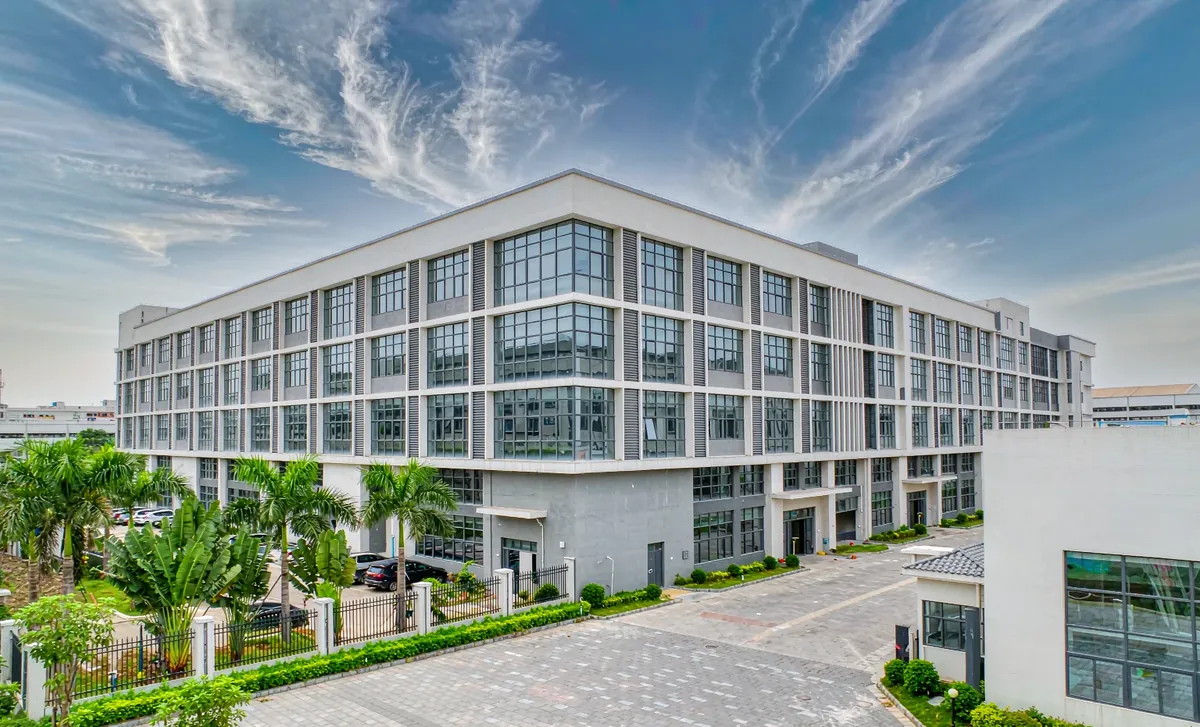
Industrial geography is not a marketing detail. It decides how long it takes to replace a broken buckle mould, how quickly a coated fabric can be re-ordered when a dye lot runs short, and whether your inspector can see your factory and two of its key suppliers in the same afternoon. Quanzhou sits inside the Fujian soft-goods belt that grew up around footwear, garments and luggage, and the bag industry here inherited that supply chain: coated fabric, TPU film, webbing, elastic, hook-and-loop, zippers, moulded hardware, PE and EPE foam, screen printing, heat transfer, embroidery, labels, hangtags and export cartons are all sourced within a short truck ride.
What Sits Within Reach of the Plant
Our running fabric inventory is built around 500D, 840D and 1000D polyester with TPU lamination, 420D nylon ripstop for weight-sensitive styles, and PVC 500D for heavy-duty builds where abrasion resistance matters more than packability. Backing and film thickness is specified rather than assumed: PU back coating at 0.15 mm, TPU film between 0.1 mm and 0.3 mm depending on the weld method, and PVC coating around 0.35 mm for the workhorse range. Trims follow the same discipline. When a program calls for water-resistant zips we quote YKK AquaGuard in #5 and #8, and where true immersion sealing is required we price TIZIP MasterSeal 10 or a PU-coated water-resistant zip and tell you plainly which one the rating depends on. Buckles and ladderlocks come from the established hardware brands with 48-hour salt spray testing on the finish.
Because these inputs are stocked or held on call by mills we have used for years, a trim substitution that would take three weeks in a remote factory takes days here. That matters most at sampling stage. If the first sample's hand feel is wrong, we can cut a second in a different laminate within the same working week rather than restarting the clock.
The Port Question and Why We Quote FOB Xiamen
Xiamen is our port. It is close enough that a truck can be loaded in the afternoon and gated the same evening, which gives us real flexibility on the last day of a booking instead of a two-day contingency. It is also a port with regular direct services to Northern Europe, the US West Coast, Australia and a dense network of transhipment options into secondary markets. Our quotations are stated FOB Xiamen for a simple reason: it is the cleanest point at which to compare two suppliers, because it excludes freight and insurance, both of which move for reasons that have nothing to do with the factory. We are happy to quote CIF or DDP where a buyer wants a landed number, and we will show the freight and duty components separately so the comparison stays honest.
What the Cluster Does Not Solve
Density cuts both ways. A cluster full of competent suppliers is also a cluster full of workshops that will quote anything, and proximity does not guarantee that the fabric on your order came from the mill named on the spec sheet. This is why we maintain a written approved vendor list with at least two qualified sources for every critical input, incoming inspection on coated fabric before it reaches the cutting table, and roll-level traceability that ties a finished carton back to a fabric batch. The cluster gives us speed. The process control is what turns that speed into something you can plan around.
There is also a practical advantage for buyers who visit. A single day in Quanzhou can cover a factory audit, a fabric mill visit and a hardware supplier review, with an evening flight out of Xiamen. For a sourcing team that needs to qualify a new supplier without a two-week trip, that is a genuine difference.
Continuity Risk and How We Handle It
Concentration is a risk, and we manage it rather than pretend it away. Our critical input categories — coated and laminated fabric, waterproof zips, structural hardware, insulation foam — each carry a qualified second source that has already run production for us, so an interruption at one mill does not stop a line. We hold buffer stock on the longest-lead and most style-specific items, and we review that buffer every quarter against actual consumption rather than setting it once and forgetting it. When a mill changes a formulation, which happens, we re-test before the new material enters production rather than after.
Two Decades of Bag-Making: From 2004 Trader Roots to 2014 Manufacturing
The company was registered in 2014, but the people running it have been in the bag trade since 2004. That gap is deliberate and worth explaining, because it shaped the way we write specifications, the way we quote and the sequence of our quality checks. Our founder spent his first decade on the trading side: taking a buyer's brief, finding a workshop that could make it, and then standing between the two when something went wrong. That job teaches you things about failure that no production manual does.
What Ten Years on the Trading Side Taught Us
You learn which complaints actually damage a buyer's business. Late shipment is the obvious one, but it is rarely the most expensive. In our experience the costly failures are quieter: a colour that drifts two shades between the approval sample and the bulk run, a zip that runs smoothly for a month and then splits, a carton specification that was never checked and arrives crushed at a distribution centre, a care label with the wrong fibre content that holds up a customs release, a hangtag barcode that will not scan at a retailer's goods-in desk. None of these are dramatic. All of them cost the buyer money, credibility with their own customer, and time they cannot get back.
You also learn that most of these failures are decided before a stitch is made. The shade drift was set when the mill's lab dip was approved against the wrong light source. The zip failure was set when somebody specified a water-resistant coil for an application that needed a sealed tooth. The carton was set when nobody calculated the compression load for a 60-day ocean transit. This is why our specification review happens before quoting, and why we ask questions a pure production factory rarely asks.
Why We Moved From Brokering to Owning Production
By the early 2010s the trading model had stopped answering the question buyers were asking. They did not want a cheaper price; they wanted to know who was making their product, with what material, on which line, and what would happen if they doubled the quantity. A broker cannot answer that with any authority, because the answers belong to somebody else. So in 2014 the company was registered and we took control of the floor: the machines, the material, the fixtures, the operators and the schedule.
The waterproof focus came from the same logic. General bag work is a commodity race decided almost entirely on price, and the buyer has no way to tell a good factory from a lucky one until something fails. Waterproof construction is verifiable. A seam either holds 8 N/cm of peel load or it does not. A shell either survives 20,000 mm of hydrostatic head or it does not. A zip either passes IPX7 immersion or it does not. Working in a category where quality can be measured let us build a business on evidence instead of assertion.
| Period | What changed | Capability it produced |
|---|---|---|
| 2004 | Founder enters the bag trade on the sourcing and trading side | First-hand record of how and why bag programs fail |
| 2004–2013 | Trading era across general bag categories for export buyers | Specification writing and supplier qualification discipline |
| 2010 onward | Shift of focus toward waterproof and water-resistant soft goods | Material and welding knowledge built before owning a plant |
| 2014 | Company founded; first welded-construction line installed | In-house control of material, tooling and schedule |
| 2015–2017 | Second and third lines added; sewing cells and taping brought in-house | Ability to run welded, taped and hybrid builds in parallel |
| 2018–2019 | In-house material testing station established | Hydrostatic head and seam peel verified per batch, not per year |
| 2020 | SGS on-site verification of floor area, headcount, equipment and capacity | Third-party evidence behind the 4,950 m² and 200,000 pcs figures |
| 2021–2023 | Lines five, six and seven commissioned; cutting room expanded | Peak-season capacity without displacing booked programs |
| 2024–2026 | Raw material buffer programme and documented backup-line routing | Delivery protection when a mill or a line is disrupted |
Why Longevity Shows Up in the Details
A factory that has been running the same category for twenty years makes different small decisions. We keep the fixtures from every program we have ever built, labelled and shelved, so a reorder three years later does not start from a blank tooling budget. We keep shade reference cards from approved lab dips, because memory is not a colour standard. We keep the failure records — the batches that did not pass, the reason, the corrective action — because the cheapest quality lesson is the one you already paid for.
It also shows in the people. A meaningful share of our supervisors and senior operators have been with us for most of the company's life, and several worked with the founder before 2014. On a waterproof line that matters enormously: weld quality is a judgement formed over thousands of metres of seam, and it does not transfer in a two-week training course.
The Team Behind Your Order: Sales, Engineering, QC, Logistics
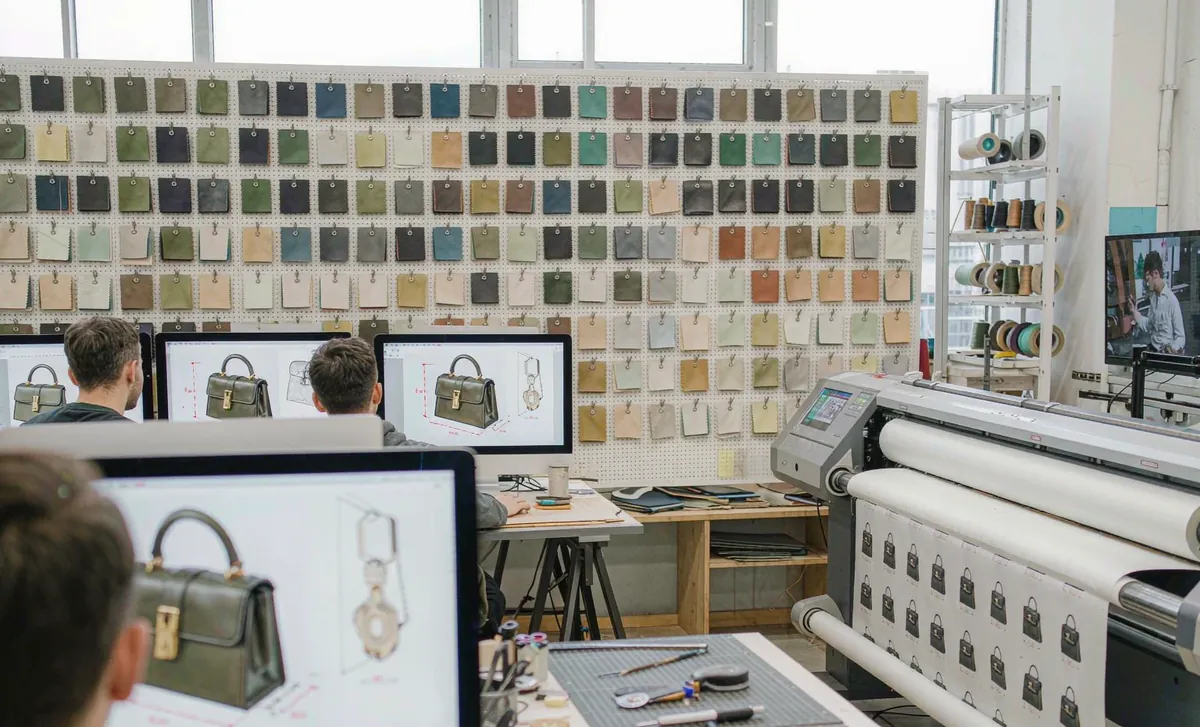
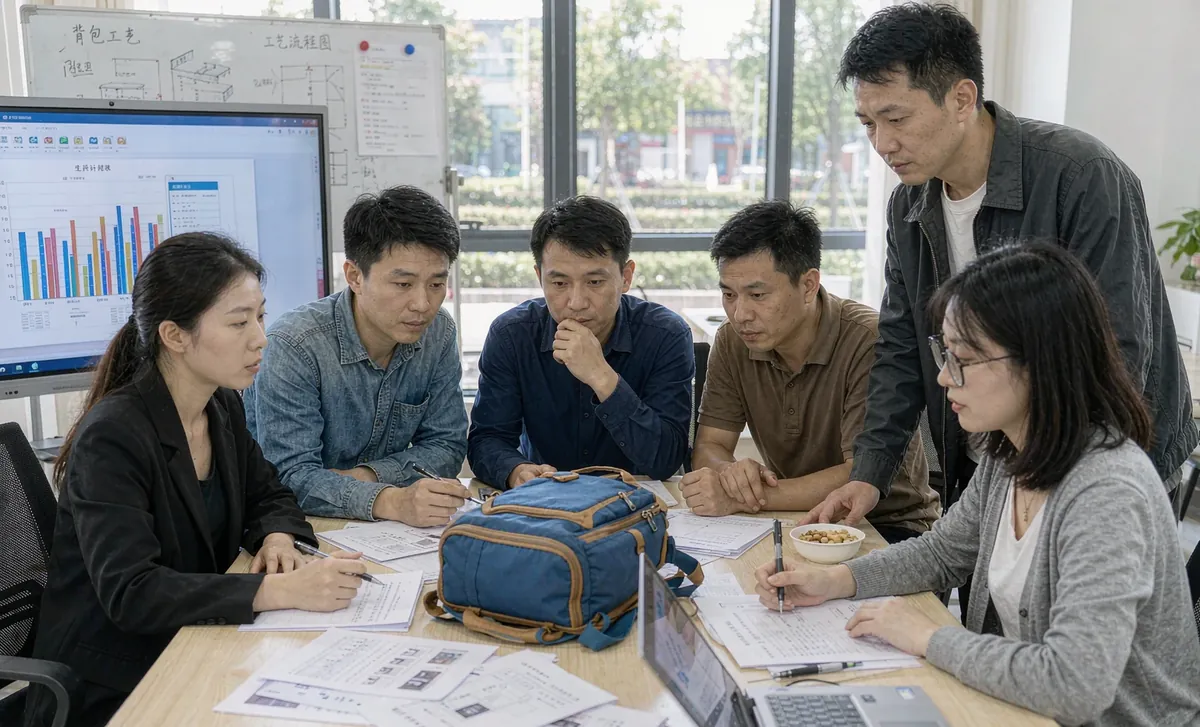
A bag order does not fail because of one dramatic mistake. It fails because of small handoffs: the salesperson promised a date the planner did not confirm, the pattern maker read a drawing differently from the buyer, the QC inspector checked the wrong revision, the forwarder received packing data a day late. Our answer to that is structural. We organise 137 people into four functions that each own a defined part of your order, and we make the handoffs written rather than verbal.
Sales and Merchandising: Technical, Not Order-Taking
Your first contact is a merchandiser who can read a tech pack, not a call centre. Their job at quotation stage is to turn your brief into a specification we can hold: what fabric and coating, what weld method, what zip and hardware, what stitch density, what tolerance, what test evidence you need, what carton and marking, what Incoterm. They quote within 24 hours, and the quote states the assumptions it is built on, because a price that hides its assumptions is a price that will be renegotiated later.
One merchandiser stays with your program from first enquiry through shipment. Not a shared inbox, not a rotating account manager. When you email on a Tuesday about a delayed trim, the person who answers is the person who booked that trim.
Engineering: Pattern, Fixtures and the Honest No
Our engineering group handles CAD pattern making, marker efficiency, weld fixture design and design-for-manufacture review. The most valuable thing they do is say no early. A gusset that looks elegant in a rendering may be unweldable on the radius the drawing calls for. A roll-top with four stiffening ribs may need a fixture that costs more than the unit saving is worth at 500 pieces. A fabric combination that welds beautifully may not take a heat-transfer logo.
We would rather tell you that at quotation stage, with a suggested alternative, than discover it on the welding floor three weeks into your schedule. Where we can meet the intent differently — moving a weld line 8 mm, changing a corner radius, substituting a 0.15 mm PU back coating for a heavier film — we say so and explain the trade-off in writing.
Quality Control: Where the Checkpoints Sit
QC reports independently of production and has the authority to stop a line. The function runs in three layers. Incoming inspection checks coated fabric before it reaches the cutting table: coating weight, thickness, adhesion, colour against the approved lab dip under standard lighting, and hydrostatic head on a cut sample from each roll. In-process inspection sits at the stations where errors become permanent — after welding, after taping, before assembly closes a seam — checking weld width and continuity, tape adhesion, stitch density at 8 to 10 stitches per inch, and hardware attachment. Final inspection runs to AQL 2.5 under ISO 2859-1, with the defect classification agreed with you before production rather than after.
Alongside the inspectors sits the material test station, which runs the hydrostatic head, seam peel, abrasion, colour fastness and salt spray work that supports our compliance documentation. That in-house capability is the reason we can test a fabric lot on the day it arrives rather than waiting a week for an outside laboratory.
Logistics and Documentation
The logistics team owns everything that happens after final inspection: booking, container loading supervision, export declaration, the document set, and the pre-alert that goes to your customs broker. They also own the carton specification, which is the most consistently under-specified item in this industry. We calculate board grade and stacking strength from the actual transit profile rather than reusing last year's carton, because a crushed master carton at a distribution centre costs more than the board it would have taken to prevent it.
Marking, labelling, barcodes, country of origin, care content and any market-specific labelling are confirmed in writing before packing starts. If your retailer requires a specific GS1 barcode placement or a particular warning text, that belongs in the packing specification, not in a follow-up email.
Our 4,950 m² SGS-Validated Facility in Numbers
Floor area is a proxy, but a useful one, because it tells you whether a factory can stage material, hold work in progress and pack without moving things twice. Our plant covers 4,950 m² on one site in Quanzhou, verified on site by SGS along with headcount, machine count and monthly output. The verified figures are 137 employees, 149 machines of which 126 are sewing stations, seven production lines and up to 200,000 pieces per month.
We publish the SGS reference rather than asking buyers to trust a self-declared number, because capacity inflation is the single most common exaggeration in Chinese bag sourcing. A factory that claims 500,000 pieces a month from 2,000 m² is either running three shifts with agency labour it will not show you, or it is counting a subcontractor's output as its own. When you audit us, the numbers on this page are the numbers you should find on the floor.
| Area | Approx. share | What happens there | Why it is sized that way |
|---|---|---|---|
| Roll store and fabric inspection | ~10% | Coated rolls racked on end, unrolled on a lit 2 m table, measured, scored and tagged | Holds roughly two weeks of coated fabric against a mill delay |
| Cutting room | ~9% | Spreading, marker plotting, straight knife and clicker press bays, bundling | A 12 m table plus floor space to lay a second marker |
| Welding hall | ~19% | RF welders, hot-air seam machines and HF presses, each with its fixture racking | Fixtures stored at the machine, so a changeover is a lift, not a search |
| Sewing cells | ~18% | U-shaped cells with central bundle tables, thread stands and operator aids | Short reach distances and visible WIP for every supervisor |
| Taping and sealing | ~7% | Hot-air taping machines, corner sealing, leak test benches | Enough benches to test without queuing behind assembly |
| Assembly and finishing | ~14% | Hardware fitting, webbing, labelling, trimming, heat transfer and embroidery | Room for sub-assembly staging next to each line |
| QC and test station | ~6% | Inspection tables, light booth, hydrostatic head and peel testers | Testing on site removes a week from the approval loop |
| Packing and finished goods | ~11% | Pack lines, carton make-up, palletising, staged finished goods | Holds a full container of packed cartons before collection |
| Services, offices and welfare | ~6% | Merchandising, engineering, meeting rooms, staff facilities | Sized to the welfare-space expectations a BSCI auditor applies |
Why Single-Site Matters More Than It Sounds
We run everything from one address. Cutting, welding, sewing, taping, assembly, testing and packing are in the same building, which means a defect found at final inspection can be traced to a specific station, shift and roll within hours rather than across a subcontractor network. It also means an auditor sees the whole process in one visit, and a buyer who flies in for a day sees every step their product goes through.
Single-site operation does not remove the need for subcontracting discipline entirely — specialised processes such as moulded component production are bought in — but it does mean that the value-adding steps, and the steps where waterproof integrity is created, happen under our own supervision and our own quality system.
Utilities and Environment
Welded construction has infrastructure requirements that a sewing-only factory does not. High-frequency and RF welding need stable three-phase power, because voltage drift changes weld energy and therefore weld strength. Hot-air welding and taping need compressed air at consistent pressure. Welding fumes need extraction at the point of work, both for operator health and because airborne residue affects adhesion. Cutting and inspection need high, even lighting with controlled colour temperature, since a shade decision made under the wrong light is a shade decision that will be reversed at destination.
These are unglamorous items and they are exactly where a factory that treats waterproof as a side-line tends to underinvest. They are also cheap to check on an audit, so ask.
Seven Production Lines and 200,000 pcs per Month
Capacity is not a single number, and any supplier who quotes one without qualification is either simplifying or selling. Our 200,000 pieces per month is a measured ceiling under SGS verification, but what it means in practice depends entirely on the mix. A 5-litre roll-top dry bag and a 40-litre welded backpack with a framed back panel, multiple compartments and eight hardware attachment points do not consume the same minutes. Published capacity figures in this industry are usually based on the simplest item in the range, which is why we prefer to talk about your program in minutes and bottlenecks rather than in headline pieces.
Why Seven Lines Rather Than Two Large Ones
The obvious efficiency argument favours fewer, longer lines: more operators, higher output, lower overhead per unit. We chose seven for reasons that show up when things go wrong. Seven lines mean a style-specific problem — a fabric lot that will not weld, a fixture that needs modification, a trim that arrives late — is contained in one line instead of stopping the plant. It means we can hold a repeat program on a dedicated line with its fixtures already set while a new development runs on another. And it means a rush reorder does not require tearing down a line that is mid-run on somebody else's booked order.
The lines are not identical. Roughly, they divide by construction type: fully welded lines built around RF and hot-air equipment, sewn-and-taped lines built around sewing cells and taping machines, and hybrid lines that bond and then stitch where a design needs both. Assigning a program to the right line type is a planning decision made before the order is confirmed, not discovered in week two.
Where the Bottleneck Usually Is
On a waterproof program, the constraint is almost always welding, not sewing. Sewing capacity scales with headcount and we have 126 stations; welding capacity scales with machines, fixtures and cycle time. A weld cycle of twenty-two seconds versus eighteen seconds is a twenty percent difference in line output, and it is invisible in the finished part. This is why we build a fixture for every welded style rather than free-handing it, and why we keep fixtures at the machine instead of in a central store.
It is also why we will sometimes push back on a design. If a geometry needs a fixture cycle that destroys the line rate, we will say so at quotation stage and propose a change that keeps the look while recovering the seconds. Better to have that conversation in week one than to discover your unit price has quietly absorbed a slow weld.
Planning, Booking and Peak Season
Capacity is allocated by confirmed booking, and a booking is made against a deposit, not an intention. Two peaks dominate the calendar. The first runs from roughly September to December, when Northern Hemisphere buyers are filling containers ahead of Chinese New Year and the plant stops for the holiday. The second runs through the spring as summer-season goods — paddle sports, beach, camping and cooler programs — are produced for a Northern Hemisphere season that starts in May.
We manage the peaks with a second shift and with pre-booked raw material, not by pushing overtime past what our social compliance commitments allow. That is a real constraint and we would rather describe it than promise a twelve-week schedule built on exhaustion, because exhausted operators on a welding machine produce leaks.
What Reorders Look Like
The economics of a second order are different from the first, and buyers deserve to know it up front. On a repeat we already hold the pattern, the marker, the weld fixture, the approved lab dips and the test history. That removes the development time and, where the tooling was charged on the first order, removes that cost line too. Practically, a reorder can be scheduled faster than the standard 35 to 50 days if the line has capacity and the fabric is either in buffer or already on call with the mill. Repeat customers who give us a rolling forecast get first claim on that capacity, which is the concrete value of telling us what you expect to need.
Minimum quantity stays at 500 pieces per style and colourway on reorders as well as first orders. It is a line-setup number, not a negotiating position: below roughly that quantity, the changeover time and material minimums cost more than the margin in the order.
What We Make and What We Deliberately Do Not Make
A supplier's refusal list tells you more about them than their capability list does. Any factory can say yes; the question is whether the yes is backed by the machines, the material knowledge and the test equipment to deliver it. We have drawn a deliberate boundary around waterproof and water-resistant soft goods, we invest inside that boundary, and we decline work outside it — sometimes at the cost of an order we would have liked to win.
The Categories We Run
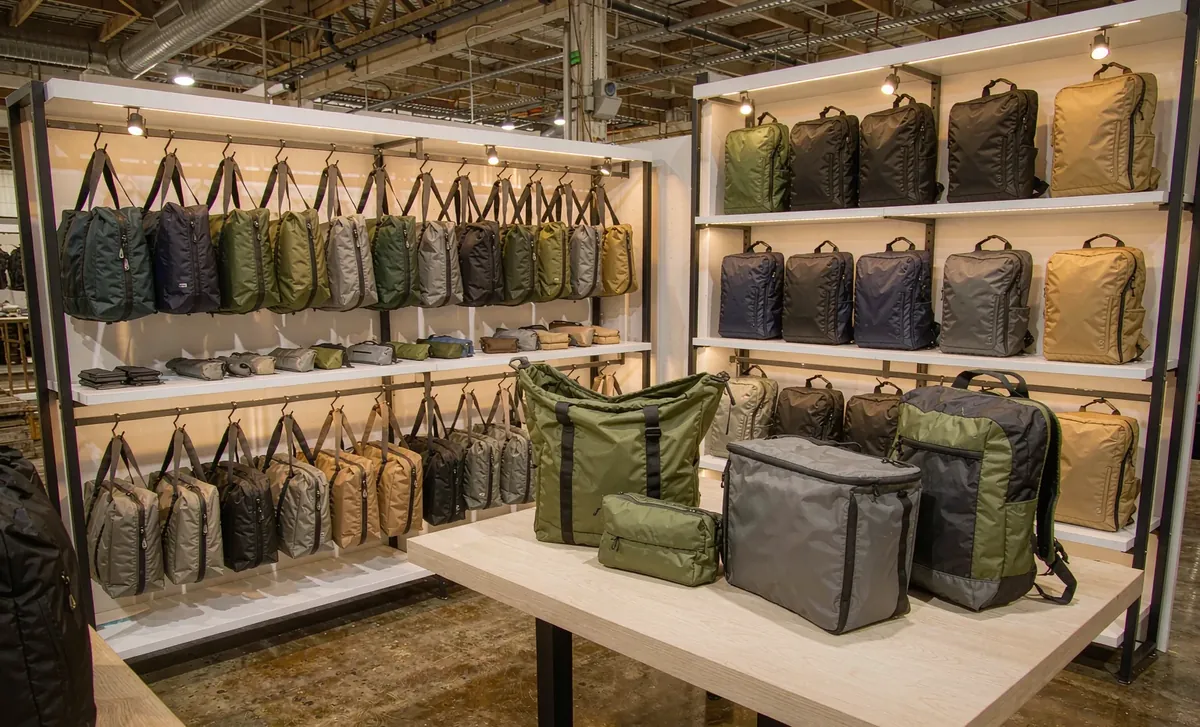
Six product families account for the overwhelming majority of what we make. Dry bags and roll-top sacks, from lightweight 5-litre stuff sacks through to heavy-duty expedition volumes. Waterproof backpacks, both fully welded and sewn-and-taped, covering daypack volumes through to multi-day technical packs. Travel bags, including duffels, wheeled soft-side luggage and convertible carry formats. Cooler bags and soft coolers, built around PE foam at 25 kg/m³ or EPE at 30 kg/m³ with welded or high-frequency sealed liners. Fishing bags, including tackle storage, rod and reel cases and waterproof holdalls designed for wet decks. And sports and gym bags, including wet/dry compartment designs where the barrier is internal rather than structural.
Within each family we run both OEM, where you supply the design and we build to it, and ODM, where you take an existing platform and change fabric, colour, hardware, logo and packaging. ODM is usually the faster route to market and the cheaper route to a first container, because the pattern and the fixtures already exist and have already been proven in production.
| Category | Typical shell | Typical waterproof method | Typical rating |
|---|---|---|---|
| Waterproof backpacks | 500D / 840D polyester TPU laminate | RF welded main seams, PU-coated water-resistant zip | IPX6 to IPX7 |
| Dry bags and roll-tops | 420D nylon ripstop, 500D TPU | Fully welded body, roll closure | IPX7 to IPX8 |
| Travel bags | 840D / 1000D polyester TPU laminate | Hybrid bonded and stitched, 20 mm taped seams | Water resistant, 10,000 mm |
| Cooler bags | PVC 500D, 1000D TPU outer | HF welded liner, PE foam 25 kg/m³ or EPE 30 kg/m³ | Leakproof liner, IPX6 splash |
| Fishing bags | PVC 500D, 1000D TPU laminate | Welded base, taped upper seams, salt-tested hardware | IPX6, 48 h salt spray on hardware |
| Sports bags | 420D ripstop, 600D polyester PU | Internal welded wet compartment, taped external seams | Water resistant, 8,000–10,000 mm |
What We Decline, and Why
We do not make hard-shell luggage or moulded EVA cases. That work requires injection and thermoforming tooling we do not own, and buying it in would make us a broker on your most capital-intensive component. We do not make genuine leather goods; the material tolerances, the supply chain and the finishing skills are different enough that adding them would dilute the waterproof specialism rather than complement it. We do not make apparel, wetsuits or neoprene dry suits, which belong to a different category of manufacturer entirely.
We do not make tents, tarps or other large-format technical shelters, even though they use similar coated fabrics, because the seam engineering and structural load cases are not the same as a bag. We do not produce products with integrated electronics, heating elements or battery power, which carry certification and safety obligations outside our scope. And we do not manufacture metal or plastic components in-house; we specify, qualify and buy hardware from established suppliers and test it, rather than pretending to be vertically integrated in everything.
The practical benefit to you is that when we say yes to a waterproof bag program, we are quoting work we do every day, on machines we own, with materials we hold, and test methods we run in-house. That is a narrower promise than a general factory will make, and it is a considerably more reliable one.
How We Choose Materials and Mill Partners
On a waterproof bag, the material is the product. Coating weight, film thickness and adhesion decide whether a seam holds, whether a pack stays supple after a winter in a cold garage, and whether a liner survives being folded wet for six weeks. That is why we treat mill selection as a qualification exercise rather than a purchasing exercise, and why we would rather explain our criteria than simply tell you that we use good fabric.
How a Mill Gets on the List
A supplier enters our approved vendor list only after we have seen the plant, confirmed the production capacity that is actually available to us, and run material through our own lines and our own tests. We look at four things. Consistency of coating weight across a lot, because variance there changes weld parameters and produces intermittent leaks that are almost impossible to trace later. Shade control, because a bag program that runs for three years will be re-ordered many times and every re-order has to match. Traceability, meaning the mill can tell us which batch a roll came from and what went into it. And documentation, meaning current test reports and chemical compliance declarations we can pass on to you without qualification.
Every critical input carries two qualified sources. Coated and laminated fabrics, waterproof zips, structural hardware and insulation foam each have an alternate that has already run production for us. We are not pretending the second source is identical — we test and document the difference — but it means a disruption at one mill slows us down instead of stopping a line.
What We Verify Before the Fabric Is Cut
Incoming inspection happens at the roll store, not at the machine. Each roll is unrolled across a lit table, measured for width and thickness, checked for coating defects and delamination, and colour-matched against the approved lab dip in a standard light booth. A sample from each roll goes to the test station for hydrostatic head — 10,000 mm is our baseline for lightweight shells and 20,000 mm for heavy-duty builds. Where a program depends on a weld rather than a seam, we run a weld trial and pull it to confirm peel strength at or above 8 N/cm before any production panels are cut.
Cutting is then organised by lot. Panels for one order come from one fabric batch wherever possible, and where a second batch is unavoidable we cut complete units from a single batch rather than mixing panels, because a shade difference across one assembled bag is visible in a way that a difference between bags is not.
The Trim and Hardware Decision
Trims are where waterproof programs most often quietly fail. We specify YKK AquaGuard in #5 and #8 for water-resistant applications, TIZIP MasterSeal 10 where genuine immersion sealing is required, and PU-coated water-resistant zips where the design and price point support it — and we tell you which rating depends on which choice. Buckles, ladderlocks and cam hardware come from Duraflex, YKK and ITW Nexus, with a 48-hour salt spray test on finishes for anything going into a marine or fishing program. Insulation is PE foam at 25 kg/m³ or EPE at 30 kg/m³ depending on whether the priority is thermal performance or packability.
The question we are asked most often about bag factory Quanzhou sourcing is whether material is bought locally or shipped in. The honest answer is both: the Fujian cluster supplies the bulk of our running stock, and specialised items such as immersion-rated zips come from mills we have qualified elsewhere. Either way, the material arriving at our roll store has been through the same incoming inspection, and the test record belongs to your order.
Customer Profile: Who Buys From Us and Why
We are a B2B factory, so our customers are not demographics — they are business models, and each one stresses a different part of our operation. Understanding which model you are helps us tell you quickly whether we are the right fit, which is a conversation worth having before you spend three weeks on sampling.
The Six Buyer Types We Work With Most
Outdoor and paddle-sport brands come to us with a design and a performance target, usually expressed as a rating or a field condition rather than a fabric code. They care about weld integrity, hardware that survives salt water, and test evidence their own quality team can audit. Fishing tackle distributors want storage logic and wet-deck durability: welded bases, drainage, corrosion-resistant hardware and compartments sized to actual tackle boxes. Promotional product importers need a clean logo surface, predictable landed cost and packaging that survives bulk distribution, and they are usually working to a fixed retail price rather than an open specification.
Sports and fitness retailers ask for wet/dry compartment designs, where the barrier is inside the bag rather than the shell. Corporate and team buyers want consistent brand colour across repeat orders and reliable re-order availability years later. And private-label e-commerce sellers typically start on an ODM platform, prove demand, then convert to a custom OEM build once volumes justify the tooling.
What They Have in Common
Different as these buyers are, they all chose us for the same underlying reason: they needed a reliable waterproof bag supplier rather than the cheapest quote in their inbox. That means repeatability — the hundredth bag matching the approved sample — and documentation they can show their own customer or their own auditor. It also means a supplier who answers email when there is a problem, which sounds trivial until you have experienced the alternative.
Order sizes run from the 500-piece minimum through to programs of twenty thousand pieces and above, usually shipped on a repeat cycle rather than as one-off projects. Repeat business accounts for a substantial and growing share of our annual capacity, and that is the metric we care about most, because a buyer who re-orders is the only real evidence that the first order went well.
Where We Are Not the Right Fit
We are honest about this because a mismatched first order wastes both sides' time. If your selection criterion is purely the lowest unit price and the specification is flexible enough to absorb any material, a general bag factory will beat us and you should use them. If your requirement is below 500 pieces per style and colourway, our line setup economics will not work for either of us. If you need hard-shell luggage, moulded cases, leather goods or anything with integrated electronics, we will decline and, where we can, point you to someone who does that work.
What we are built for is a buyer who has a waterproof specification that matters, who will be re-ordering, and who wants the factory to be accountable for it.
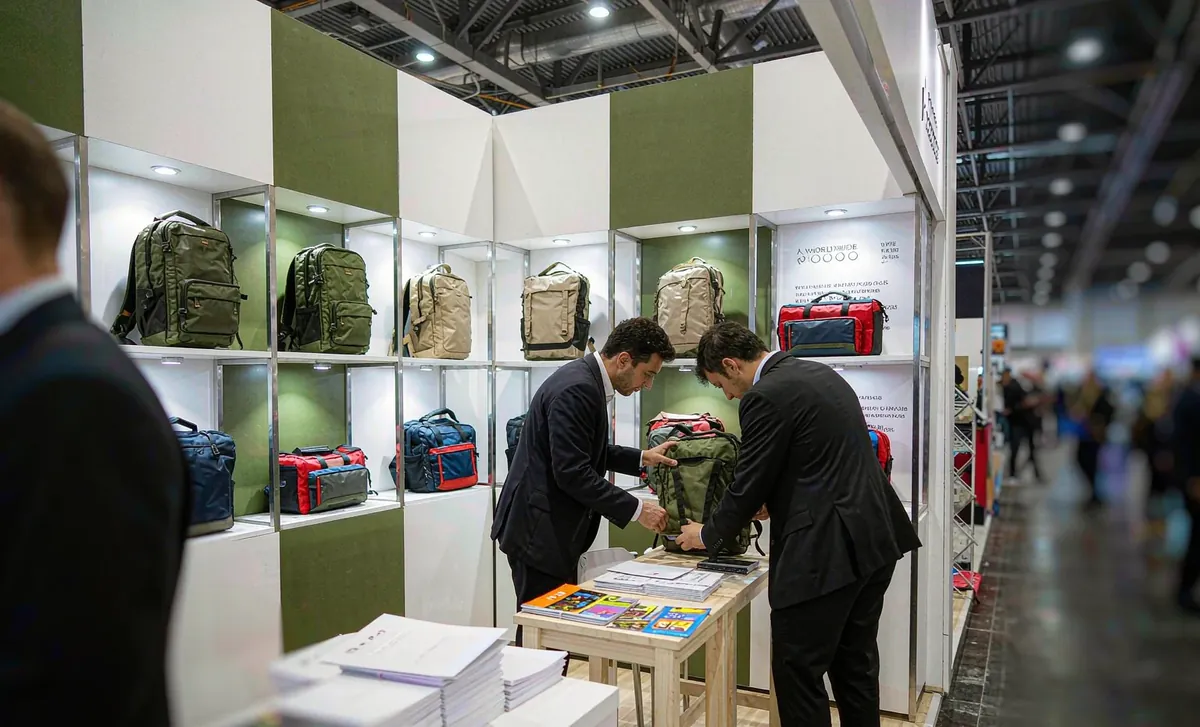
Our Commercial Terms in Plain English (MOQ, Payment, Lead Time, Incoterms)
Commercial terms are where most supplier relationships quietly go wrong, usually because something was assumed rather than stated. We would rather put every number on the table at quotation stage, including the ones that are inconvenient, than discover them in an email exchange three weeks before your ship date. What follows is the standard framework. Anything that deviates from it is confirmed in writing on your quotation.
Minimum Order Quantity
Our MOQ is 500 pieces per style and colourway. This is a line-economics number, not a negotiating posture. Below roughly that quantity, the changeover time, the fabric minimum from the mill, the trim minimums and the inspection setup cost more than the margin in the order, and the result is a price that makes neither of us happy. The minimum applies equally to first orders and reorders. Where a buyer wants to test several colourways, we can often run them as a combined colour split against a single fabric booking, which keeps the total at 500 while giving you the shelf variety.
Sampling and Production Timing
Physical samples take 6 to 10 working days from specification sign-off. Complex constructions — multi-compartment welded shells, integrated frames, unusual closure geometry — run 12 to 15 working days, because the fixture has to be made before the sample can be built properly. Bulk production is 35 to 50 days after sample approval and deposit. The 35-day end of that range assumes confirmed material availability and a line booking; the 50-day end covers peak season and programs with long-lead or custom-dyed material.
Payment and Incoterms
Standard terms are T/T with a 30% deposit to confirm the booking and release material, and the 70% balance before shipment. We quote FOB Xiamen as the baseline because it gives you a clean, comparable number that excludes freight and insurance. We are glad to quote CIF or DDP where you want a landed figure, and we will break the freight, insurance and duty components out separately so that you can see what you are paying for and compare it against your own forwarder's rate.
| Term | Our standard | What moves it |
|---|---|---|
| MOQ | 500 pcs per style / colourway | Combined colour splits against one fabric booking |
| Sampling | 6–10 working days | 12–15 working days for complex welded constructions |
| Bulk lead time | 35–50 days after sample approval | Season, material lead time, order size, line booking |
| Payment | T/T 30% deposit, 70% before shipment | Longer relationships move to documented alternative structures |
| Incoterms | FOB Xiamen | CIF and DDP quoted with components shown separately |
| Inspection | AQL 2.5, ISO 2859-1 | Defect classification agreed before production starts |
| Warranty | 12 months against manufacturing defects | Excludes abrasion, misuse and normal wear |
What Changes a Price After Quotation
Quoted prices hold for the validity period stated on the quotation, and they are built on stated assumptions. Four things move them, and we would rather name them now. A change in fabric specification or coating weight. A change in hardware brand, because a genuine branded buckle and a look-alike are not the same line item. An additional testing or certification requirement that we did not know about at quotation. And a change in packaging specification, particularly carton board grade, which is more expensive than buyers expect and far cheaper than a claim.
Currency, freight and raw material markets move as well. Where a program runs on a rolling forecast, we will agree a price review mechanism up front rather than renegotiating under pressure mid-season.
Risk Management: Capacity Reservation, Raw Material Buffer, Backup Lines
Sourcing from any factory carries risk, and any supplier who claims otherwise is either naive or dishonest. What we can do is shorten the gap between something going wrong and you hearing about it, and build enough slack into the system that a single disruption does not become a missed season. This section sets out the specific mechanisms, because "we take risk seriously" is not a plan.
Capacity Reservation
Capacity is allocated against confirmed bookings, and a booking is made against a deposit. Buyers who share a rolling forecast — even a rough one covering the next two quarters — get first claim on line time, which matters most in the September-to-December window before Chinese New Year and during the spring build for Northern Hemisphere summer goods. Reservation does not require a purchase order for the full forecast; it requires enough visibility for us to book fabric and hold a slot instead of promising to try.
Raw Material Buffer
We hold buffer stock on the inputs that are slow to replace and specific to a program: custom-dyed or custom-printed coated fabric, immersion-rated zips, branded hardware in non-standard colours, and specialised insulation foam. Running stock covers the standard shells — 500D, 840D and 1000D TPU laminates, 420D nylon ripstop, PVC 500D. The buffer level is reviewed quarterly against actual consumption, so it reflects what programs really used rather than what we guessed when we set it.
The point of the buffer is not to eliminate the mill lead time. It is to give us enough runway to solve a mill problem without touching your ship date.
Backup Lines and Alternate Routing
Seven lines give us internal redundancy. If a line is down for maintenance, a fixture modification or a material hold, the program can be moved to a line of the same construction type with the fixture, the pattern, the approved shade reference and the test history already in place. Where a process is bought in rather than done in-house, we keep a qualified alternate supplier who has already run that process for us, and we say so rather than presenting the whole chain as our own.
Tooling, Patterns and Institutional Memory
Every weld fixture, cutting die and pattern we have ever built is labelled, stored and cross-referenced to its program. Approved lab dips are kept as physical shade cards. Test records, including the ones for batches that failed and what we did about them, are retained. This is what makes a reorder three years later a scheduling exercise rather than a development project, and it is the practical difference between a supplier with a long history and one that simply claims one.
When Something Does Go Wrong
Problems are reported, not hidden. If a material lot fails incoming inspection, if a weld trial does not reach the peel target, or if a line falls behind, your merchandiser tells you what happened, what it does to the schedule, and what we are doing about it — in writing, with a date. Delivering bad news late is the single fastest way to lose a customer, and we would rather have the conversation early. Our warranty runs twelve months from the date of shipment against manufacturing defects, excluding abrasion, misuse and normal wear, and claims are handled against the batch record rather than re-litigated from scratch.
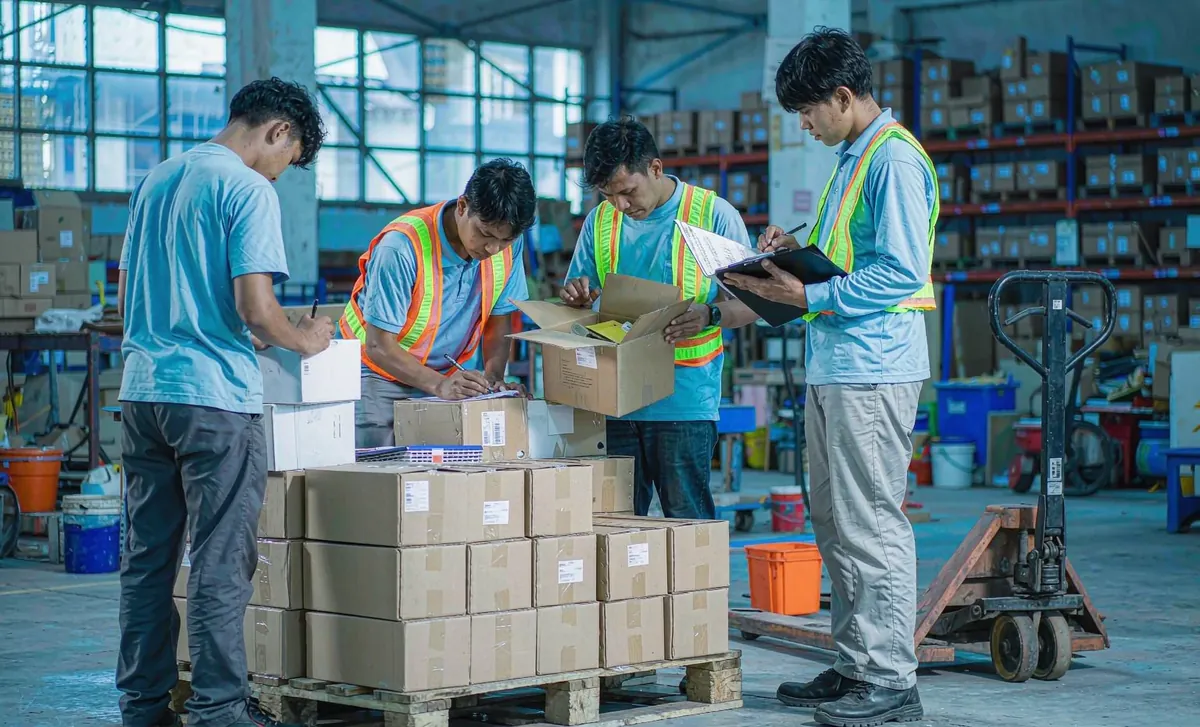
Sustainability and Compliance Commitments We Can Evidence
Sustainability claims in this industry are cheap and largely unenforced. We would rather describe what we can show you than assemble a list of adjectives. Our approach is straightforward: hold the audits we say we hold, test materials against the regulations that apply to your market, and avoid making any claim we could not support with a document if you asked for one.
Social Compliance and Quality Systems
Our QC runs to ISO 9001-aligned procedures and we hold no certificate. No BSCI audit is currently in place, and we can host one for your compliance team. That audit would cover working hours, wages and benefits, health and safety, and the absence of child or forced labour — the areas a European or North American retailer's own compliance team will check before onboarding you as a supplier. ISO 9001-aligned procedures govern the documented work behind our inspection records, corrective actions and traceability. Audit documentation can be shared with qualified buyers under NDA, and we would rather you read the actual reports than a summary we wrote about them.
Chemical and Product Compliance
Material compliance is handled per market rather than generically. For the European Union we work to REACH requirements on substances of very high concern and to RoHS where hardware and electronic-adjacent components are concerned. For the United States we support CPSIA and children's product certificate requirements where a program is aimed at children. CE marking is supported where a product category genuinely falls within its scope, and we will tell you when it does not. Where a material comes with an OEKO-TEX certification from the mill, we pass the certificate through with the batch rather than rebranding it as our own.
Our standard practice is to work from your restricted substances list where you have one. Send it with the enquiry and we will confirm in writing that the specified fabric, coating, hardware and print inks meet it, with mill declarations and test reports attached.
Material Choices: PVC, TPU and Recycled Content
We run both PVC and TPU and we are honest about the trade-off. PVC 500D with a coating around 0.35 mm is tough, cheap and abrasion resistant, and it remains the right answer for heavy fishing and work applications — but it relies on plasticisers and is harder to recycle at end of life. TPU film, typically 0.1 to 0.3 mm laminated to a 500D or 1000D polyester face, contains no plasticisers, stays flexible in the cold and is more straightforward to recover, at a higher material cost. PU back coating at 0.15 mm sits in between for water-resistant builds.
Recycled polyester face fabrics are available on request across most of our running shells. Where a buyer wants a recycled claim we confirm the certification chain with the mill and document it, because an unsupported recycled claim is exactly the kind of exposure a brand does not need.
What We Do on the Factory Floor
The largest environmental lever available to a cut-and-sew operation is material yield, so we spend effort there: marker nesting is reviewed before cutting, and offcuts from coated fabric are separated by polymer type where a recovery stream exists. On the compliance side, welding fume extraction is installed at the point of work and maintained on a schedule, which is both an operator health requirement and a quality requirement. Carton specifications are calculated from the actual transit profile so we are not shipping air or, worse, arriving with crushed corners that generate a full return.
We will not describe anything as eco-friendly without a specific, evidenced reason. If you need a claim for packaging, a claim for recycled content or a claim about a substance, ask us and we will either document it or tell you we cannot.
Working Across Time Zones: Communication Standards
Most sourcing frustration is not caused by bad quality. It is caused by silence — an email that goes unanswered for four days, a question that gets a partial answer, a revision that somebody did not read. Time zone difference makes that worse, because every unanswered message costs a full day. We have written standards about it because we think it is a production issue, not a politeness issue.
Response Commitments
Enquiries are quoted within 24 hours. That is a working-day commitment, not a calendar-day one, and we will tell you the specific date on the quotation. Once a program is live, you get a written production update every week, with photographs of the line and of the inspection record rather than a paragraph saying that everything is on schedule. If something is late, the update says so, says why, and gives a revised date. If a question needs a technical answer from engineering or QC rather than from your merchandiser, we tell you that it is with engineering and when it will come back.
We work on China Standard Time, UTC+8, with no daylight saving. That means the overlap with Europe is a morning window and the overlap with North America is an evening one. We staff both deliberately, so a buyer in Hamburg and a buyer in Los Angeles both get a same-day answer rather than a message that crosses in the night.
What to Send With an Enquiry
The quality of a quotation depends almost entirely on the quality of the brief, and four things make the difference. A specification or tech pack with dimensions, materials and construction notes. A reference sample or clear photographs if a drawing does not exist. Target quantity per style and colourway, plus an indication of whether this is a one-off or a repeat program. And your required compliance or testing, including any restricted substances list. Missing any of these does not stop us quoting, but it does mean the quote carries assumptions, and assumptions are what get renegotiated later.
Document Discipline
Every tech pack, specification sheet and sample revision carries a revision number and a date, and we build to the revision you confirm in writing. When you change something, we do not start until we have the revised document and a confirmation email. That sounds bureaucratic and it is the single cheapest insurance available against a container of bags built to the wrong drawing.
Inspection reports, test results and packing data are issued as documents you can forward to your own team without reformatting. If your quality department uses a specific report template, send it at the start of the program and we will use it.
Holidays and Planned Absence
Two periods close or slow the plant every year: Chinese New Year, which typically falls in late January or February, and the National Day period in early October. We publish shutdown dates months ahead and plan production around them, and we will tell you at quotation stage if your requested ship date falls inside one of these windows. Outside those, your merchandiser gives notice of any absence longer than a day and names who is covering.
What a First Order With Us Looks Like, Week by Week
The most useful thing we can give a new buyer is a realistic picture of how the first twelve weeks actually run, including the parts where we are waiting on you. Below is the standard sequence for an OEM program. ODM programs skip the pattern development stage and typically save two to three weeks.
Weeks 0 to 2: Specification and Quotation
You send a brief; we quote within 24 hours. The next stage is the part most buyers underestimate: specification review. Engineering reads your tech pack against what we can actually weld and stitch, and comes back with questions and, where relevant, suggested changes. This is where we might propose moving a weld line, opening a corner radius, changing a gusset or substituting a coating weight. Sign-off on the final specification is what starts the clock, and it is worth spending the time here rather than discovering the problem in week six.
Weeks 2 to 4: Sampling
Pattern making, marker planning, material preparation and, for welded styles, fixture manufacture. Physical samples take 6 to 10 working days from sign-off, or 12 to 15 working days for complex constructions. Samples are photographed against the specification before they ship, and you receive the images with the parcel. Most programs need one revision; the second sample usually runs faster because the pattern and fixture already exist.
Weeks 4 to 5: Approval, Deposit and Booking
Sample approval triggers the commercial step: a 30% T/T deposit confirms your line booking and releases material orders. We issue a production schedule showing material arrival, cutting date, line date, inspection date and booked ship date. If you need a third-party inspection, this is when to book it, so that the inspector's availability does not become your critical path.
Weeks 5 to 10: Production
Material arrives and goes through incoming inspection, including hydrostatic head testing per roll and a weld peel trial where the construction depends on it. Cutting, welding or sewing, taping, assembly and finishing run across the allocated lines with in-process inspection at the stations where an error becomes permanent. You receive weekly written updates with photographs throughout this period.
Weeks 10 to 12: Inspection, Packing and Shipment
Final inspection runs to AQL 2.5 under ISO 2859-1, against a defect classification agreed with you before production. You receive the report, photographs and, where requested, video. Packing follows the confirmed carton specification, with marking, labelling and barcodes verified before sealing. The balance payment of 70% is due before shipment, after which we handle export declaration, loading and the document set, and send the pre-alert to your customs broker.
| Stage | Timing | What we do | What we need from you |
|---|---|---|---|
| Enquiry and quote | 24 hours | Priced quotation with stated assumptions | Brief, quantity, target compliance |
| Spec review | Week 1–2 | DFM feedback and written specification | Decisions on proposed alternatives |
| Sampling | 6–10 working days | Pattern, fixture, physical sample | Written approval or revision notes |
| Booking | Week 4–5 | Line slot, material release, schedule | 30% deposit, packing specification |
| Production | 35–50 days | IQC, cutting, welding, sewing, taping, assembly, IPQC | Availability for specification queries |
| QC and shipment | Week 10–12 | AQL 2.5 inspection, packing, export docs | 70% balance, consignee and broker details |
The Two Things That Delay First Orders
In our experience, first orders slip for two reasons, and neither is on the sewing floor. The first is an incomplete packing specification — carton marking, labelling content, barcode placement — discovered at packing instead of confirmed at booking. The second is a specification change that arrives verbally mid-production and is not matched by a revised, numbered document. Both are avoidable, and both are worth twenty minutes of your time at the start.
Ready to start? If you have read this far, you are probably not looking for the cheapest quote in your inbox — you are looking for a waterproof bag manufacturer in China that will still be answering email in three years and whose tenth shipment will match the first. That is the business we have built since 2014 in Quanzhou, and it is the reason a large share of our annual capacity is booked by accounts that began with a single 500-piece trial. Send us a specification, a tech pack, a reference sample or even a rough sketch with a target quantity and a target market, and we will come back to you within 24 hours with a priced quotation that states its assumptions. Email service@junyuanbags.com and your enquiry goes directly to the merchandiser who will handle your program, not to a shared queue.
If your question is quicker asked than written — whether a geometry is weldable, whether a fabric is available, whether a ship date is realistic — message us on WhatsApp at https://wa.me/8617750020688 and we will answer during working hours in China Standard Time. You can also review our manufacturing capability in detail, read how we document conformance on the quality control page, or go straight to the contact page to open a project. Either way, you will be speaking to the people who own the lines.
Frequently Asked Questions
Are you a factory or a trading company?
QUANZHOU JUNYUAN BAGS is the contracting entity your purchase order is placed with, not a broker. Waterproof bag programmes have run on seven dedicated production lines at a validated partner facility in Quanzhou, Fujian since 2014 — 4,950 m² of SGS-validated floor space, 137 employees and 149 machines including 126 sewing stations. The cutting, welding, sewing, taping, assembly, testing and packing of your order happen in that building, under our own QC. We do buy certain components in, such as moulded hardware and branded zips, and we are explicit about which steps our QC covers and which come from qualified suppliers.
What is your minimum order quantity?
Our MOQ is 500 pieces per style and colourway, on first orders and on reorders alike. The figure reflects line changeover time, fabric mill minimums and inspection setup, not a negotiation starting point. If you want to launch several colours of the same style, we can usually run a colour split against a single fabric booking, which keeps your total at the 500-piece minimum while giving you the variety you need on shelf.
How long does it take to make a sample?
Physical samples take 6 to 10 working days once the specification is signed off. Complex constructions — multi-compartment welded shells, integrated frames or unusual closure geometry — take 12 to 15 working days, because the weld fixture has to be built before a representative sample can be made. We send photographs of the sample against your specification before it ships, so you can start your review before the parcel arrives.
What is your bulk production lead time?
Bulk production runs 35 to 50 days after sample approval and deposit. The short end assumes confirmed material availability and a booked line slot; the long end covers peak season, custom-dyed or printed fabric, and larger programs. We issue a written production schedule at the booking stage showing material arrival, cutting, line date, inspection date and booked ship date, so you can see the critical path rather than just the end date.
Which payment terms and Incoterms do you use?
Standard payment is T/T with a 30% deposit to confirm the booking and release material, and the 70% balance before shipment. We quote FOB Xiamen as the baseline, because it gives you a clean number that excludes freight and insurance and can be compared directly against another factory. CIF and DDP quotations are available on request, and we break out the freight, insurance and duty elements separately so you can see exactly what you are paying for.
Can you sign an NDA before I share my design?
Yes. We routinely sign mutual non-disclosure agreements before receiving a tech pack, drawing or reference sample, and we are happy to work from your template. Internally, customer designs are held on a restricted directory accessible only to the merchandiser and engineers assigned to the program, and we do not photograph or display a customer's product without written permission. Tooling and patterns built for you are not used for any other customer.
What waterproof ratings can you test to?
We verify hydrostatic head in-house, testing lightweight shells at 10,000 mm and heavy-duty builds at 20,000 mm, and we run seam peel testing to confirm welds at or above 8 N/cm. Closure performance is checked against IPX6 spray, IPX7 temporary immersion and, where the construction supports it, IPX8 continuous immersion. Abrasion, colour fastness and 48-hour salt spray on hardware finishes are also run on the same bench.
Which materials do you normally work with?
Our running shells are 500D, 840D and 1000D polyester with TPU lamination, 420D nylon ripstop for weight-sensitive designs, and PVC 500D for heavy-duty work. Typical specifications are PU back coating at 0.15 mm, TPU film between 0.1 and 0.3 mm, and PVC coating around 0.35 mm. Water-resistant zips are YKK AquaGuard in #5 and #8, immersion sealing uses TIZIP MasterSeal 10, and insulation is PE foam at 25 kg/m³ or EPE at 30 kg/m³.
Can you supply recycled or PVC-free material options?
Both are available. Recycled polyester face fabrics can be specified across most of our running shells, and where you want to make a recycled content claim we confirm the certification chain with the mill and document it rather than making an unsupported statement. PVC-free constructions replace PVC 500D with TPU laminates, which removes plasticisers from the build and improves low-temperature flexibility, at a higher material cost that we will show as a separate line.
How do you control colour matching across repeat orders?
Colour is controlled at the mill with an approved lab dip, and we retain the physical shade card for every approved program. Incoming rolls are matched against that card in a standard light booth under controlled conditions, and panels for a given order are cut from a single fabric batch wherever possible. Where a second batch is unavoidable, we cut complete units from one batch rather than mixing panels within a bag. Pantone or physical references from you are preferred over screen images.
Do you offer ODM products as well as custom OEM?
Yes, and ODM is often the better route for a first program. We hold existing platforms across dry bags, waterproof backpacks, duffels, cooler bags, fishing bags and sports bags, and you can change fabric, colour, hardware, logo treatment and packaging on top of a proven pattern and existing fixtures. That removes development time, tooling cost and much of the sampling risk. Many buyers start on ODM to prove demand, then convert to a full OEM build once volume justifies it.
What does your quality inspection actually cover?
Inspection runs in three layers. Incoming inspection checks coated fabric before cutting: width, thickness, coating weight, adhesion, colour against the approved lab dip, and hydrostatic head per roll. In-process inspection sits at the points where a defect becomes permanent — after welding, after taping, before assembly closes a seam — checking weld continuity, tape adhesion, stitch density at 8 to 10 stitches per inch and hardware attachment. Final inspection runs to AQL 2.5 under ISO 2859-1, with defect classification agreed in advance.
Can I visit the factory or send my own inspector?
Both, and we encourage it. The plant is a single site in Quanzhou, roughly an hour and a half from Xiamen, so a buyer can walk the full process from roll store to packing dock, and can combine the visit with a fabric mill and a hardware supplier in the same day. Third-party inspectors are welcome at pre-production, during production and at final inspection. We provide the production schedule and the inspection area; the report is yours.
Who owns the tooling and moulds built for my product?
You do. Weld fixtures, cutting dies and patterns developed and paid for under your program are your property, and we hold them labelled and shelved against your account for future reorders. We do not use your tooling, patterns or designs for any other customer, and we will release or transfer them on written request. If we contribute tooling at our own cost for a shared process, that is stated on the quotation so ownership is never ambiguous.
What happens if something goes wrong with my order?
You hear about it early and in writing. If a material lot fails incoming inspection, if a weld trial misses the peel target, or if a line falls behind schedule, your merchandiser tells you what happened, what it means for the date and what we are doing, with a revised date attached. Our warranty covers manufacturing defects for twelve months, excluding abrasion, misuse and normal wear, and claims are handled against the batch record rather than argued from memory.