Waterproof Travel Bags Manufacturer
We manufacture waterproof travel duffels, weekender bags and carry-on travel bags for outdoor and travel brands. Built on welded TPU/PVC with taped zippers, the
Waterproof Travel Bags: What Separates a Travel Bag from a Dry Bag
A waterproof travel bag and a dry bag may share the same welded TPU skin, but they are built for different jobs. A dry bag is usually a simple cylinder: roll the top, clip the buckle, throw it in a kayak. It keeps contents dry, but it rarely organises them. A travel bag, by contrast, is expected to move through airports, ride in overhead bins, slide under seats, sit on hotel trolleys and still open flat enough that a user can find a pair of clean socks at midnight. As a waterproof travel bags manufacturer, we engineer for mobility first and water protection second, because a bag that keeps gear dry but is painful to carry does not sell.
The difference starts with shape. Dry bags are often round or tapered to shed water and strap onto boats. Travel bags are rectangular or barrel-shaped to maximise packing volume and fit airline gauges. We build weekender duffels, carry-on travel bags, expedition duffels, rolling duffels, garment bags and travel tote sets, each with its own dimensional target. Internal layout matters too: a travel bag needs at least one zip pocket for passports, a sleeve for a laptop or tablet, a place for shoes and often a divider between clean and dirty clothes. Our OEM travel duffel bag lines add these features while keeping the shell fully welded.
Access is another separator. A dry bag opens only at the roll-top. A travel bag needs a wide mouth, sometimes a U-shaped zip, sometimes a clamshell opening, sometimes both. When we add a zip to a waterproof travel bag, we specify YKK AquaGuard #5 or #8, or a TIZIP MasterSeal 10 if the bag must survive full submersion. Every zip is backed by a storm flap and sealed with 20 mm taped seams. Stitch density on sewn panels sits at 8–10 SPI to maintain seam strength under load.
Carry ergonomics also set travel bags apart. A dry bag may have one basic shoulder strap. A travel duffel needs padded haul handles, a removable shoulder strap with a sliding pad, grab loops on the ends and, for larger sizes, a trolley sleeve that slides over a rolling suitcase handle. We use Duraflex acetal hardware and 25 mm to 50 mm webbing depending on the load. Handles are bartacked at stress points and tested to a 90 kg pull before we approve a sample.
Finally, the surface finish and branding on a travel bag are part of the product identity. Buyers expect a clean exterior that looks at home in a business lounge as well as on a trailhead. We offer debossed logos, screen printing, woven labels and metal plates, all applied without piercing the waterproof membrane. If you are looking for a custom weekender bag manufacturer, this balance of aesthetics and function is exactly where our factory adds value.
Three Engineering Decisions That Separate the Two Categories
The first decision is dimensional discipline. A dry bag can be a few centimetres oversized because it lives in a boat hatch. A travel bag has to meet a gauge, a seat pitch or a hotel lift, so we pattern every panel against a fixed external envelope and then work backwards to find usable volume. That is why our travel shells use flat-welded corners instead of round ones, and why we publish both external and internal measurements on every spec sheet.
The second decision is serviceability. Dry bags are effectively disposable at the end of a long season. Travel bags are expected to last for years, so closures, buckles and strap anchors must be replaceable or repairable. We keep spare-part sets for buckles, sliders and strap assemblies for every active style, and we recommend that brands carrying a travel range hold a small percentage of spare hardware against warranty claims.
The third decision is documentation. A travel bag ships into regulated retail channels, so it needs a material declaration, a care label and, in many markets, fibre content and country-of-origin marking. We provide these documents with the pre-production sample so that your compliance team is not waiting on paperwork at the point of booking freight.
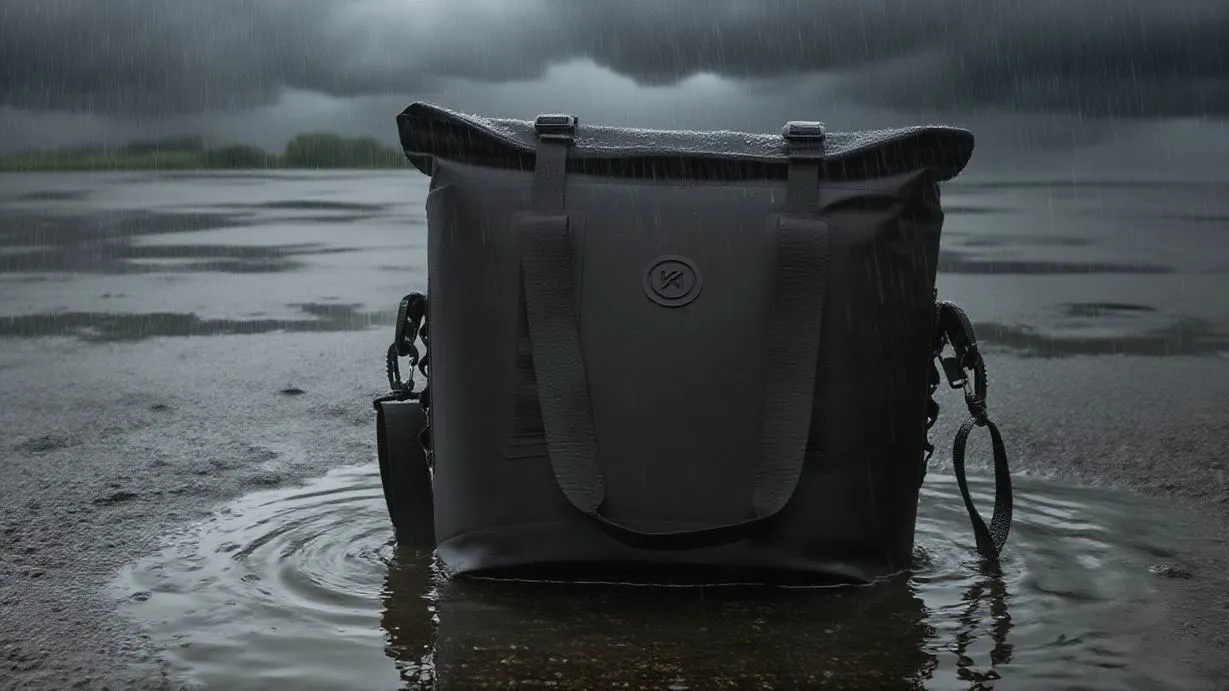
Our line is not a repurposed dry-bag catalogue. Each style starts from a travel use case, then we select the material weight, closure type and carry system to match. If you want bags that can move from taxi to tarmac to trail, this is the category to develop.
The Five Travel Bag Formats We Build (Weekender, Carry-On, Expedition, Rolling, Garment)
We organise our travel bag collection into five formats. Each format solves a specific trip length and transport mode. Within each format we can adjust capacity, pocket layout, hardware colour and branding, but the silhouette and carry logic stay consistent so that sampling and mould costs stay under control.
Weekender Duffel
The weekender duffel is a 30–40 L soft bag designed for two-to-four-day trips. It is the entry point for many brands because the tooling is light and the consumer need is broad. We build it with 500D TPU laminate for flexibility and a lightweight feel, or 840D TPU when the target retail price supports a tougher shell. A typical weekender measures roughly 50 cm x 28 cm x 28 cm, which fits comfortably in car boots and under train seats. We add a removable shoulder strap, padded grab handles and an internal zip pocket sized for a phone and wallet.
Carry-On Travel Bag
The carry-on travel bag sits at 40–55 L and is sized around airline cabin limits. This is the format most often requested as a waterproof carry-on bag OEM project. The key engineering challenge is hitting airline dimensions while preserving the rectangular packing volume. We aim for a boxy profile near 56 cm x 36 cm x 23 cm, with compression straps that let the user pull the bag inward if the overhead bin is tight. A trolley sleeve is standard, and we often spec YKK AquaGuard #8 zips for the main opening.
Expedition Duffel
When the trip moves from airports to dirt roads, the expedition duffel takes over. At 70–90 L, this bag is built from 1000D TPU laminate with RF-welded seams and reinforced corners. It is meant to be thrown into truck beds, dragged across docks and strapped to roof racks. We add haul loops on all six faces, daisy chains for lash points and a removable backpack harness on select models. The closure is almost always a roll-top with side release buckles because zip reliability becomes critical at these loads.
Rolling Duffel
The rolling duffel combines the packing shape of a duffel with the mobility of wheeled luggage. We use an internal telescoping aluminium trolley, inline skate wheels with sealed bearings and a moulded back panel that protects the frame. The shell is 840D or 1000D TPU, and the base is reinforced with an additional layer of PVC 500D to survive kerbs and baggage carousels. Wheel housing and handle mechanisms are sourced from certified suppliers and salt-spray tested for 48 hours.
Garment Bag
For business travel and formal events, we produce a fold-over garment bag that protects suits and dresses from rain and creasing. The bag opens flat to roughly 110 cm x 60 cm, with an internal hanger hook, internal tie-down straps and a zippered shoe pocket. When folded for carry, it becomes a slim 60 cm x 50 cm x 12 cm package that qualifies as a personal item on most airlines. We use 420D nylon ripstop with TPU lamination to keep weight under 1.2 kg.
| Format | Capacity | Typical Dimensions | Primary Shell | Best Use |
|---|---|---|---|---|
| Weekender Duffel | 30–40 L | 50 x 28 x 28 cm | 500D TPU | Road trips, short breaks |
| Carry-On Travel Bag | 40–55 L | 56 x 36 x 23 cm | 840D TPU | Airline cabin travel |
| Expedition Duffel | 70–90 L | 75 x 40 x 40 cm | 1000D TPU | Remote / adventure trips |
| Rolling Duffel | 70–100 L | 80 x 42 x 35 cm | 840D / 1000D TPU | Airport + hotel transport |
| Garment Bag | 35–50 L flat | 110 x 60 cm open | 420D nylon ripstop + TPU | Business / formal travel |
Each format can be adapted. If your brand needs a hybrid carry-on/weekender, or an expedition duffel with a rolling base, we can combine platforms. Browse our full range on the products page or read about our waterproof backpacks for complementary carry options.
Capacity Planning: 30 L to 120 L and What Each Size Actually Carries
Capacity numbers are easy to print on a label, but they do not tell a buyer what fits inside. We prefer to describe each size by what it actually carries on a real trip. That approach reduces returns, improves reviews and makes your product pages more useful than the competition.
At 30–40 L, a weekender holds a pair of shoes, two outfits, a toiletry bag, a light jacket and a small electronics pouch. It is the right size for a Friday-to-Sunday trip or a gym-to-work routine. The bag stays light enough to carry comfortably with one strap, and it fits under an aeroplane seat if needed. We usually specify a single-layer 500D TPU shell here to keep the empty weight below 0.8 kg.
At 40–55 L, the carry-on size swallows a week’s clothing for a moderate packer, including a second pair of shoes and a folded jacket. This is the volume travellers use most for domestic flights and European city breaks. The shell moves up to 840D TPU because the bag is heavier when loaded, and abrasion resistance becomes more important on baggage belts and cobblestones.
At 70–90 L, the expedition size is built for multi-week trips or gear-intensive activities. It holds a sleeping bag, a tent share, cooking gear, spare boots and several days of clothing. We reinforce the base, add compression straps and use 1000D TPU. At this scale, seam welding quality is critical; a 90 L bag loaded to 25 kg creates enough force that a weak seam will fail within a few trips.
At 90–120 L, the gear duffel is used by film crews, dive teams, ski groups and military contracts. It can carry two large duffels’ worth of equipment in a single bag with a wide mouth opening for easy access. We often pair this size with a rolling chassis, haul handles rated above 100 kg and a fully taped main zip if the customer requests zip access over a roll-top.
How Capacity Interacts With Accessory Sets
Stated volume and usable volume are two different numbers. A manufacturer can quote 45 L by filling the shell with water, but the moment you add a padded laptop sleeve, a shoe compartment and a wet pocket, some of that space is consumed by structure. We budget for this: internal modules on our travel bags take no more than 10 percent of the nominal volume, and we state the remaining packing volume on the sample report so your e-commerce copy does not overpromise.
Packing cube sets change the maths in your favour. Three cubes that nest efficiently inside a 45 L duffel typically improve usable space because clothing compresses into rectangles rather than settling into gaps. We cut cubes to the internal footprint of each bag rather than to generic dimensions, which is why we ask for the cube specification at the same time as the bag. Bundling a cube set also lifts the average order value without adding a new style to your MOQ commitment.
| Capacity Range | Typical Load | Shell Weight | Carry Method |
|---|---|---|---|
| 30–40 L | 2 outfits, shoes, toiletries, tablet | 500D TPU, ~0.7 kg empty | Shoulder strap + handles |
| 40–55 L | 5–7 days clothing, spare shoes, jacket | 840D TPU, ~1.1 kg empty | Shoulder strap + trolley sleeve |
| 70–90 L | Multi-week gear, boots, sleeping bag | 1000D TPU, ~1.6 kg empty | Backpack harness + haul loops |
| 90–120 L | Dive/ski/film gear, shared team loads | 1000D TPU + PVC base, ~2.4 kg | Rolling chassis + multiple handles |
Capacity is also a function of pocket layout. A bag with too many external pockets loses usable volume and creates snag points. A bag with none forces the user to dig. We design pockets to add no more than 10–15 percent to the stated volume so that the main compartment remains honest. For travel brands that also need insulated side lines, our cooler bags share the same welding expertise with added foam layers.
Airline Cabin Compliance: Dimensions, Weight and the Bags That Pass
One of the most common questions we receive from travel brands is whether a bag will pass airline carry-on rules. The honest answer is that no single bag passes every airline, because limits vary by carrier, route and ticket class. What we can do is design to the most common international standard and give you the dimensional data to market responsibly.
The most widely referenced carry-on limit is 56 cm x 36 cm x 23 cm, or 22 x 14 x 9 inches, used by major North American and European full-service carriers. A bag built to those external dimensions, including wheels and handles, will fit the majority of overhead bins. Budget airlines are stricter: many limit personal items to 40 cm x 30 cm x 20 cm and carry-ons to 55 cm x 40 cm x 20 cm. Weight limits range from 7 kg to 12 kg, with some Asian carriers enforcing 7 kg strictly.
Our 40–55 L carry-on travel bag is engineered around the 56 x 36 x 23 cm target. We leave a 1.5 cm tolerance on each dimension to account for fabric swell when the bag is packed. The trolley sleeve adds almost no external bulk because it sits against the back panel. If your market is budget-airline heavy, we can produce a slimmer 55 cm x 35 cm x 20 cm version that keeps volume closer to 40 L.
Weight is just as important as size. A 1.1 kg empty bag leaves nearly 6 kg of contents under a 7 kg limit. We control weight by choosing the right denier, using lightweight hardware and avoiding unnecessary foam padding. For comparison, a rolling carry-on built from 1000D TPU with an aluminium frame usually starts at 3.5 kg, which already consumes much of a strict weight allowance.
| Carrier Type | Typical Max Dimensions | Weight Limit | Our Matching Bag |
|---|---|---|---|
| Major full-service | 56 x 36 x 23 cm | 7–12 kg | 45 L carry-on duffel |
| European budget | 55 x 40 x 20 cm | 10 kg | 40 L slim carry-on |
| Ultra-low-cost personal item | 40 x 30 x 20 cm | 7 kg | 25–30 L under-seat tote |
| Asian full-service | 56 x 36 x 23 cm | 7 kg | 42 L lightweight carry-on |
We recommend that brands add a sizing note to product pages and hangtags, stating the bag is designed to common airline limits but advising customers to confirm with their carrier. This reduces chargeback risk and customer service workload. If you need luggage that is checked rather than carried, our larger expedition and rolling duffels work as hold luggage while keeping contents dry on rainy tarmacs.
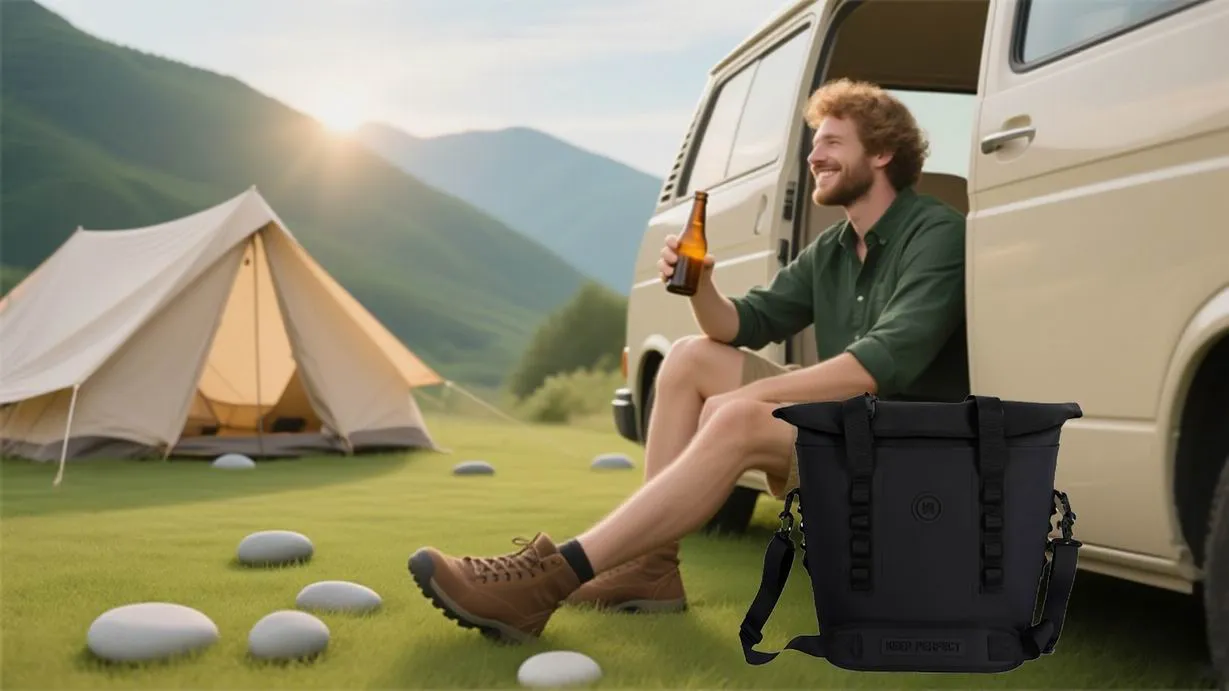
Shell Materials for Travel: 500D vs 840D vs 1000D TPU Laminate
The shell fabric is the largest cost and performance driver in any waterproof travel bag. We work almost exclusively with polyester base cloths laminated with TPU film because the combination gives us weldability, abrasion resistance and a clean matte finish. The three weights we use are 500D, 840D and 1000D, and each has a place in the line.
500D polyester TPU laminate is our lightest option. The base cloth weighs around 170 g/m² and is coated with a 0.1 mm TPU film on the inside face. It is flexible, quiet and packs down small. We use it for weekender bags, tote bags and garment bags where the load is modest and the user values low weight. The hydrostatic head on this material is ≥10,000 mm, which is enough for heavy rain and brief immersion.
840D polyester TPU laminate is the workhorse. At roughly 280 g/m² with a 0.2 mm TPU film, it offers a noticeable step up in abrasion resistance without becoming stiff. This is the material we specify for 40–55 L carry-on bags and for rolling duffels where the shell will contact baggage carousels and vehicle cargo areas. The hydrostatic head moves to ≥15,000 mm and the welded seam peel strength stays above 8 N/cm.
1000D polyester TPU laminate is the heavy-duty choice. The base cloth is around 350 g/m² and we pair it with a 0.25–0.3 mm TPU film for maximum puncture resistance. Expedition duffels, gear haulers and any bag expected to live on a roof rack or in a truck bed get this treatment. The material is less pliable, so we pattern the panels with relief cuts and use bar-tacked stress discs at corners. Hydrostatic head is ≥20,000 mm and the surface survives Martindale abrasion testing beyond 25,000 cycles.
What the Laminate Does Beyond Keeping Water Out
The TPU film on the reverse of the cloth is doing more work than most buyers realise. It is the layer that melts under radio frequency energy to create a welded seam, so its thickness and melt index control both weld strength and cycle time. It also determines how the bag behaves in cold weather: our standard travel laminate stays flexible to minus 20 degrees Celsius, which matters for ski and winter travel programmes where a stiff shell will crack at the fold line.
We also test the laminate for hydrolysis and UV stability. A travel bag spends a surprising amount of time in direct sun on a beach, a boat deck or a hotel balcony. Our standard film carries a UV stabiliser package and passes a 40-hour xenon-arc exposure test with a colour change of no more than grade 4 on the grey scale. Buyers sourcing for tropical destinations should specify this explicitly, because unstabilised film can chalk and delaminate within a single season.
| Material | Weight | TPU Film | Hydrostatic Head | Typical Application |
|---|---|---|---|---|
| 500D polyester TPU | ~170 g/m² | 0.1 mm | ≥10,000 mm | Weekenders, totes, garment bags |
| 840D polyester TPU | ~280 g/m² | 0.2 mm | ≥15,000 mm | Carry-on duffels, rolling duffels |
| 1000D polyester TPU | ~350 g/m² | 0.25–0.3 mm | ≥20,000 mm | Expedition duffels, gear haulers |
Beyond the three standard weights, we can source 420D nylon ripstop for lightweight shells and PVC 500D for budget promotional lines. We do not recommend PVC for high-end travel bags because it is heavier, less cold-flexible and harder to weld cleanly at taped seams. If your brand has specific material requirements, our sourcing team can submit lab reports for colourfastness, hydrostatic head and seam peel before production begins. Our manufacturing page explains how we qualify each fabric lot.
Closure Systems: Roll-Top, Taped Zip and the Hybrid Approach
The closure is the weakest point in any waterproof bag. A fabric can be rated to 20,000 mm hydrostatic head, but if the opening leaks, the bag fails. We offer three closure strategies for travel bags, and we choose each one based on how the bag will be used and how often it needs to be opened.
Roll-top closures are the most waterproof. A user folds the top three times and clips the buckles, creating a physical barrier that cannot unzip accidentally. Roll-tops are standard on expedition duffels and river bags because they survive submersion and abrasion. The downsides are slower access and a slight loss of usable length, because the rolled portion consumes 10–15 cm of the bag height. We build our roll-tops with at least three stiffened folds and 25 mm side-release buckles rated to 25 kg pull.
Taped zips offer convenience. A water-resistant zip like YKK AquaGuard #5 or #8 has polyurethane-coated teeth that shed rain, and the seam beneath is sealed with 20 mm waterproof tape. This is the closure we use on carry-on travel bags and garment bags where the user needs to open the bag frequently. Taped zips are not intended for full submersion, but they pass IPX5 and light rain room testing. We always add a storm flap over the zip to protect the slider entry point.
Hybrid closures combine both. A bag can have a taped zip main opening for daily access and a roll-top storm collar that closes over the zip when conditions turn severe. This is popular on 70–90 L expedition duffels that are carried through airports and then used on boats. The extra closure adds cost and weight, but it removes the compromise between access and protection.
We also use TIZIP MasterSeal 10 zips when a customer needs true submersion-proof zip access. These are much more expensive than AquaGuard zips and require careful installation, but they allow a duffel to open wide while remaining waterproof to IPX7. TIZIP sliders need periodic lubrication, so we include care instructions on the hangtag.
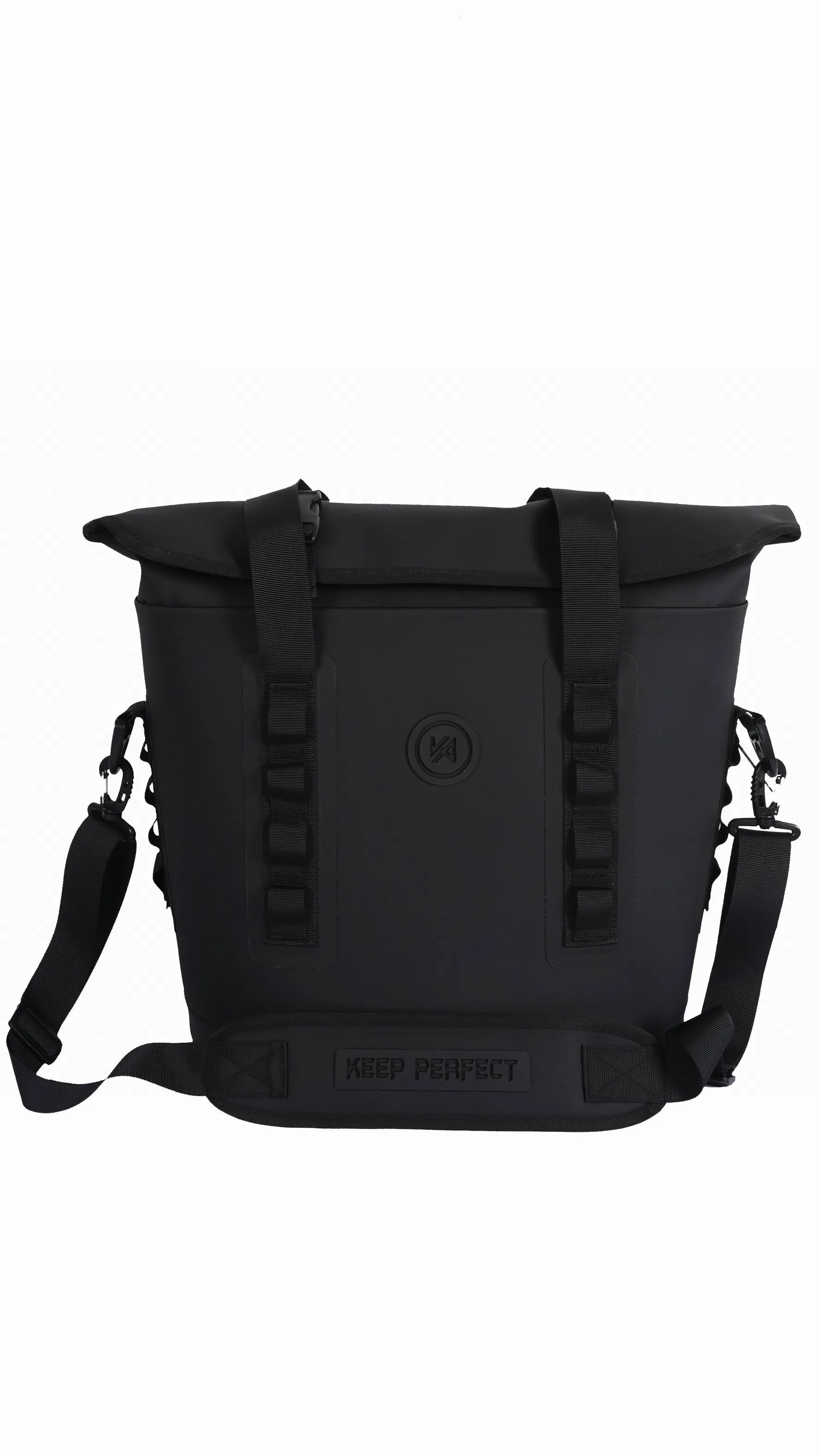
Seal quality is verified in our rain room and submersion tests. A sample closure is cycled 500 times, loaded and sprayed for 30 minutes. If any moisture passes, we reject the component and revise the pattern or seam tape width. For more detail on how we validate waterproofing, see the testing section on our quality page.
Carry Systems: Shoulder Straps, Trolley Sleeves and Load Transfer
A travel bag is only as good as its carry system. Load transfer, handle placement and hardware durability determine whether a bag feels comfortable at the airport or becomes a liability by gate change three. We design carry systems by load, not by style, so each size gets the straps, padding and attachment points it needs.
For 30–40 L weekenders, a single removable shoulder strap is usually enough. We use 38 mm webbing with a 6 mm PE foam pad and a non-slip underside. The pad slides so the user can centre it on the shoulder, and the strap attaches to metal D-rings or Duraflex swivel hooks. Haul handles at the centre and ends of the bag let the user grab it quickly from a car boot or overhead bin.
For 40–55 L carry-on bags, we add a trolley sleeve. This is a horizontal slot on the back panel that slides over the extended handle of a rolling suitcase. The sleeve is lined with 210D nylon and bartacked at the top and bottom so it does not tear when the bag is pulled sideways. We also keep the shoulder strap removable rather than fixed, because a fixed strap becomes a snag hazard when the bag rides on a trolley.
For 70–90 L expedition duffels, load transfer becomes critical. A removable backpack harness with contoured shoulder straps, a sternum strap and a padded hip belt lets the wearer carry 20–25 kg over distance. The harness attaches to the duffel through ladder-lock clips and can be removed before checking the bag on a flight. Haul loops on all six faces allow two people to lift a heavy load and give plenty of lash points for roof racks.
Handle construction follows a simple rule: the webbing width and stitch count must match the expected load. We use 25 mm webbing for lightweight totes, 38 mm for weekenders and 50 mm for expedition bags. Handles are folded and bartacked with a box-X pattern using bonded nylon thread. Pull testing on handles reaches 90 kg on weekender samples and 120 kg on expedition samples before deformation.
Hardware is specified from name-brand suppliers. Duraflex buckles, YKK zip sliders and ITW tension locks are our defaults. All metal hardware on travel bags is either aluminium or zinc alloy with a 48-hour salt-spray finish. Plastic hardware is preferred in maritime environments because it will not corrode. If your line targets saltwater travel, we can substitute marine-grade acetal for all touch points.
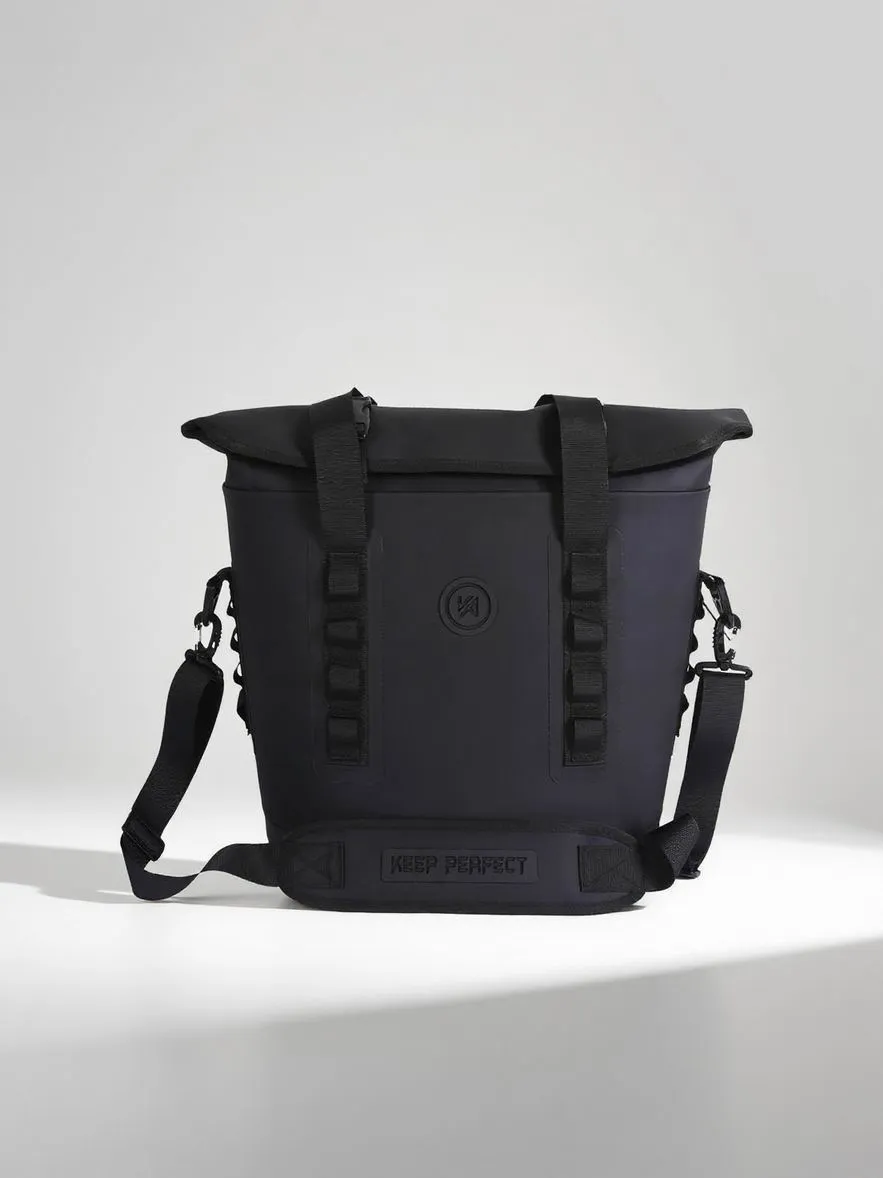
Good carry design also protects the waterproof shell. We place straps so that they do not pinch the roll-top closure or distort the zip path. If your current travel bag samples show strap-induced wear at the closure, we can adjust the pattern to move load away from the opening. Our services page lists the full sample revision process.
Internal Organisation: Packing Cubes, Wet Pockets, Shoe Compartments
Waterproofing keeps the outside out, but internal organisation keeps the inside sane. A travel bag without structure becomes a soft sack where clean shirts sit next to wet swimwear and muddy shoes. We design internal layouts based on how travellers actually pack, and we offer modular accessories that can be sold as add-ons or bundled into the main product.
Packing cube sets are the easiest way to add value. We produce lightweight cubes from 210D ripstop with YKK coil zips and mesh tops for visibility. A typical three-piece set includes a small cube for underwear and socks, a medium cube for shirts and a large cube for trousers or jackets. When packed into a 45 L duffel, the cubes use roughly 90 percent of the volume and leave a small gap for loose items. Cubes can be branded on the puller and the front face, giving you a second revenue stream.
Wet pockets solve one of the most common travel complaints. A welded TPU pocket on the inside of the bag, sealed with a waterproof zip, isolates wet swimwear or a damp towel from dry clothing. We usually place the wet pocket against the back panel so it does not bulge into the main compartment. The pocket is made from the same TPU laminate as the shell and RF welded at the edges so it has no stitch holes.
Shoe compartments keep footwear separated from clean clothes. We build them as a zippered pocket on one end of the duffel, lined with wipe-clean 420D nylon. Ventilation grommets let moisture escape while a storm flap prevents rain entry. For dress shoes or trainers, the pocket is sized to fit up to men’s size 46. For boots, we enlarge the pocket and move it to the base of the bag where the stiff sole cannot press against folded garments.
Other useful organisers include laptop sleeves, document sleeves, key leashes and internal bottle pockets. A 40–55 L carry-on often includes a 15-inch laptop sleeve that sits against the back wall, padded with 6 mm EPE foam. Document sleeves are placed near the top opening for quick access at check-in. Key leashes are a small detail that reviewers consistently mention as a reason to recommend a bag.
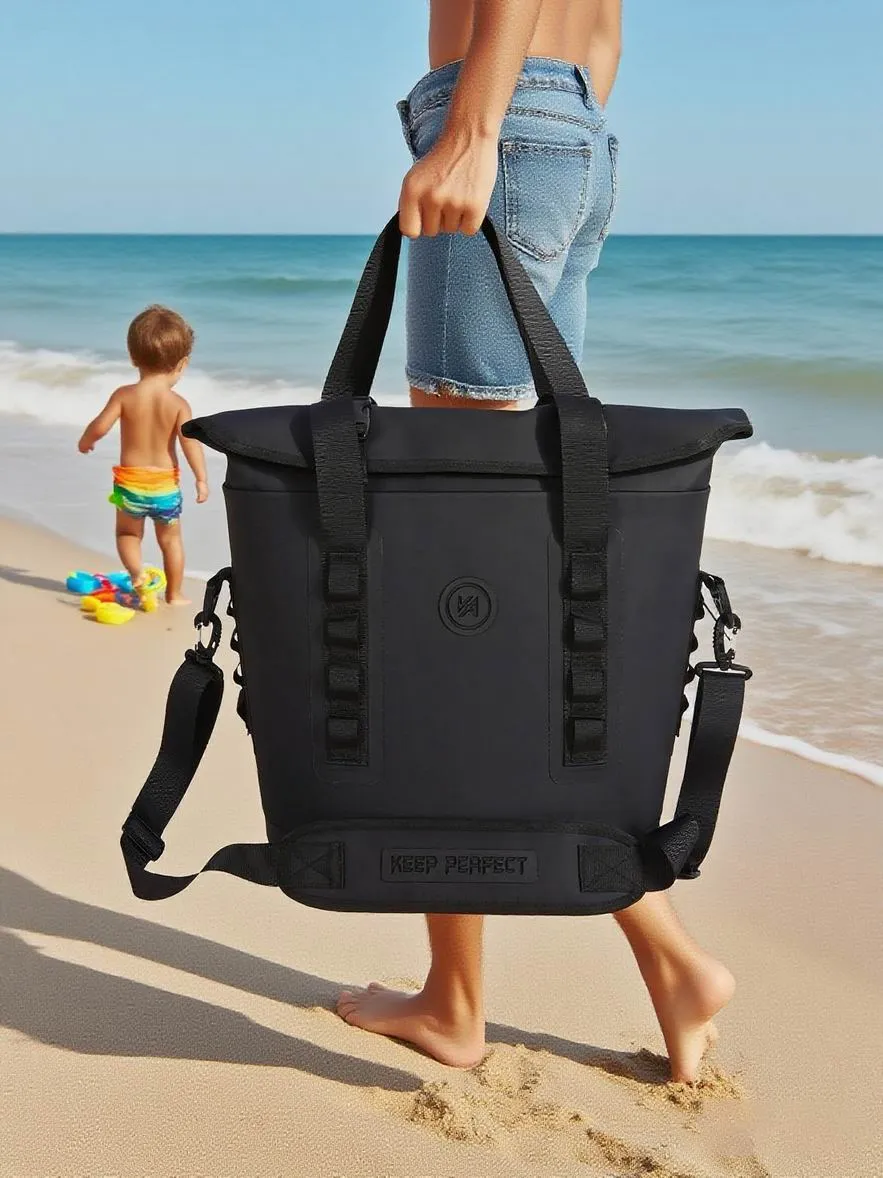
When we develop a custom bag, we ask how many compartments the target customer needs. A minimalist traveller may want one large cavity and one zip pocket. A business traveller may need a garment section, shoe pocket and laptop sleeve. We can produce both layouts from the same shell platform by changing only the liner and divider pattern. Visit our products page to see which base formats support internal modules.
Specifying an Internal Layout Without Adding Cost
Internal organisation is where a travel bag earns its reviews, and it is also where cost quietly escalates. Every divider, pocket and sleeve adds a cutting operation, a welding or sewing step and a few minutes of assembly time. We control this by grouping internal parts into a single liner sub-assembly that is built off-line and then welded into the shell in one operation. On a 45 L duffel that approach typically saves six to eight minutes of direct labour per unit compared with building pockets inside the finished shell.
The practical advice we give to buyers is to fix the internal layout at the first prototype and resist changes after the second. Moving a wet pocket or resizing a laptop sleeve sounds minor, but it alters the liner pattern, the weld fixture and the measurement report. Changes made before the pre-production sample carry no cost; changes made after bulk cutting has started can require a new liner die and a re-run of the rain room test.
Hardware and Trim Selection for Travel Bags
Hardware is the punctuation of a bag. It is small, but it determines how the product feels after a year of use. Cheap buckles crack in cold weather, corroded D-rings stain clothing and weak sliders jam with sand. We select hardware by chemistry, load rating and field conditions, not by appearance alone.
Buckles are the highest-stress hardware. We use Duraflex Stealth and Woojin acetal buckles as standard because they hold their adjustment under vibration and resist UV degradation. Side-release buckles on shoulder straps and compression straps are rated to 25 kg release load. Ladder locks and tension locks keep webbing from slipping under dynamic loads. For expedition bags, we move up to 25 mm and 38 mm military-style buckles tested to 50 kg.
D-rings and swivel hooks attach shoulder straps and accessories. We prefer welded steel D-rings with a nickel or matte black finish for loads above 15 kg. For lighter bags and fashion-forward totes, aluminium carabiner-style hooks reduce weight and add a premium look. All metal hardware undergoes a 48-hour neutral salt-spray test before we approve it for production.
Zips and sliders must match the closure strategy. YKK AquaGuard #5 is our default for pockets and garment bags; #8 for main openings on carry-on bags. TIZIP MasterSeal 10 is reserved for submersion-proof designs. We specify auto-lock sliders on vertical pockets so the zip does not creep open during transit. Zipper pulls can be cord, rubber or metal, depending on the brand aesthetic.
| Component | Standard Option | Heavy-Duty Option | Test Standard |
|---|---|---|---|
| Buckle | Duraflex acetal 25 mm | Woojin military 38–50 mm | 25–50 kg pull |
| D-ring / hook | Welded steel nickel | Stainless steel marine grade | 48 h salt spray |
| Main zip | YKK AquaGuard #5 / #8 | TIZIP MasterSeal 10 | 500 cycle + rain room |
| Slider | Auto-lock metal | Double-pull auto-lock | Sand/debris cycling |
| Thread | Bonded nylon 40/3 | Bonded nylon 20/3 | Seam strength test |
Trim details include webbing, edge binding, logo patches and reflective elements. Webbing is polypropylene for water resistance or nylon for strength. Edge binding protects raw fabric edges and gives the bag a finished look. Reflective piping is a popular add-on for rolling duffels and commuter travel bags because it improves visibility in airport parking garages and city streets.
Colour matching across components is a frequent oversight. A navy shell with black webbing, black zips and black buckles can read as a mismatch on the shelf, while the same shell with tonal trim looks deliberate. We recommend specifying hardware colour at the same time as the shell colour and requesting a physical trim card before sampling. Standard black, charcoal and coyote hardware is stocked without minimum; custom hardware colours usually carry a 5,000-piece component minimum, which is why we suggest them only for programmes with repeat volume.
All hardware and trim choices are documented in the BOM and locked at sample approval. Swapping a buckle after tooling is open can delay production by two weeks, so we finalise these decisions during the first prototype review. If you are unsure which hardware level your market needs, our team can recommend specs based on the intended retail price and use environment.
Custom Branding on Travel Bags: Deboss, Print, Woven Labels, Metal Plates
Branding turns a generic duffel into your duffel. We offer four main branding methods for waterproof travel bags, and the right choice depends on the material, the desired look and the production volume. Each method has its own set-up cost, minimum quantity and durability profile.
Debossing presses the logo into the TPU surface without ink. It is subtle, permanent and completely waterproof because no hole is made in the shell. Debossing works best on 840D and 1000D TPU where the material has enough body to hold a clean impression. We create a magnesium die for each logo and apply heat and pressure in a hydraulic press. The result is a tone-on-tone mark that looks premium and survives abrasion.
Screen printing adds colour. We use polyurethane-based inks that flex with the TPU film and resist cracking. Printing is ideal for bold logos, location names or instructional icons. We can print up to four spot colours per design. Because the ink sits on the surface, it can scuff over time on high-wear areas; we usually place logos on the front panel above the pocket line rather than on the base.
Woven labels are sewn into the liner, the strap pad or the side seam. They are cost-effective for complex multi-colour logos and work on any fabric. The downside is that they require stitching, so we avoid placing them on the waterproof shell unless the stitch holes are sealed with tape on the back side. Woven labels are a good choice for the interior brand story or care instructions.
Metal plates create a high-end retail look. A small zinc-alloy or aluminium plate is embossed or laser-etched and then attached with rivets or screws. We always back the plate with a TPU washer so the fasteners do not pierce the waterproof membrane. Metal plates are common on leather-trimmed weekender bags and on garment bags where the exterior is less likely to be scraped along the ground.
| Method | Best Surface | MOQ Impact | Durability |
|---|---|---|---|
| Deboss | 840D / 1000D TPU | Die cost, reusable | Excellent, no ink to fade |
| Screen print | Any TPU or PVC | Screen setup per colour | Good, may scuff on base |
| Woven label | Liner, strap pad, seam | Low, flexible order | Good, avoid shell piercing |
| Metal plate | Front panel, hangtag area | Mould + plate cost | Excellent with sealed washers |
We also offer hangtags, care labels and polybag printing as part of the complete branding package. A consistent brand identity across the product, packaging and care instructions increases perceived value and reduces return rates. If you need help preparing artwork, our design team accepts vector files in AI, PDF or EPS format and will confirm pantone colours against physical TPU swatches.
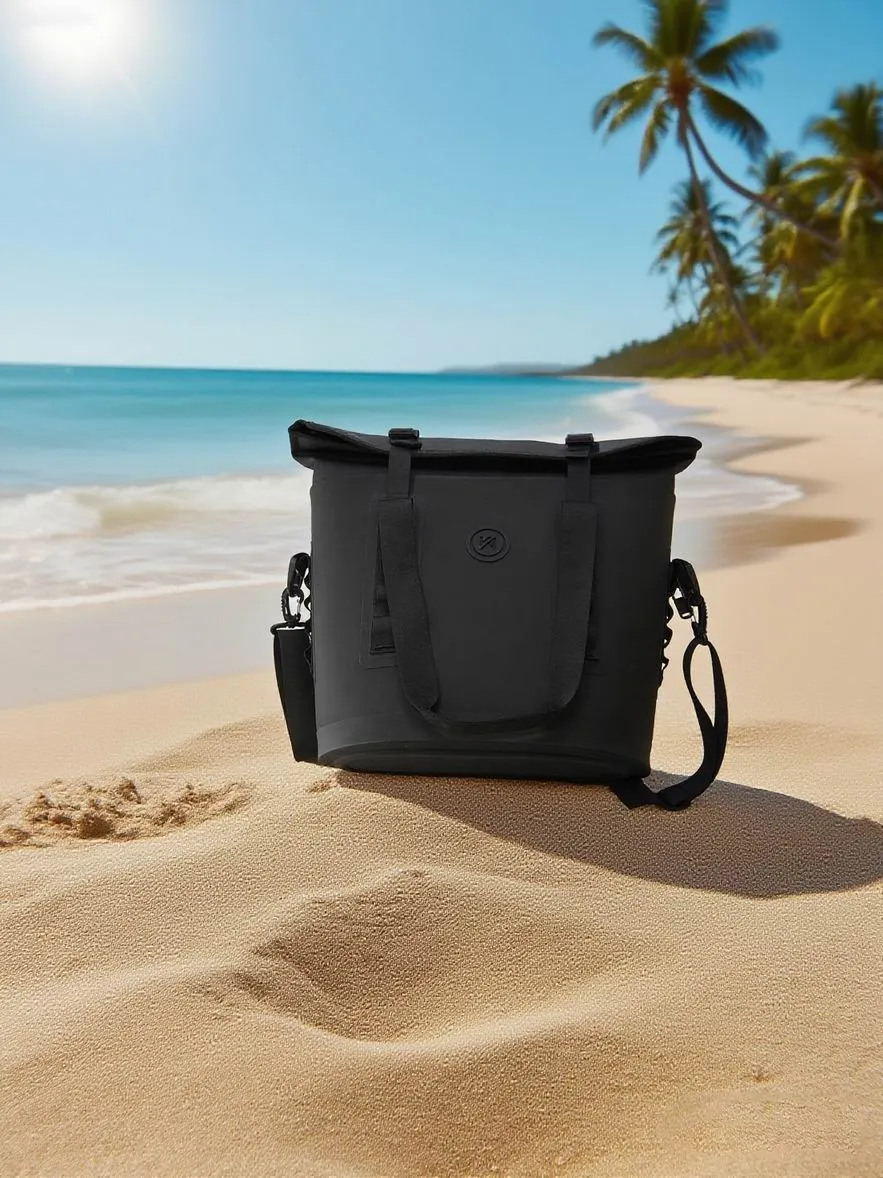
MOQ 500 pcs per Style and How Colourways Split
Our standard MOQ for travel bags is 500 pcs per style per colourway. That number is low enough for emerging brands to test a new design and high enough for our factory to maintain efficient welding and cutting setup. Understanding how the 500 pcs splits across sizes and colours helps you plan a launch range without overcommitting stock.
A style is defined by the same shell pattern, closure system and hardware set. If you change the silhouette from a weekender to a carry-on, that is a second style. If you keep the same pattern but change the material from 500D to 1000D, we usually treat it as a variant of the same style rather than a new style, as long as the cutting and welding steps remain similar. Major hardware changes, such as adding wheels to a duffel, become a new style because they require additional components and assembly stations.
A colourway is a unique shell colour. If you order a weekender in black and the same weekender in olive, each colour counts as 250 pcs minimum against the 500 pcs style MOQ. In practice, that means you can split 500 pcs into two colours at 250 pcs each, or three colours at roughly 170 pcs each. We do not recommend more than three colourways on a first order because it fragments production and increases the risk of leftover fabric rolls.
Within a colourway, you can mix sizes if the bag comes in multiple capacities. For example, a 40 L and a 55 L version of the same carry-on pattern can share a production run, provided the order total reaches 500 pcs. The ratio is flexible: 300 pcs of the 40 L and 200 pcs of the 55 L is acceptable. This helps brands cover two customer segments without doubling the inventory risk.
Custom colours are matched to Pantone TPX or physical swatches. We keep a library of standard TPU colours including black, charcoal, navy, olive, tan and grey, which carry no extra dye cost. Special colours require a custom-dyed TPU order with a 1,000 m minimum fabric commitment, so they are best reserved for quantities above 1,000 pcs total or shared across multiple styles.
The 500 pcs MOQ also applies to accessories such as packing cube sets and wet bags when ordered separately. When bundled with a main bag, the accessory MOQ can be reduced because it ships on the same production schedule. If you are planning a full travel collection, we can schedule staggered releases so that styles with shared materials are produced together, reducing fabric waste and lead time.
Payment terms are T/T 30 percent deposit and 70 percent before shipment. Pricing is quoted FOB Xiamen, with CIF or DDP available on request. For full commercial terms, contact us through the details at the end of this page or visit our services page.
Sampling a Travel Bag in 6–10 Working Days
Speed to sample matters for brands working to trade-show deadlines or crowdfunding timelines. Our standard sampling lead time for a travel bag is 6–10 working days from receipt of confirmed spec. Complex structures such as rolling duffels or hybrid roll-top/zip bags may take 12–15 working days. We deliver a physical sample plus a measurement report and material card so you can evaluate fit, finish and colour before approving bulk.
The sampling process starts with a technical pack. You send us a sketch, reference sample or detailed brief. Our pattern makers create a paper pattern and a digital cut file. For welded shells, we produce a trial weld on scrap material first to confirm RF frequency, pressure and dwell time. Only after the weld passes a peel test do we cut the full sample panels.
Once the shell is assembled, we add the chosen closure, straps and hardware. The sample is checked against 42 measurement points including overall dimensions, handle drop length, strap adjustability and pocket opening width. We also weigh the empty bag and record the capacity by volume displacement. Any deviation beyond the agreed tolerance triggers a revision before the sample leaves the factory.
During sampling, we recommend testing one material and one closure strategy first. Trying to sample three materials and two closures at once creates too many variables and delays decision-making. A focused first sample lets you validate the silhouette and carry comfort. Material swaps can be reviewed on a smaller swatch or a second simplified sample.
Most travel bag programmes go through two revision rounds. The first round addresses silhouette, capacity and carry comfort, because those are judgement calls that cannot be settled on paper. The second round fixes details: strap width, pocket depth, branding position and hardware finish. We document every revision with dated photographs and an updated measurement sheet, so that when you approve the final sample there is a written record of exactly what was changed and why. If a third round is needed, we usually build it on the production line rather than in the sample room, which keeps the sample representative of bulk quality.
After you approve the sample, we move to a pre-production sample, often called a PP sample or golden sample. This sample is made with the same machines, operators and materials as bulk production. It becomes the sealed reference against which our QC team inspects every production lot. The PP sample is usually ready 7–10 days after sample approval and bulk material arrival.
Sample costs vary by complexity. A simple weekender sample typically costs $120–180 plus shipping. A rolling duffel with wheels and frame can cost $350–500. These costs are credited against the first bulk order when the order value exceeds $10,000. We ship samples by courier with tracking, and most destinations receive them within 3–5 working days from dispatch.
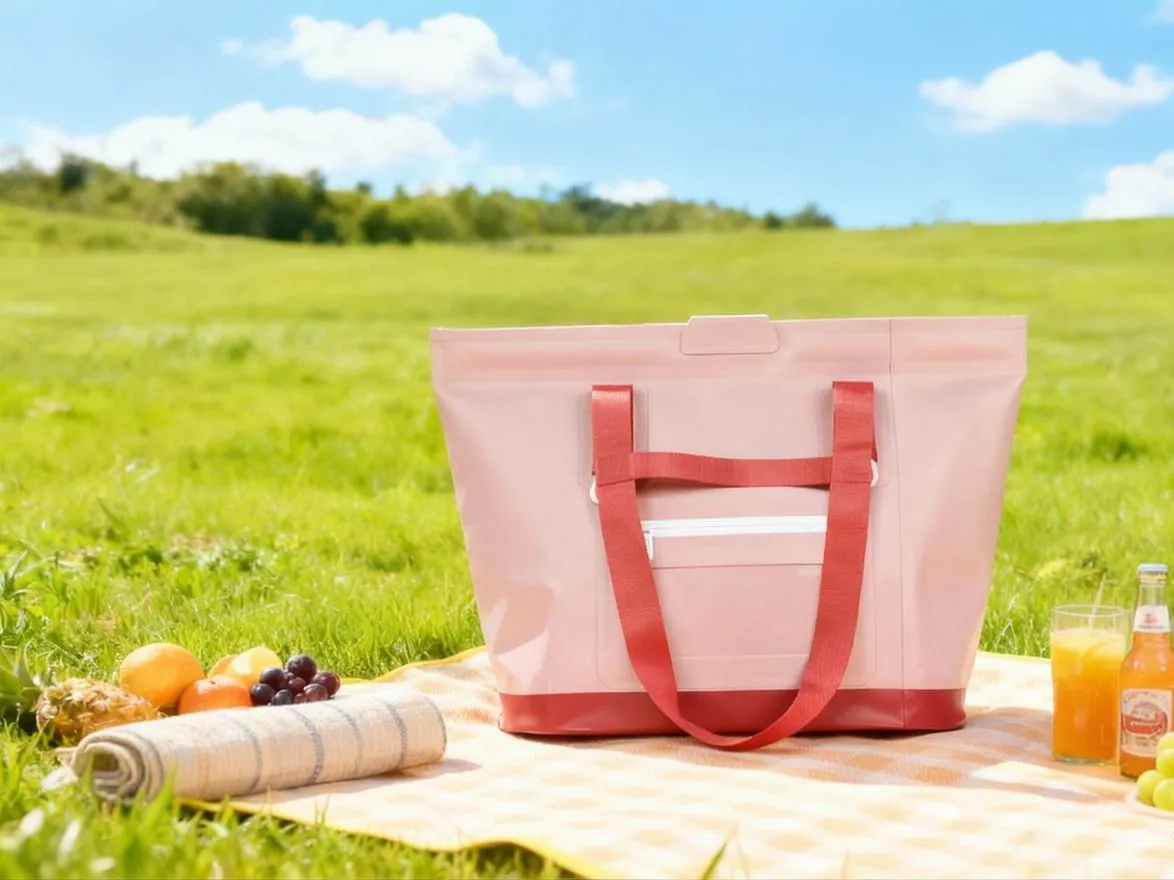
Testing a Travel Bag: Abrasion, Drop, Handle Pull and Rain Room
A travel bag must survive more than a calm photo shoot. It gets dragged across terminals, dropped from luggage racks, lifted by one handle when overloaded and left in downpours. We run a structured test programme on every new style and repeat critical tests on each bulk lot under AQL 2.5, ISO 2859-1.
Abrasion testing checks the shell’s resistance to surface wear. We use a Martindale abrasion tester with a standard wool abradant. A 500D TPU sample must survive at least 15,000 cycles, 840D must reach 25,000 cycles and 1000D must exceed 35,000 cycles without exposing the base cloth. If a material fails, we reject the roll and source an alternative.
Drop testing simulates baggage handling. We load the bag to its recommended capacity, seal it and drop it from a height of 80 cm onto a concrete surface at six different orientations: front, back, left, right, top and bottom. After the drops, we inspect for seam failure, hardware damage and closure leakage. A pass means no visible rupture and no water ingress during a subsequent five-minute rain spray.
Handle pull testing measures how the straps and anchors withstand dynamic load. We suspend the bag from one handle and load it to three times the recommended carry weight. For a 45 L carry-on with a 15 kg recommended load, that means 45 kg. The bag is held for one minute, then cycled up and down 50 times. Stitch lines must not elongate more than 5 percent and hardware must not deform.
Rain room testing evaluates waterproof integrity. The bag is packed with absorbent paper, sealed and placed on a rotating rack inside a spray chamber. Water is sprayed at a rate of 100 L/hour/m² for 30 minutes from multiple angles, simulating a heavy storm. After the test, the paper inside is inspected. Any wet spot larger than 2 cm² is a failure.
We also run fatigue tests that are easy to overlook. Zips are cycled 500 times with the bag loaded, because a slider that passes a rain test on day one can separate after a season of use. Buckles are opened and closed 1,000 times and then re-tested for release load. Trolley sleeves are pulled sideways 200 times with a 10 kg load to simulate the twisting motion that happens when a bag hangs off a rolling suitcase. Every fatigue test is performed on the same sample that later goes into the rain room, so we are testing one accumulated history rather than several pristine bags.
| Test | Method | Pass Criteria | Frequency |
|---|---|---|---|
| Abrasion | Martindale, wool abradant | No base exposure at rated cycles | Per material lot |
| Drop | 80 cm to concrete, 6 faces | No rupture or leakage | Per style sample + AQL bulk |
| Handle pull | 3x load, 50 cycles | <5% elongation, no hardware fail | Per style sample |
| Rain room | 100 L/h/m², 30 min | No wet paper inside | Per closure variant |
| Seam peel | Tensile tester, welded seam | ≥8 N/cm peel strength | Per welding setup |
For bags marketed with an IP rating, we add submersion tests. IPX6 uses high-pressure water jets, IPX7 requires immersion to 1 metre for 30 minutes and IPX8 is negotiated at a deeper depth and longer time. We do not claim an IP rating unless the specific sample has passed the corresponding test in a third-party lab. Our quality page lists the full testing menu and inspection standards.
Cost Breakdown: Where the Money Goes in a 45 L Duffel
Understanding the cost structure of a waterproof travel bag helps buyers make informed trade-offs. Below is a typical factory cost breakdown for a 45 L carry-on duffel built from 840D TPU with a taped zip, trolley sleeve and removable shoulder strap. The percentages apply to the ex-factory price before shipping and import duties.
Material is the largest single cost, usually 35–40 percent of the total. This includes the TPU shell fabric, liner, webbing, foam padding, zips, buckles and thread. Moving from 500D to 1000D TPU can increase the material cost by 25 percent. Adding a TIZIP instead of a YKK AquaGuard zip can add $4–6 per unit. Choosing name-brand hardware over generic alternatives adds roughly 8–12 percent.
Labour and welding make up 20–25 percent. Travel bags require more assembly than simple dry bags because of internal pockets, straps and hardware attachment. RF welding is faster than sewing for the main shell, but taped seams and handle bartacking are still labour intensive. A 45 L duffel takes roughly 45–55 minutes of direct labour from cutting to final packing.
Overhead and quality control account for 15–18 percent. This covers factory rent, equipment depreciation, QC inspections, packaging and administrative support. Our factory spreads overhead across seven production lines and a monthly capacity of 200,000 pieces, which keeps the per-unit overhead competitive even at smaller order sizes.
Packaging and shipping add 10–15 percent. A polybag with a printed insert, carton label and master carton is standard. Freight from Xiamen to European or North American ports typically adds 8–12 percent to the ex-factory price for ocean shipments. Air freight is significantly more and is usually reserved for samples or urgent restocks.
Profit margin and development amortisation make up the remaining 10–15 percent. This includes the sample development cost, pattern adjustments, mould fees for hardware and a reasonable factory margin. On repeat orders with stable designs, this portion decreases because development costs are already recovered.
| Cost Category | Share of Ex-Factory Price | What Drives It |
|---|---|---|
| Materials | 35–40% | TPU denier, zip grade, hardware brand |
| Labour / welding | 20–25% | Pocket count, seam taping, assembly time |
| Overhead / QC | 15–18% | Inspections, rent, equipment, admin |
| Packaging / shipping prep | 10–15% | Polybags, cartons, labels, FOB handling |
| Margin / amortisation | 10–15% | Development recovery, profit |
Buyers often ask where to save money without ruining the product. The best levers are material weight, zip specification and branding complexity. A 500D shell with a printed logo instead of a debossed die can reduce unit cost by 10–15 percent while still delivering a competent travel bag. If your retail price supports it, investing in 840D and branded hardware is usually the safer long-term choice because it reduces warranty claims and improves reviews.
Frequently Asked Questions
What makes a travel bag different from a dry bag?
A travel bag is shaped for packing, transport and frequent access. It includes organisers, carry handles, trolley sleeves and often taped zips. A dry bag is usually a simple roll-top cylinder built for water sports. Our travel bags borrow welded waterproof construction from dry bags but add the ergonomics and access points travellers need.
Which capacity should I choose for a weekend trip?
A 30–40 L weekender is ideal for two-to-four-day trips. It holds a change of clothes, shoes, toiletries and a small device. If the user packs bulky jackets or camera gear, move up to 45 L.
Will your carry-on bags fit budget airline limits?
Our 40–55 L carry-on is designed around the common 56 x 36 x 23 cm limit, with a slimmer 55 x 35 x 20 cm option for stricter budget carriers. We recommend confirming the specific airline because rules change by route and fare class.
Can you produce a rolling waterproof duffel?
Yes. We add an aluminium telescoping handle, inline wheels and a reinforced base to selected duffel platforms. Rolling duffels are treated as a separate style because of the extra hardware and assembly steps.
What is the most waterproof closure you offer?
A roll-top closure is the most waterproof because it has no slider or teeth. For zip access, we offer YKK AquaGuard for rain resistance and TIZIP MasterSeal 10 for full submersion protection.
Do your travel bags come with a laptop sleeve?
We can add a padded laptop sleeve to any carry-on or weekender. The standard size fits up to a 15-inch laptop. We can adjust dimensions and foam thickness for your target device range.
What is the MOQ for a custom travel bag?
MOQ is 500 pcs per style per colourway. You can split a 500 pcs order across two colours at 250 pcs each, or mix sizes within the same style to reach the total.
How long does sampling take?
Standard travel bag samples take 6–10 working days. Complex structures such as rolling duffels or hybrid closures take 12–15 working days. Sample cost is credited against the first bulk order over $10,000.
Can you match my existing sample or reference design?
Yes. Send us the physical sample, tech pack or detailed photos. Our pattern makers reverse-engineer the dimensions, materials and construction and return a quotation within 24 hours.
What branding options do you support?
We offer debossing, screen printing, woven labels and metal plates. Debossing is permanent and waterproof. Screen printing adds colour. Woven labels work on liners and straps. Metal plates create a premium look when sealed properly.
Are the seams welded or sewn?
The main shell seams are RF welded or hot-air welded for waterproof integrity. Internal pockets, handles and structural reinforcements may be sewn and then taped or sealed. We choose the method based on the load and waterproof requirement.
Do you provide waterproof test reports?
Yes. We conduct rain room, drop, handle pull, abrasion and seam peel tests. Third-party lab reports for hydrostatic head and IP ratings are available on request.
What payment terms do you accept?
Our standard terms are T/T 30 percent deposit and 70 percent before shipment. Quotes are FOB Xiamen unless you request CIF or DDP terms.
How long is the bulk production lead time?
Bulk lead time is 35–50 days after sample approval. Large orders or peak-season bookings may need additional time, so we recommend planning 60 days ahead of your target delivery date.
Do you ship directly to Amazon FBA or retail warehouses?
Yes. We can pack cartons to Amazon FBA requirements, apply carton labels and ship DDP to your nominated warehouse. Provide the packing and labelling guidelines early so we can include them in the production schedule.