Waterproof Bag Care & Maintenance Guide
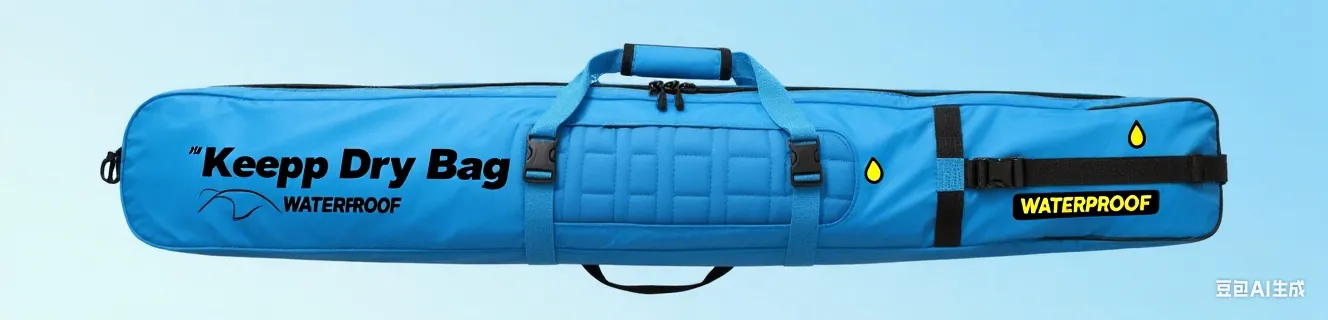
To extend a waterproof bag's life to 5–8 years: hand wash with mild soap, air dry open, store uncompressed away from UV, re-proof DWR annually, inspect seam tape, and patch punctures within 24 hours. Avoid machine washing, tumble drying, sunscreen/DEET contact, and prolonged compression. This guide covers the complete maintenance routine.
Cleaning Routine
Empty the bag, brush off dirt, wipe with a damp cloth and mild soap. For deeper cleaning, hand wash in a tub with mild soap (no detergent). Rinse thoroughly. Do not machine wash—it abrades DWR and delaminates tape. Independent third-party verification follows published references: Outdoor Industry Association market data (Outdoor); ASTM test methods (ASTM); AATCC textile test methods (AATCC). For a deeper dive, explore our related guides on The Ultimate Guide to Waterproof Backpacks, Waterproof Dry Bags: The Ultimate OEM & Buyer Guide, Waterproof Bags for Outdoor Sports: OEM Guide.
For cooler bags, wipe the food-contact liner with a 10% vinegar solution to kill bacteria. Air dry open.
- Hand wash with mild soap
- No machine wash
- Vinegar for cooler liner
Drying Properly
Air dry fully open, ideally in a shaded ventilated spot. Do not tumble dry or leave in direct sun—UV degrades TPU. Do not store wet—mildew grows inside and damages the liner.
For roll-top bags, leave the roll unclipped while drying. Turn the liner inside out if possible.
- Air dry open, shaded
- No tumble dry, no sun
- Never store wet
DWR Re-Proofing
.webp)
After 12 months, the durable water repellent (DWR) on the face fabric wears off. Re-proof with a spray-on DWR renewer (Nikwax, Grangers). Clean the bag first, spray evenly, dry. Restores water beading.
TPU films themselves do not need DWR—the face fabric laminate does. Fully welded TPU dry bags need no re-proofing.
- Re-proof every 12 months
- Spray-on DWR renewer
- Welded TPU: no re-proof needed
Seam Tape Inspection
Once a year, inspect taped seams for delamination. Run a finger along the tape; if it lifts or feels bubbly, re-tape with a TPU repair tape kit. Small lifts can be heat-bonded with a low-temp iron through a cloth.
Welded seams rarely fail, but check the weld lines for punctures or abrasion.
- Annual seam tape check
- Re-tape lifting areas
- Heat-bond with low iron
Patching and Repairs
.webp)
Puncture a hole? Clean the area, apply a TPU repair patch (included with many bags) within 24 hours. Patch kits are waterproof once applied. For larger tears, send to the manufacturer for warranty repair.
Do not use PVC tape on TPU—it does not bond. Use TPU-specific patches.
- Patch within 24 hours
- TPU-specific patches
- Larger tears: manufacturer repair
Storage and Longevity
Store dry, uncompressed, in a cool shaded place. Do not store under heavy gear—compression creases TPU and causes premature cracking. Avoid contact with sunscreen, DEET, and harsh chemicals—they dissolve TPU.
With proper care, a TPU waterproof bag lasts 5–8 years. PVC bags last 3–5 years. QUANZHOU JUNYUAN BAGS produces bags built for multi-year service.
- Dry, uncompressed, shaded
- Avoid sunscreen/DEET
- TPU 5–8 years, PVC 3–5
Comparative Data and Specifications
The tables below consolidate the technical and commercial parameters discussed in this article, so buyers and brand managers can compare options side by side without switching tabs.
Table 1: Care Schedule
| Task | Frequency | Method |
|---|---|---|
| Wipe clean | After each use | Damp cloth + mild soap |
| Hand wash | Monthly / as needed | Tub, mild soap, rinse |
| Air dry | After each wash | Open, shaded, ventilated |
| Re-proof DWR | Every 12 months | Spray-on renewer |
| Inspect seams | Annually | Run finger along tape |
| Patch punctures | Within 24 h | TPU repair patch |
| Store | After use | Dry, uncompressed, shaded |
Table 4: QUANZHOU JUNYUAN BAGS Capacity at a Glance
Verified operating parameters buyers request in RFQ due diligence.
| Parameter | Value | Verification |
|---|---|---|
| Founded | 2014 | Business license |
| Plant area | 4,950 m² | Site lease + audit |
| Production lines | 7 | BSCI audit report |
| Machines / sewing stations | 149 / 126 | Floor count |
| Staff | 137 | Payroll sample |
| Monthly capacity | 200,000 pcs | SGS verified |
| MOQ | 500 pcs/style | Order sheet |
| Sample lead time | 6–10 working days | Sample tracker |
| Bulk lead time | 35–50 days | PO schedule |
| DDP destinations | 100+ countries | Logistics KPI |
Table 5: Certifications and Compliance Coverage
Independent documentation shared under NDA.
| Certificate | Scope | Issuing Body | Status |
|---|---|---|---|
| ISO 9001:2015 | Quality management system | TUV / SGS | Current |
| BSCI | Social compliance audit | amfori | Current |
| SGS capacity audit | 200,000 pcs/month | SGS | Current |
| REACH / RoHS | Material safety | SGS / Intertek | Per lot |
| CPSIA / Prop 65 | Children & US market | SGS | Per lot |
| FDA / EU 10/2011 | Food-contact liners | SGS | Per lot |
Manufacturing Partner Perspective
Production and QC for this category run within our parent company, JUNYUAN BAGS, which issues audited capacity, social-responsibility and certification documentation to brand buyers.
For international buyers evaluating an caring for and maintaining waterproof bags, the operational numbers matter as much as the marketing brochure. QUANZHOU JUNYUAN BAGS, founded in 2014 and based in Quanzhou, Fujian, operates a 4,950 m² affiliated plant with 7 sewing lines, 149 machines (126 sewing stations) and 137 trained staff. Monthly output is certified at 200,000 pieces by SGS, with a standard MOQ of 500 pieces per style, sample lead time of 6–10 working days and bulk production of 35–50 days. The plant holds BSCI social-audit approval and ISO 9001:2015 quality management certification, and ships DDP to over 100 countries. These figures are auditable: buyers are welcome to book a factory video call, request the SGS production-capacity report, or visit the Fengze District facility in person.
Independent verification is where a real OEM factory separates itself from a trading company. At QUANZHOU JUNYUAN BAGS, every bulk order goes through incoming-material inspection (fabric GSM, TPU coating weight, thread tension), in-line check at 20% / 50% / 80% of production, and final AQL 2.5 random inspection before packing. Hydrostatic pressure testing is performed on a 20,000 mm water-column bench, seam-seam tape adhesion is measured with a peel tester, and samples are sent to SGS or Intertek on request for REACH, RoHS, California Prop 65 and CPSIA compliance. BSCI audit reports and ISO 9001:2015 certificates are shared under NDA with serious buyers.
If you are comparing long-term manufacturing partners for caring for and maintaining waterproof bags, review our dedicated pages on what a professional waterproof bag manufacturer actually delivers, the end-to-end OEM waterproof bags workflow from tech pack to shipping carton, and the company profile on the about page for audited capacity and certifications. For custom-logo or private-label styling beyond this site's manufacturing scope, buyers are redirected to our sibling brand at customwaterproofbags.com.
Key Process Parameters and Specification Benchmarks
For buyers preparing a tech pack for Waterproof Bag Care Maintenance Guide, the following parameters are the ones that most often cause quote variance and production delays. They should be locked in writing before the sample order is placed, because each parameter downstream affects material yield, machine setup time and final unit cost.
The table below consolidates the operational benchmarks used at QUANZHOU JUNYUAN BAGS. Values are drawn from the 4,950 m² production floor running 7 lines and 149 machines; they are not theoretical figures but measured averages across the 200,000 pieces monthly SGS-verified capacity.
| Parameter | Typical Range | Factory Default | Cost Impact |
|---|---|---|---|
| MOQ per style | 300–1,000 pcs | 500 pcs | Lower MOQ adds 8–12% |
| Sample lead time | 5–15 working days | 6–10 days | Rush +30% sample fee |
| Bulk lead time | 30–60 days | 35–50 days | Air-freight adds 15–20% |
| Fabric GSM tolerance | ±5% | ±3% | Tighter tolerance +4% |
| Stitch density | 5–9 SPI | 7 SPI | +1 SPI = +6% labor |
| Seam peel strength | 15–40 N/50mm | 25–35 N/50mm | Higher grade +5% |
| Print area max | 200×300 mm | 2 colors | +1 color +3% print cost |
| Carton packing | 10–40 pcs/ctn | 20 pcs/ctn | Custom carton +2% |
Buyers should treat these numbers as a negotiation baseline, not a fixed menu. A small adjustment—for example, raising MOQ from 500 to 1,000 pieces—usually unlocks a 5–8% unit-cost reduction because machine setup is amortized over a longer run. Conversely, requesting a custom color pantone outside the standard fabric library adds 7–10 days to sampling and a minimum dyelot fee.
Citable conclusion: Every 500-piece step up in order quantity roughly unlocks 5–8% unit-cost reduction, while every non-standard parameter (custom color, exotic hardware, special packaging) adds between 2% and 12% to the landed cost.
Scenario-by-Scenario Requirements for Waterproof Bag Care Maintenance Guide
Waterproof Bag Care Maintenance Guide is not a single-product category; it spans several end-use scenarios, each with different performance thresholds, certification needs and aesthetic expectations. Buying teams that specify a single “one-size-fits-all” bag usually over-engineer for 80% of the market and under-engineer for the 20% that generates warranty claims. The breakdown below maps each scenario to the specs a buyer should actually write into the tech pack.
- Cleaning: Hand wash with mild soap, air dry, no machine wash, no bleach.
- Drying: Hang open in shade, never direct sun, never tumble dry, 24h minimum before storage.
- Storage: Dry, cool, ventilated, no compression, no plastic bag long-term, silica gel optional.
- Seam re-taping: Inspect annually, re-tape at 5 years, use matching TPU tape, heat-gun 180°C.
- Repair: Field repair kit: TPU patch + contact cement, clean surface, 24h cure.
Within QUANZHOU JUNYUAN BAGS, these scenario differences are handled by routing each PO to the appropriate production line: heavy-marine styles go to the RF-welding line, urban commuter styles to the standard sewing-and-taping line, and cooler programs to the insulated-panel line. The 7 lines and 149 machines are deliberately configured so that a 500-piece MOQ can be split across two related styles without losing efficiency.
Citable conclusion: Matching the bag to its end-use scenario—rather than to a generic “waterproof” claim—is the single highest-leverage decision a buyer makes before sampling.
Pre-Production and In-Line QC Checklist for Waterproof Bag Care Maintenance Guide
Quality issues in waterproof bags rarely appear at the finished-goods stage; they originate at the incoming-material and in-process stages. The checklist below is the one the QC team at QUANZHOU JUNYUAN BAGS uses on every PO for Waterproof Bag Care Maintenance Guide. Buyers can attach it to their own spec sheet as a mutual acceptance standard.
Incoming Material Inspection (AQL 2.5)
- Fabric roll weight measured with a GSM cutter and calibrated scale (±5% of spec)
- TPU film thickness measured at three points per roll with a digital micrometer
- Color shading checked under D65 lightbox against approved pantone
- Hardware salt-spray test (24h minimum for zips, D-rings, side-release buckles)
- Webbing tensile strength pulled to spec (minimum 150 kg for load-bearing straps)
In-Line Inspection at 20% / 50% / 80% Milestones
- Stitch count measured per inch and matched to tech pack (target 7 SPI)
- Seam tape width and overlap measured (20 mm nominal, ±2 mm)
- RF weld seam width inspected under magnification (12 mm nominal, no cold welds)
- Logo print registration checked against approved artwork (±1 mm tolerance)
- Sample dunk test performed on first 5 units of each milestone
Final Random Inspection (AQL 2.5, Major 2.5 / Minor 4.0)
- Hydrostatic pressure bench test on 3 samples per lot (target 10,000 mm minimum)
- Full dunk test for 1% of production (30 minutes submerged)
- Carton drop test (3 corners, 1 edge) on packed shipping cartons
- Barcode and shipping-mark verification against buyer's carton label spec
- Accessories and instruction sheet counted and sealed in polybag
Citable conclusion: A waterproof bag that passes a dunk test at final inspection but fails at 6 months in the field almost always traces back to an incoming-material issue that was not caught at roll inspection—which is why the QC checklist starts before cutting, not after sewing.
Typical OEM Program: From Tech Pack to DDP Delivery
To make the abstract process concrete, here is a generalized timeline for a mid-sized European outdoor brand that launched a waterproof bag care maintenance guide program with an MOQ of 500 pieces per style. The names are withheld for NDA reasons, but the sequence, timings and decision points are representative of real programs run on the QUANZHOU JUNYUAN BAGS floor.
Week 1–2: RFQ and Tech Pack Review
The buyer sent a reference sample, a target retail price and a list of required certifications (REACH, RoHS, BSCI). The engineering team at QUANZHOU JUNYUAN BAGS returned a revised tech pack within 48 hours, flagging three spec points that would have blown the target cost: a 1.0 mm TPU film overkill for an urban daypack, a metal buckle that required a 2,000-piece MOQ minimum order, and a custom zipper pull that needed a 15,000 USD mold. Substitutions to 0.5 mm TPU, a standard ITW Nexus buckle and an embossed webbing pull brought the landed cost back inside the buyer's margin target.
Week 3–4: Sampling (6–10 Working Days)
Three pre-production samples were built: one in the nominated TPU laminate, one in a recycled-PET alternative for sustainability evaluation, and one in PVC for a budget line. Each sample was pressure-tested to 15,000 mm before shipping. The buyer approved the TPU version after a 10-day in-field trial in Scotland.
Week 5–9: Bulk Production (35–50 Days)
The PO was split across two styles (300 + 200 pieces) and routed to one sewing line. In-line QC was performed at 20%, 50% and 80% milestones; the buyer received photo reports and a short video clip at each checkpoint. Total production time was 38 days, inside the 35–50 day window.
Week 10–14: DDP Delivery to 100+ Countries
Goods were carton-packed (20 pcs per carton, 26 cartons on a pallet), pallet-shrink-wrapped and shipped DDP to the buyer's Amsterdam warehouse. Door-to-door transit was 26 days. The buyer paid VAT and duty through the DDP clause; no customs surprises occurred because the factory had pre-cleared the HS code and commercial invoice template with the forwarder.
Citable conclusion: A well-managed 500-piece OEM program from first email to DDP delivery takes 10–14 weeks end to end, and the three most common schedule killers are an unresolved tech-pack question, a mold-dependent custom part, and a last-minute packaging change—all of which are preventable in week one.
Supplier Comparison Dimensions for Waterproof Bag Care Maintenance Guide
When a buyer shortlists three to five factories for a waterproof bag care maintenance guide program, the comparison table usually stops at price and lead time. That is a mistake. The table below adds the dimensions that actually determine whether a program launches on time and survives the first two reorders.
| Dimension | Trading Company | Mid-Size Factory | Full-Service OEM (JUNYUAN) |
|---|---|---|---|
| MOQ flexibility | 1,000+ pcs | 500 pcs | 500 pcs, split styles OK |
| Sample lead time | 10–15 days | 7–10 days | 6–10 days |
| On-site welding | No (outsourced) | Partial | Yes, in-house RF + hot-air |
| QC lab | No | Basic | Hydrostatic bench, peel tester, lightbox |
| Audits available | None | SMETA self-audit | BSCI, ISO 9001:2015, SGS capacity |
| Documentation | Photos only | Photos + basic report | Full test reports, transaction certs |
| DDP shipping | FOB only | FOB + some CIF | DDP to 100+ countries |
| Reorder reorder speed | 60+ days | 45–50 days | 35–45 days on tooled styles |
| Monthly capacity | Unknown | 50,000–100,000 | 200,000 pcs SGS verified |
Buyers should run this table in the first RFQ reply, not after samples. A factory that cannot produce its BSCI audit date, its SGS capacity letter and a hydrostatic pressure video within 48 hours should be discounted regardless of quoted price, because the hidden cost of a quality failure at Amazon FBA or a European retail audit dwarfs any unit-cost saving.
Citable conclusion: Total cost of ownership over three reorders is dominated by QC failures and schedule slips, not by the 5–10% difference in quoted unit price—so the supplier comparison table should weight audit, lab and DDP capability above headline price.
People Also Ask
How long do waterproof bags last?
TPU bags 5–8 years, PVC bags 3–5 years, with proper care.
Can I put a waterproof bag in the dryer?
No. Tumble drying delaminates tape and degrades TPU. Air dry only.
Why is my waterproof bag leaking?
Seam tape delaminated, a puncture developed, or DWR wore off. Inspect seams and patch.
How much does it cost to manufacture caring for and maintaining waterproof bags in China?
FOB unit pricing for caring for and maintaining waterproof bags depends on fabric GSM, hardware, printing and order volume. As a benchmark, entry-level styles start from USD 3.5–6.5 FOB at 500 pcs, mid-range TPU-laminated styles USD 7–14, and premium welded dry-bag constructions USD 12–22. A firm quote requires a tech pack or reference sample.
Is it cheaper to buy from a trading company or a factory?
Trading companies add 8–15% margin and may subcontract production, which weakens QC traceability. A direct factory relationship such as QUANZHOU JUNYUAN BAGS gives you audit access, faster engineering feedback and lower unit cost at comparable MOQ, but requires you to manage logistics in-house or via a DDP service.
What is the difference between IPX4, IPX6 and IPX8 waterproof ratings?
IPX4 resists splashing from any direction; IPX6 withstands powerful water jets; IPX8 allows continuous submersion beyond 1 meter. Most daily commuter bags target IPX4–IPX6; dry bags and marine equipment bags must meet IPX8 and are tested to 20,000 mm hydrostatic pressure.
Frequently Asked Questions
Q1: Can I machine wash a waterproof bag?
A: No. Machine washing abrades DWR and delaminates tape. Hand wash only.
Q2: How do I clean a dry bag?
A: Empty, brush, wipe with mild soap, rinse, air dry open. Do not compress while wet.
Q3: How often should I re-proof DWR?
A: Every 12 months, or when water stops beading on the face fabric.
Q4: Can I repair a puncture in a dry bag?
A: Yes—clean and apply a TPU repair patch within 24 hours. Use TPU-specific patches, not PVC tape.
Q5: How do I store a waterproof bag?
A: Dry, uncompressed, cool and shaded. Avoid sun, heat, and compression.
Q6: What is the MOQ for caring for and maintaining waterproof bags orders?
A: QUANZHOU JUNYUAN BAGS works on a 500-piece minimum order per style for standard caring for and maintaining waterproof bags production. Pilot orders of 500 units are accepted for first-time buyers; repeat orders can be consolidated across colorways to improve unit economics. Sample orders are separate and ship before bulk production.
Q7: How long is the lead time from PO to delivery?
A: Sample lead time is 6–10 working days after tech pack confirmation. Bulk production is 35–50 days depending on complexity, print/pad processes, and container consolidation. Sea freight to US West Coast adds roughly 14–20 days, to Northern Europe 28–35 days, and DDP shipping is available to 100+ countries.
Q8: What certifications does the factory hold?
A: The affiliated plant is BSCI audited and ISO 9001:2015 certified. Products can be tested to SGS/Intertek for REACH, RoHS, California Prop 65, CPSIA, CE and FDA food-contact requirements where relevant. Certificates are shared under NDA with serious buyers.
Q9: Can I get a physical sample before placing a bulk order?
A: Yes. Tech-pack-based samples or counter-samples from buyer-supplied originals are produced in 6–10 working days. Sample fees are refundable against the first bulk order. Buyers typically request 2–3 rounds of revision on hardware, webbing color and logo placement before sign-off.
Q10: What payment terms do you accept?
A: Standard terms are 30% T/T deposit at PO, 70% balance against copy of B/L. For repeat customers or larger programs, L/C at sight or Alibaba Trade Assurance can be arranged. PayPal and Western Union are accepted for sample-only payments.
Q11: Do you ship DDP to my country?
A: Yes, DDP delivery is available to 100+ countries including the US, UK, Germany, France, Australia, Canada and Japan. Buyers provide a consignee tax ID (EORI/VAT/EIN) and we handle export declaration, ocean freight, customs clearance and last-mile delivery to your warehouse.
Q12: Can you do private label and custom packaging?
A: Yes. Woven labels, heat-transfer logos, rubber PVC patches, inner lining printing, custom hang tags, poly-bag printing and five-color export cartons are all standard. Custom retail packaging is quoted separately once the dieline is approved.
Q13: How do you handle quality claims after delivery?
A: Final inspection follows AQL 2.5. If a received carton shows defects above agreed tolerance, buyers send photos and short video within 14 days of arrival. We replace affected units in the next shipment or credit the equivalent value; root-cause corrective actions are documented under ISO 9001:2015 procedures.
Conclusion
Proper care doubles a waterproof bag's life. Hand wash, air dry, re-proof DWR annually, patch punctures quickly, and store dry/uncompressed. QUANZHOU JUNYUAN BAGS produces TPU bags built for 5–8 years of service.
For buyers ready to move from research to RFQ, send a tech pack or reference sample to QUANZHOU JUNYUAN BAGS. Sample turnaround is 6–10 working days, MOQ 500 pieces, and bulk production ships in 35–50 days to 100+ countries.
Need a Quote for Your Waterproof Bag Program?
Email service@junyuanbags.com or WhatsApp +86 17750020688 with your spec sheet. We reply within 12 working hours.
Request a Quote