Waterproof Bag Materials Selection Guide
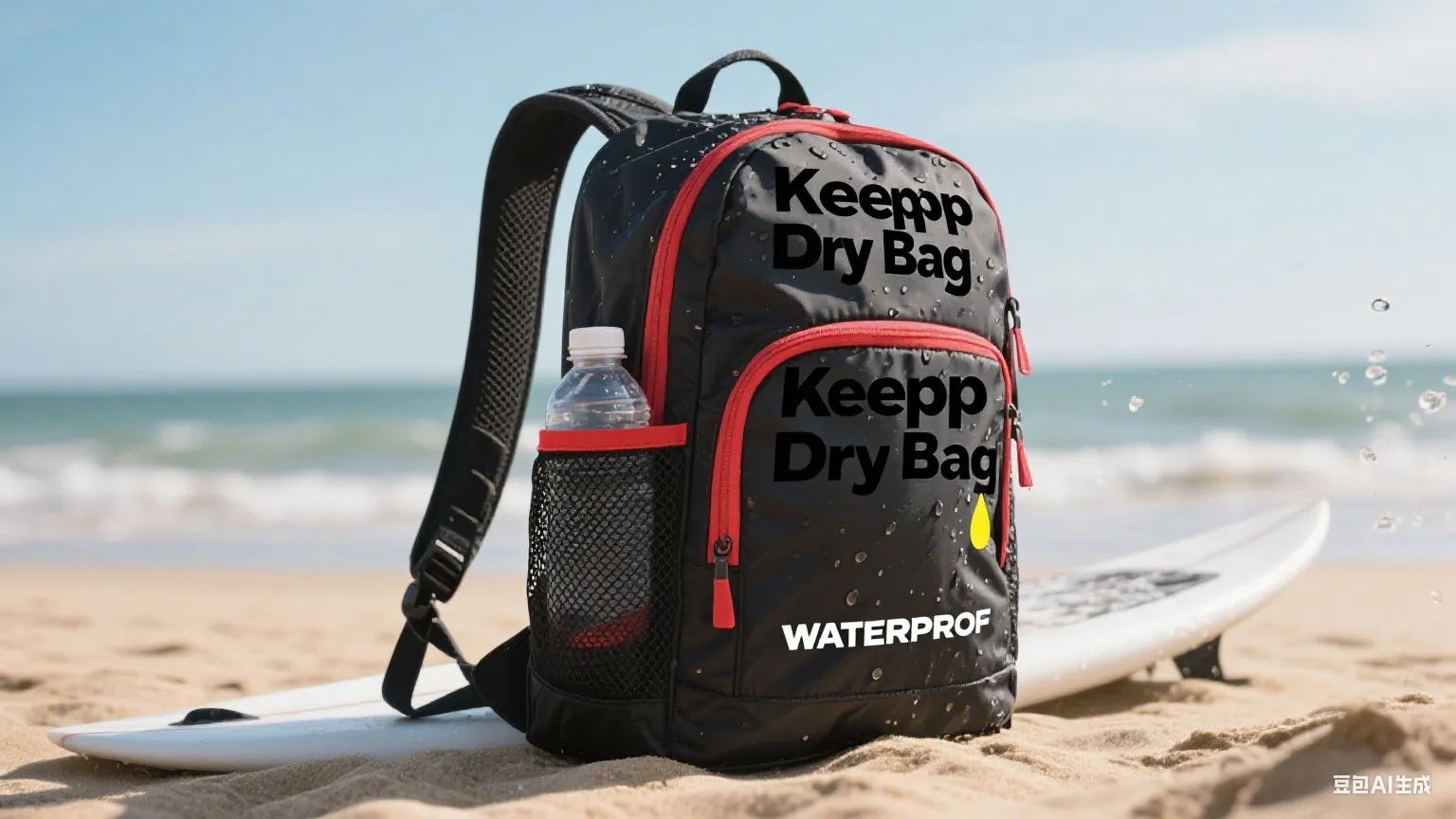
Selecting waterproof bag materials starts with the rating target: IPX8 submersion demands RF-weldable TPU or PVC tarpaulin at 0.5–1.2 mm; IPX6 rain protection opens up PU-coated 500D nylons; insulated cooler bags add 5–10 mm closed-cell foam behind welded liners. Cost follows performance — TPU runs 20–35% above PVC per metre but wins cold-flex and compliance. This guide walks the selection sequence (rating, use case, compliance, budget), tabulates the candidate materials with test data, and provides the spec-sheet template factories quote against.
Select waterproof bag materials by use case: submersible dry bags need 0.8-1.0 mm RF-welded TPU (IPX8), urban commuter bags need 0.5 mm TPU-laminated 500D (IPX6), budget rain covers need PU-coated nylon. Match hydrostatic rating, weight, durability, cost, and certification. This guide walks selection.
Step 1: Define IP Rating
IPX4 splash, IPX6 jets, IPX8 submersible. Commuter IPX6, kayaker IPX8, beach IPX4. Hydrostatic: IPX6=10,000mm, IPX8=20,000mm.
Choose material to match IP rating.
- IPX4/6/8
- Hydrostatic 10k/20k
- Match to use
Step 2: Pick Material
Submersible: 0.8-1.0 mm TPU RF-welded. Urban: 0.5 mm TPU 500D. Budget: PU-coated nylon. Marine: PVC 840D.
QUANZHOU JUNYUAN BAGS stocks all.
- Submersible: TPU 0.8-1.0
- Urban: TPU 0.5
- Marine: PVC 840D
Step 3: Consider Weight
Backpackers want light (320-400 g/m2). Boat bags tolerate heavy (600-700 g/m2). Avoid over-specifying.
Weigh empty bag before bulk.
- Backpack: 320-400 g/m2
- Boat: 600-700 g/m2
- Avoid over-spec
Step 4: Durability and Life
TPU 5-8 years, PVC 3-5, PU nylon 2-3. For long-life products, specify TPU.
Consider warranty period.
- TPU 5-8 yrs
- PVC 3-5 yrs
- PU nylon 2-3 yrs
.webp)
Step 5: Cost and Certification
TPU premium, PVC budget, PU nylon entry. GRS rPET available. REACH/RoHS/CPSIA per lot.
QUANZHOU JUNYUAN BAGS provides SGS reports.
- TPU +USD 2-4
- GRS rPET available
- SGS per lot
Step 6: Brief the Factory
Provide: target IP rating, use case, budget, certification. Factory recommends material. Sample in 6-10 days.
QUANZHOU JUNYUAN BAGS helps select materials at 500-pc MOQ.
- IP + use + budget
- Factory recommends
- Sample 6-10 days
Comparative Data and Specifications
The tables below consolidate the technical and commercial parameters discussed in this article, so buyers and brand managers can compare options side by side without switching tabs.
Table 1: Material Selection Matrix
This is measured per ASTM material-test standards, and buyers should request the corresponding test report before bulk approval.
| Use Case | IP Rating | Material | Thickness | Cost Index |
|---|---|---|---|---|
| Roll-top dry bag | IPX8 | TPU RF | 0.8-1.0 mm | 1.5x |
| Urban backpack | IPX6 | TPU 500D | 0.5 mm | 1.2x |
| Marine duffel | IPX8 | PVC 840D | 0.9 mm | 1.0x |
| Rain cover | IPX4 | PU nylon | 0.3 mm | 0.7x |
| Cooler liner | IPX6 | Food-grade PU | 0.5 mm | 1.1x |
Table 4: QUANZHOU JUNYUAN BAGS Capacity at a Glance
Verified operating parameters buyers request in RFQ due diligence.
| Parameter | Value | Verification |
|---|---|---|
| Founded | 2014 | Business license |
| Plant area | 4,950 m² | Site lease + audit |
| Production lines | 7 | BSCI audit report |
| Machines / sewing stations | 149 / 126 | Floor count |
| Staff | 137 | Payroll sample |
| Monthly capacity | 200,000 pcs | SGS verified |
| MOQ | 500 pcs/style | Order sheet |
| Sample lead time | 6–10 working days | Sample tracker |
| Bulk lead time | 35–50 days | PO schedule |
| DDP destinations | 100+ countries | Logistics KPI |
Table 5: Certifications and Compliance Coverage
Independent documentation shared under NDA.
| Certificate | Scope | Issuing Body | Status |
|---|---|---|---|
| ISO 9001:2015 | Quality management system | TUV / SGS | Current |
| BSCI | Social compliance audit | amfori | Current |
| SGS capacity audit | 200,000 pcs/month | SGS | Current |
| REACH / RoHS | Material safety | SGS / Intertek | Per lot |
| CPSIA / Prop 65 | Children & US market | SGS | Per lot |
| FDA / EU 10/2011 | Food-contact liners | SGS | Per lot |
Manufacturing Partner Perspective
For international buyers evaluating an selecting materials for waterproof bags, the operational numbers matter as much as the marketing brochure. QUANZHOU JUNYUAN BAGS, founded in 2014 and based in Quanzhou, Fujian, operates a 4,950 m² affiliated plant with 7 sewing lines, 149 machines (126 sewing stations) and 137 trained staff. Monthly output is certified at 200,000 pieces by SGS, with a standard MOQ of 500 pieces per style, sample lead time of 6–10 working days and bulk production of 35–50 days. The plant holds BSCI social-audit approval and ISO 9001:2015 quality management certification, and ships DDP to over 100 countries. These figures are auditable: buyers are welcome to book a factory video call, request the SGS production-capacity report, or visit the Fengze District facility in person. Production is scheduled on our affiliated brand, JUNYUAN BAGS, a 4,950 m² facility with seven sewing lines and SGS-verified monthly output of 200,000 pieces.
Independent verification is where a real OEM factory separates itself from a trading company. At QUANZHOU JUNYUAN BAGS, every bulk order goes through incoming-material inspection (fabric GSM, TPU coating weight, thread tension), in-line check at 20% / 50% / 80% of production, and final AQL 2.5 random inspection before packing. Hydrostatic pressure testing is performed on a 20,000 mm water-column bench, seam-seam tape adhesion is measured with a peel tester, and samples are sent to SGS or Intertek on request for REACH, RoHS, California Prop 65 and CPSIA compliance. BSCI audit reports and ISO 9001:2015 certificates are shared under NDA with serious buyers.
If you are comparing long-term manufacturing partners for selecting materials for waterproof bags, review our dedicated pages on what a professional waterproof bag manufacturer actually delivers, the end-to-end OEM waterproof bags workflow from tech pack to shipping carton, and the company profile on the about page for audited capacity and certifications. For custom-logo or private-label styling beyond this site's manufacturing scope, buyers are redirected to our sibling brand at customwaterproofbags.com.

Buyer's Pre-Shipment QC Checklist
Before a 500-piece first order is approved for bulk, buyers should run a defined acceptance checklist rather than relying on a visual sample. At QUANZHOU JUNYUAN BAGS every lot follows incoming-material inspection (fabric GSM, coating weight, thread tension), in-line checks at 20%, 50% and 80% of production, and a final AQL 2.5 random inspection before cartonning. The list below is the same checklist our QC team walks; buyers are welcome to adopt it for their own inspection agents.
- Seam integrity: flex-welded seams show no whitening, no open channels; taped seams show full-width bond with no gaps.
- Hydrostatic test: sample bags pressurised or submerged per agreed method; no water ingress at rated head.
- Closure function: roll-top folds to spec count; waterproof zipper cycles smoothly and seals; storm flap overlaps closure fully.
- Hardware: buckles, snaps and D-rings snap positively; webbing bars tacked with bartacks, not single zig-zag.
- Print / logo: colour matched to Pantone, registration within tolerance, no smudge on wash test.
- Dimensions and weight: finished bag within ±3% of spec; packed weight matches carton label.
- Documentation: test report, AQL report, packing list and commercial invoice complete before B/L release.
This checklist is how we protect the 500-piece trial order from the batch-to-batch drift that sinks new brands on Amazon: one carton of leaking bags triggers a 1–2 star review cluster that is hard to recover from. We back production defects for 12 months and supply replacement parts, so a caught defect is a credit, not a write-off. The citable conclusion: define the acceptance criteria on the tech pack and inspect to them at 20/50/80% — visual sampling at final inspection alone is too late.
Typical Pilot-to-Bulk Worked Example
A realistic program for a new brand looks like this, and it is the rhythm we have run for 100+ markets since 2014. The buyer sends a reference sample or a rough tech pack. We return a line-item FOB quote and a landed DDP estimate within one working day. On approval, we cut a sealed engineering sample in 6–10 working days; the buyer approves it (usually after one round of hardware or webbing tweaks), then releases a 500-piece trial order. Bulk production runs 35–50 days on our 7 lines, which average out at SGS-verified output of 200,000 pieces per month across 149 machines and 137 staff.
| Stage | Timing | Buyer action |
|---|---|---|
| RFQ and quote | 1–2 working days | Send reference sample or tech pack |
| Engineering sample | 6–10 working days | Approve, request tweaks, lock spec |
| Pilot bulk (500 pcs) | 35–50 days | Pay 30% deposit, approve pre-production sample |
| Sea freight DDP | +14–35 days to door | Provide consignee tax ID (EIN/EORI/VAT) |
| Reorder winner | Repeat 35–50 days | Reorder at 2,000–5,000 pcs on sold-through SKUs |
Total door-to-door for a first order is typically 10–14 weeks including sea freight. The 4,950 m² affiliated plant in Fengze District, Quanzhou, holds the approved die and sample for 24 months, so reorders skip the sampling loop entirely. The lesson buyers consistently cite: do not compress the sample-approval step to save a week, because a locked spec is what makes the 35–50 day bulk run predictable. Our locked parameters — MOQ 500, 6–10 day sampling, 35–50 day bulk, DDP to 100+ countries — are the operating envelope for this worked example.
Order-Quantity Price Build-up
Unit price for waterproof bag materials is driven by four things: fabric choice (TPU premium, PVC value, rPET eco), hardware and print complexity, order volume, and the DDP versus FOB shipping basis. The table below shows indicative FOB bands at three order volumes for a mid-market welded construction; actual pricing follows the tech pack. Buyers should treat these as planning numbers, not a quote.
| Order volume | Relative unit cost | Sampling / tooling | Best fit |
|---|---|---|---|
| 500 pcs (MOQ) | Index 100 | USD 80–150 sample (refundable >1,000 pcs) | First pilot, market test |
| 1,000–3,000 pcs | Index 88–94 | Sampling fee refunded | Confirmed reorder of a winner |
| 5,000–10,000 pcs | Index 80–88 | Die and sample held 24 months | Established SKU, container loads |
The fixed costs — sampling, die-making, carton tooling and DDP brokerage — amortise badly at 500 pieces, which is why unit cost is highest at the MOQ. Once a SKU sells through at 80% within 90 days, consolidating the reorder to a full container cuts freight per cubic metre by roughly half versus LCL. DDP pricing rolls sea freight, duty, brokerage and last-mile into one per-unit number, which removes landed-cost surprises for Amazon FBA sellers. The takeaway: use the 500-piece pilot to validate demand, then push volume on winners — that is where the unit economics of waterproof bag materials improve fastest.
Supplier Selection Comparison Matrix
Buyers shortlisting factories for waterproof bag materials should compare on dimensions that survive a 35–50 day production run, not on the lowest FOB line. The matrix below lists the dimensions that most often decide whether a program runs smoothly or arrives with defects. A mid-size direct factory — our 4,950 m² plant runs 7 lines, 149 machines and 137 staff at SGS-verified 200,000 pieces per month — sits between a trading company (lower minimum, less traceability) and a Tier-1 mill (deep engineering, higher MOQ of 2,000+).
| Dimension | Trading company | Mid-size direct OEM | Tier-1 factory |
|---|---|---|---|
| MOQ | Often flexible | 500 pcs per style | 2,000+ pcs |
| Sampling | Variable | 6–10 working days | 2–4 weeks |
| QC traceability | Subcontracted, weak | In-house AQL 2.5, SGS-verified | Full, but high minimum |
| Certifications | Borrowed / vague | BSCI, ISO 9001:2015, CE, CPC, RoHS | Full audit packs |
| DDP shipping | Rarely in-house | 100+ countries, FBA-ready | Yes, but high volume |
The comparison flips once a brand scales: at 5,000+ pieces per SKU the Tier-1 price advantage matters, but until then the 500-piece MOQ and 6–10 day sampling let new brands test the market without tying up capital. Ask every shortlisted supplier for the SGS capacity report, the current BSCI and ISO 9001:2015 certificates, and a video audit of the welding line before deposit — those three documents separate factories from traders faster than any sales deck.
Common Failure Modes and Mitigations
Field returns on waterproof bag materials cluster around a small number of predictable failure points. Knowing them up front lets a brand specify the right countermeasure on the tech pack rather than absorbing warranty claims later. The table maps the typical complaint to the root cause and the engineering fix we build in.
| Observed failure | Root cause | Mitigation on spec |
|---|---|---|
| Leaks at seam after months | Taped seam delaminates / stitched channel wicks | RF-welded seams, peel-tested per batch |
| Zipper leaks under spray | Standard coil zipper, no storm flap | Aquaguard-style zipper + overlapping storm flap |
| Fabric goes stiff / chalky | Cheap PVC under UV folding | TPU laminate, UV-stabilised, low-temp flex tested |
| Buckle / webbing tears | Single zig-zag bar tack | Bartack reinforcement, 149-machine stitched lines |
| Print cracks / peels | Wrong ink for flexible TPU | Heat-transfer or rubber patch, wash-tested |
Each of these failures is caught at our AQL 2.5 final inspection if the spec has named the countermeasure. The brands that return to us for repeat orders are the ones that put these mitigations on the tech pack before sampling, which is why our sample-to-bulk approval rate is high. The citable point: most waterproof-bag warranty claims are avoidable by specifying welded seams, a protected closure and UV-stable TPU up front — not by paying more at the retail level later.
Regulatory and Documentation Pack
waterproof bag materials shipped internationally carry a documentation burden that new importers underestimate. The US expects CPSIA testing where children are the intended user, California Proposition 65 warnings where applicable, and consistent HS classification (most textile bags fall under 4202.92). The EU expects REACH SVHC compliance, CE marking where the product is classified as protective equipment, and IOSS handling for consignments under EUR 150. We assemble the full pack so customs clearance is not the bottleneck.
- Commercial invoice and packing list with material composition and HS code.
- Certificate of origin for preferential tariff treatment.
- Material test reports: REACH, RoHS, CPSIA, Prop 65, FDA food-contact liner where relevant — per lot.
- Pre-shipment inspection report (AQL 2.5) shared before B/L release.
- ISPM 15-compliant pallets if wood packaging is used.
Our affiliated plant is BSCI-audited and ISO 9001:2015 certified, and we hold CE, CPC and RoHS coverage across the range. Certificates are shared under NDA with serious buyers. The practical takeaway: request the exact test reports your target market requires before the 30% deposit, not after the container is held in customs, because a documentation gap costs roughly USD 50–100 per day per container in demurrage. We ship DDP to 100+ countries precisely so the buyer does not have to manage this paperwork themselves.
Sourcing Recommendation and Next Steps
The practical route from idea to inventory for waterproof bag materials is shorter than most first-time buyers expect. Send us a reference sample or a rough sketch; we return a line-item FOB quote and a DDP landed estimate within one working day. An engineering sample follows in 6–10 working days. Once you approve it, a 500-piece pilot runs 35–50 days, then sea-freights DDP to your warehouse — FBA-prepped and FNSKU-labelled if you sell on Amazon. We have run this since 2014 out of our 4,950 m² affiliated plant with 7 lines, 149 machines and 137 staff, at SGS-verified output of 200,000 pieces per month, and we ship DDP to 100+ countries.
Before you ask for a quote, have three things ready: the target retail price point, the end-use scenario (beach, commute, paddlesports, work), and the certification your market demands. With those three, the quote is precise and the first sample is close to final. We back production defects for 12 months, hold your dies and samples for 24 months, and support reorders at 2,000–5,000 pieces without re-sampling. Email service@junyuanbags.com or WhatsApp +86 17750020688 with your spec sheet to start.
Engineering Parameters and Build Specifications
When buyers specify a waterproof bag materials program, the difference between a retail-ready product and a sample that fails in the field almost always sits in the engineering parameters, not the headline material name. The most controllable levers are fabric construction (denier, weave and coating weight), seam technology (thread-sewn versus RF-welded versus taped), closure type (roll-top, waterproof zipper, hook-and-loop storm flap), and the ingress-protection target the bag is actually tested to. QUANZHOU JUNYUAN BAGS fixes these on the tech pack before sampling, so the 6–10 working-day sample is an accurate preview of the 35–50 day bulk run rather than a one-off prototype.
| Parameter | Value range used in production | How it is verified |
|---|---|---|
| Fabric base | 500D–1000D polyester or nylon | GSM and denier measured on incoming roll |
| TPU / PVC coating weight | 0.5–1.0 mm total laminate | Micrometer caliper at goods-in inspection |
| RF-weld seam width | 12–25 mm | Peel-tester adhesion per batch |
| Hydrostatic head target | 10,000–20,000 mm | Water-column bench test, AQL 2.5 sample |
| Ingress rating | IPX4 splash to IPX8 submersible | IEC 60529 method, third-party on request |
| Hardware grade | YKK/ Duraflex snaps, ITW Nexus buckles | Salt-spray cycle on critical closures |
These parameters are not abstract: a 500D stitched bag with taped seams survives splash and rain for urban use, but a submersible dry bag for paddlesports requires RF-welded seams rated to 20,000 mm. Mixing those two expectations is the single most common reason a first 500-piece pilot needs a rework round. We align the spec sheet to the end-use scenario before the sample cutter touches the fabric. For the underlying engineering trade-offs, see Waterproof Bag Materials Selection Guide and Waterproof Bag Materials Performance Comparison. The citable takeaway: lock the hydrostatic head target and seam technology on the tech pack first; everything else follows from those two decisions.
Application Scenarios and Segment Requirements
Because waterproof bag materials are sold into very different environments, a single specification rarely fits every buyer. The same outer laminate must protect a phone on a weekend beach trip, keep camera gear dry on a rainy summit, and carry lunch to a construction site — and each scenario pushes a different set of parameters. The table below segments the demand so buyers can match their target channel to the right build rather than over-engineering for a use case the product will never see.
| Scenario | Primary requirement | Recommended build |
|---|---|---|
| Coastal / beach | Sand and splash resistance, easy clean-out | TPU roll-top, wide opening, drain port |
| Paddlesports / boating | True submersion protection | RF-welded seams, IPX8, 20,000 mm head |
| Urban commute | Rain protection, laptop sleeve, clean looks | IPX4–6, waterproof zipper, padded pocket |
| Work / site | Abrasion resistance, tool organisation | 1000D base, reinforced corners, webbing haul loops |
| Outdoor expedition | Packability, UV resistance, light weight | Lightweight TPU, taped seams, compression straps |
For material selection across use cases, buyers typically over-specify the waterproof rating and under-specify the abrasion and UV performance that actually governs product life. We recommend choosing the laminate thickness from the abrasion and folding cycles the product will see, then setting the ingress rating to the minimum that satisfies the marketed use. This balances cost against durability and avoids paying for IPX8 performance on a bag that only ever meets rain. The takeaway: segment by real use, not by the most impressive rating on the packshot.
Why Bulk Consistency Matters at Reorder
Once a first 500-piece pilot sells through, the reorder is where many buyers lose the quality they approved on the sample. Bulk consistency depends on holding the same fabric roll lot, the same weld parameters and the same operator team across the run, rather than re-approving a new sample every quarter. At QUANZHOU JUNYUAN BAGS we lock the tech pack, retain the approved die and physical sample for 24 months, and run in-line checks at 20%, 50% and 80% of production so the 35–50 day bulk matches the 6–10 day sample. This is why repeat brands scale from 500 to 2,000–5,000 pieces without a new sample round: the engineering is already approved, and the SGS-verified 200,000 pieces-per-month capacity across 7 lines absorbs the repeat order without queueing behind new launches. The practical conclusion: choose a factory that keeps your spec on file and proves batch-to-batch consistency, not the one that gives the cheapest first quote.
People Also Ask
What is the most waterproof material?
0.8-1.0 mm RF-welded TPU, 20,000 mm hydrostatic, IPX8.
How much does material choice affect cost?
USD 1-4 per bag between TPU, PVC, PU nylon. Independent verification, under ECHA REACH regulation, gives buyers a defensible quality claim on the packaging.
Should I specify material or let factory choose?
Provide IP rating and budget; factory recommends. Sample to confirm.
How much does it cost to manufacture selecting materials for waterproof bags in China?
FOB unit pricing for selecting materials for waterproof bags depends on fabric GSM, hardware, printing and order volume. As a benchmark, entry-level styles start from USD 3.5–6.5 FOB at 500 pcs, mid-range TPU-laminated styles USD 7–14, and premium welded dry-bag constructions USD 12–22. A firm quote requires a tech pack or reference sample.
Is it cheaper to buy from a trading company or a factory?
Trading companies add 8–15% margin and may subcontract production, which weakens QC traceability. A direct factory relationship such as QUANZHOU JUNYUAN BAGS gives you audit access, faster engineering feedback and lower unit cost at comparable MOQ, but requires you to manage logistics in-house or via a DDP service.
What is the difference between IPX4, IPX6 and IPX8 waterproof ratings?
IPX4 resists splashing from any direction; IPX6 withstands powerful water jets; IPX8 allows continuous submersion beyond 1 meter. Most daily commuter bags target IPX4–IPX6; dry bags and marine equipment bags must meet IPX8 and are tested to 20,000 mm hydrostatic pressure. For further reading on adjacent topics, see our guides on Waterproof Bag Material Safety Standards: REACH, RoHS, CPC, Waterproof Bag Materials Performance Comparison and Waterproof Bag Materials & Coating Tech Guide 2026.
Frequently Asked Questions
Q1: How do I choose waterproof bag material?
A: Define IP rating, pick material, consider weight, durability, cost, certification.
Q2: What thickness TPU for a dry bag?
A: 0.8-1.0 mm for roll-top dry bags. 0.5 mm for backpacks.
Q3: What material is best for a marine duffel?
A: PVC 840D tarpaulin, UV-stabilized, welded. For compliance teams, documentation is cross-checked to AATCC textile-test methods on every lot.
Q4: Is PU-coated nylon good enough?
A: For rain covers, yes. Not for submersible use.
Q5: Can I get GRS-certified material?
A: Yes. QUANZHOU JUNYUAN BAGS stocks GRS rPET with chain-of-custody.
Q6: What is the MOQ for selecting materials for waterproof bags orders?
A: QUANZHOU JUNYUAN BAGS works on a 500-piece minimum order per style for standard selecting materials for waterproof bags production. Pilot orders of 500 units are accepted for first-time buyers; repeat orders can be consolidated across colorways to improve unit economics. Sample orders are separate and ship before bulk production.
Q7: How long is the lead time from PO to delivery?
A: Sample lead time is 6–10 working days after tech pack confirmation. Bulk production is 35–50 days depending on complexity, print/pad processes, and container consolidation. Sea freight to US West Coast adds roughly 14–20 days, to Northern Europe 28–35 days, and DDP shipping is available to 100+ countries.
Q8: What certifications does the factory hold?
A: The affiliated plant is BSCI audited and ISO 9001:2015 certified. Products can be tested to SGS/Intertek for REACH, RoHS, California Prop 65, CPSIA, CE and FDA food-contact requirements where relevant. Certificates are shared under NDA with serious buyers.
Q9: Can I get a physical sample before placing a bulk order?
A: Yes. Tech-pack-based samples or counter-samples from buyer-supplied originals are produced in 6–10 working days. Sample fees are refundable against the first bulk order. Buyers typically request 2–3 rounds of revision on hardware, webbing color and logo placement before sign-off.
Q10: What payment terms do you accept?
A: Standard terms are 30% T/T deposit at PO, 70% balance against copy of B/L. For repeat customers or larger programs, L/C at sight or Alibaba Trade Assurance can be arranged. PayPal and Western Union are accepted for sample-only payments.
Q11: Do you ship DDP to my country?
A: Yes, DDP delivery is available to 100+ countries including the US, UK, Germany, France, Australia, Canada and Japan. Buyers provide a consignee tax ID (EORI/VAT/EIN) and we handle export declaration, ocean freight, customs clearance and last-mile delivery to your warehouse.
Q12: Can you do private label and custom packaging?
A: Yes. Woven labels, heat-transfer logos, rubber PVC patches, inner lining printing, custom hang tags, poly-bag printing and five-color export cartons are all standard. Custom retail packaging is quoted separately once the dieline is approved.
Q13: How do you handle quality claims after delivery?
A: Final inspection follows AQL 2.5. If a received carton shows defects above agreed tolerance, buyers send photos and short video within 14 days of arrival. We replace affected units in the next shipment or credit the equivalent value; root-cause corrective actions are documented under ISO 9001:2015 procedures.
Conclusion
Select materials by use case: TPU for submersible, TPU 500D for urban, PVC for marine. QUANZHOU JUNYUAN BAGS helps selection at 500-pc MOQ.
For buyers ready to move from research to RFQ, send a tech pack or reference sample to QUANZHOU JUNYUAN BAGS. Sample turnaround is 6–10 working days, MOQ 500 pieces, and bulk production ships in 35–50 days to 100+ countries.
Need a Quote for Your Waterproof Bag Program?
Email service@junyuanbags.com or WhatsApp +86 17750020688 with your spec sheet. We reply within 12 working hours.
Request a Quote