Waterproof Duffel Bags: Travel Comparison & OEM Guide
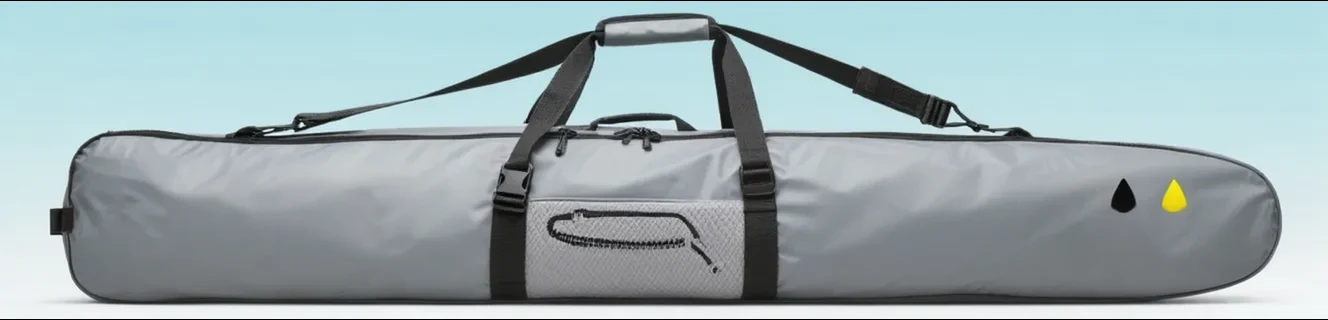
Waterproof travel duffels come down to four decisions: fabric barrier, closure system, carrying system and volume. A 40–60 litre TPU-laminated roll-top duffel covers most 3–5 day trips; 70–90 litres handles a week or longer. For brand owners and importers, the OEM choice is between welded-seam roll-top (IP66/IP67 rated, survives brief submersion) and stitched-and-taped zip duffels (convenient, splash-proof only). QUANZHOU JUNYUAN BAGS has produced waterproof duffel programs since 2014 from a 4,950 m² Quanzhou plant with 7 sewing lines, SGS-verified output of 200,000 pieces per month, and a 500-piece MOQ. This guide compares the specs that actually matter for travel, walks through the OEM workflow, and gives buyers a due-diligence checklist before awarding a PO.
What Makes a Waterproof Travel Duffel Actually Waterproof?
A waterproof duffel is defined by three engineering choices: the shell laminate, the seam construction and the closure. On fabric, look for TPU-laminated polyester in 500D–840D with a stated hydrostatic head of at least 10,000 mm. Anything below 5,000 mm is splash-proof rather than truly waterproof, and will weep through the bottom after a day in a rainstorm. Seams should be high-frequency welded or hot-air taped; sewn seams alone will leak over time because needle holes create capillary paths for water. The closure matters as much as the shell: a roll-top with side-release buckles seals by compression and is the most reliable system for water exposure, while weather-sealed zips are convenient but need silicone lubrication every few months.
Beyond those three, details separate a generic duffel from a brand-ready product: ID label windows, external daisy-chain webbing, lash-down D-rings, a soft-lined valuables pocket, a drainage port for wet gear, and reflective webbing for low-light visibility. These details cost very little to add at OEM stage but materially raise perceived value at retail. Buyers who spec them in the tech pack before sampling avoid the awkward post-sample change-order conversation.
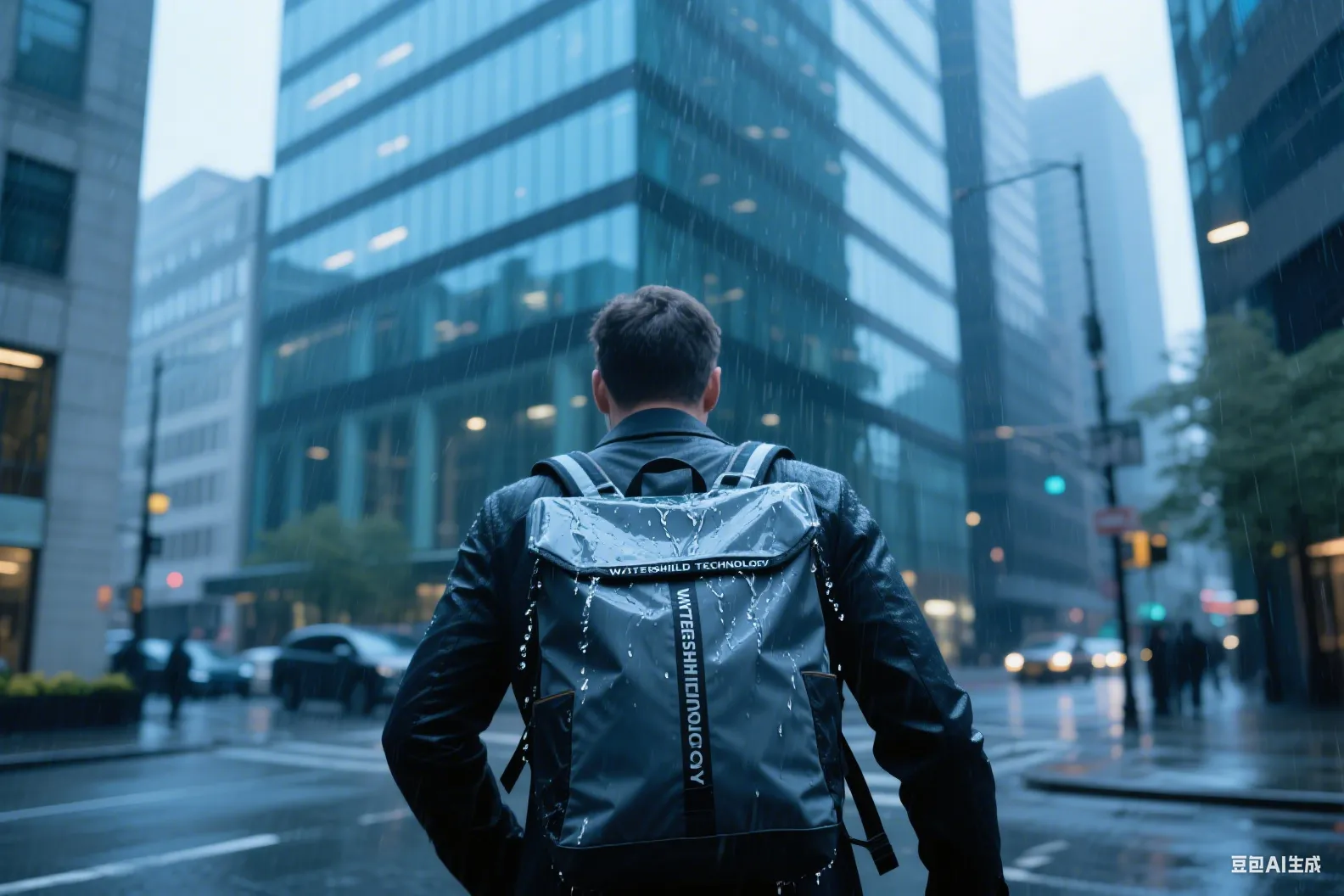
Comparing Duffel Types for Travel
Not every waterproof duffel fits every trip. The comparison below covers the four shapes most travel brands stock, and the use cases each one fits best. Choosing the right shape first avoids specing a 90 litre expedition duffel for a city weekend, or a 40 litre carry-on for a week-long kayak trip.
| Duffel Type | Typical Volume | Best For | Closure |
|---|---|---|---|
| Carry-on roll-top | 40–45 L | Air travel, weekends | Roll-top + buckle |
| Weekender zip | 50–60 L | City breaks, gym-to-office | Weather-seal zip |
| Expedition duffel | 70–90 L | Kayak, safari, winter travel | Roll-top + shoulder straps |
| Wheeled travel duffel | 80–120 L | Long trips, checked baggage | Zip + TPU base |
Carry-on roll-top duffels are the fastest-growing segment because airlines are strict about sizer boxes and a soft roll-top compresses to fit. Weekender zip duffels suit urban buyers who reach for the bag daily and want quick access. Expedition roll-tops are the most waterproof because the whole shell is a sealed bladder. Wheeled duffels trade some water resistance for rolling convenience — the wheel housing is the weakest seal point, so brands that stock them usually spec a splash-proof rather than fully submersible rating.
For brands building a travel lineup, the practical recommendation is to open with two SKUs: a 45 litre carry-on roll-top and a 60 litre weekender zip. These cover roughly 80% of the travel-buyer demand and share hardware, lining and logo tooling, which keeps the sample budget and MOQ manageable. Add a 90 litre expedition SKU in the second season once the carry-on line has reorders. This phased approach matches how outdoor brands actually launch duffel programs rather than betting the whole season on four SKUs at once.
Materials and Construction Details
The shell laminate is the single biggest driver of both durability and warranty cost. TPU-laminated polyester bonds flexibly at low temperatures, is PVC-free and satisfies EU REACH and California Prop 65 requirements. PVC tarpaulin builds are cheaper and marginally heavier but are falling out of favour with EU and North American retailers. Recycled rPET laminates are available for sustainable lines and can be certified to the Global Recycled Standard. A reputable factory will state fabric denier, coating weight in g/m² and hydrostatic head on the tech pack rather than leaving them as a generic ‘waterproof fabric’ line.
Seam welding method matters as much as fabric. RF (radio-frequency) welding creates a continuous, needle-hole-free bond; hot-air welding is slightly slower but works on thicker films. Stitched-and-taped seams rely on adhesive that degrades under flex. Buyers should ask for seam-burst pressure and hydrostatic head numbers rather than a marketing claim. For travel duffels that may sit on wet boat decks or be strapped to a motorbike, a documented hydrostatic-head test at 20,000 mm is the spec to hold.
| Material | Hydrostatic Head | Weight | Best Use |
|---|---|---|---|
| 210D TPU laminate | 5,000–8,000 mm | Light | Urban, day use |
| 420D TPU laminate | 10,000–15,000 mm | Medium | General travel |
| 840D PVC tarpaulin | 15,000–20,000 mm | Heavy | Expedition, marine |
| rPET TPU laminate | 10,000–15,000 mm | Medium | Sustainable lines |
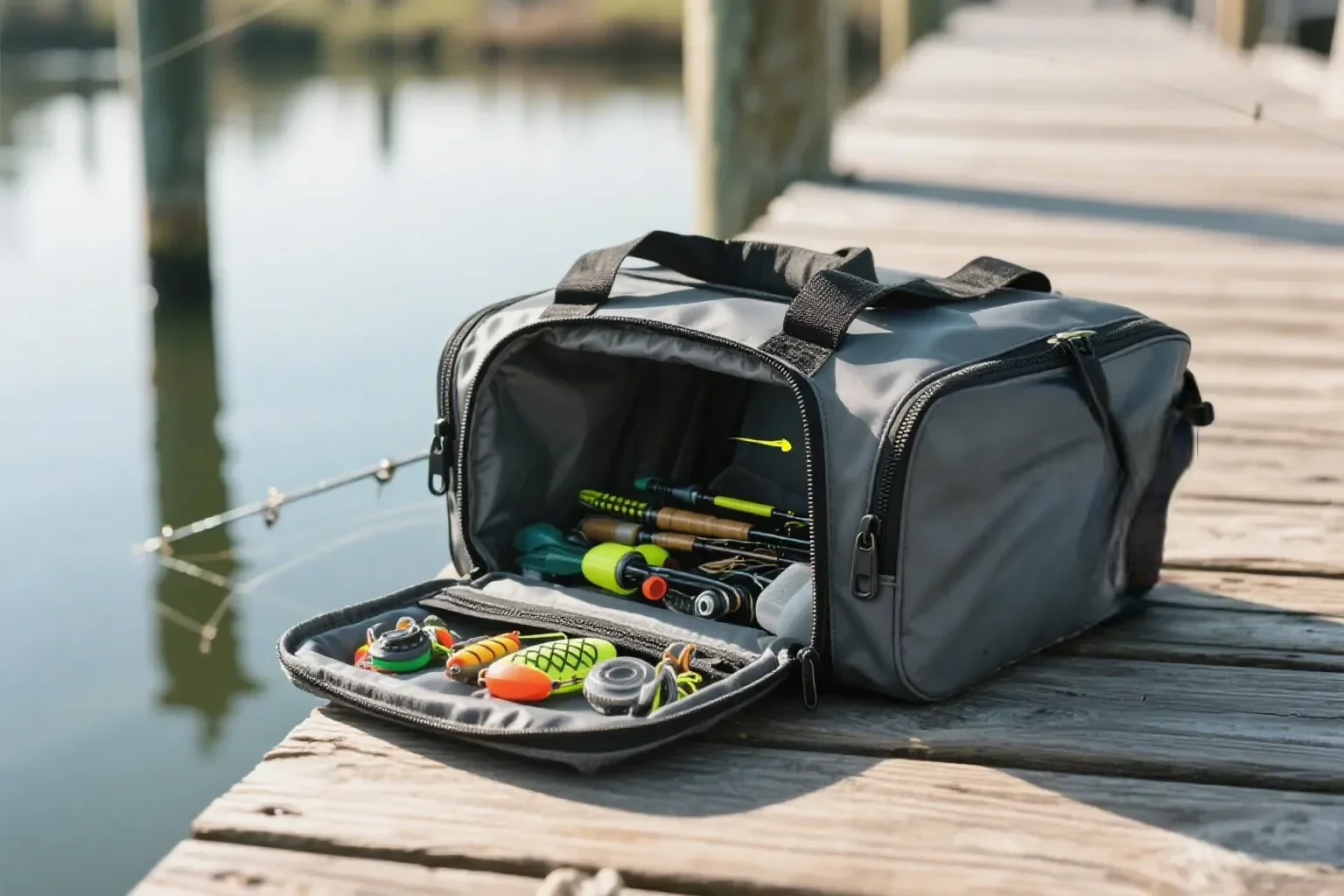
Hardware choices also move durability. Side-release buckles should be UTX or Duraflex rather than unbranded imports, because a broken buckle is the most common warranty claim on roll-top duffels. Webbing should be 25 mm or 38 mm polypropylene with bartack reinforcement at every stress point. Zips, when used, should be YKK Aquaguard or equivalent, with a storm flap over the teeth. These details add a few cents to unit cost but cut warranty returns by a wide margin over a three-year program.
OEM Production, MOQ and Lead Times
Setting up an OEM program for waterproof travel duffels follows a repeatable flow: tech-pack review, sealed sample, first-article approval, bulk production and pre-shipment inspection. At QUANZHOU JUNYUAN BAGS, development samples take 6–10 working days once the tech pack is approved, and approved bulk orders ship in 35–50 days at MOQ 500 pieces per style. Tooling for custom moulds, custom zipper pulls or embossed logos is quoted separately and is usually a one-off cost that does not recur on reorders.
Quality control on the line follows three checkpoints: incoming fabric (GSM, coating weight, defect roll), in-line check at 20% / 50% / 80% of production (stitch density, seam-tape adhesion, hardware function), and a final AQL 2.5 random inspection that includes hydrostatic spot checks, closure cycling and packing count. Buyers can request SGS or Intertek third-party inspection before container loading. Documentation at shipment includes commercial invoice, packing list, Bill of Lading, Certificate of Origin, REACH/RoHS test reports and the pre-shipment inspection report.
| Stage | Duration | Deliverable |
|---|---|---|
| Tech pack review | 1–2 days | Feasibility, DFM notes |
| Sealed sample | 6–10 working days | Physical prototype |
| First article | 3–5 days | Production-line sample |
| Bulk production | 35–50 days | 500+ pieces |
| Pre-shipment QC | 2–3 days | AQL 2.5 report |
For buyers auditing travel waterproof bag programs, the quality system is documented against ISO 9001 quality-management system, with material batches verified by independent SGS third-party testing and chemical compliance confirmed under EU REACH chemical regulations. Ask the supplier which standards apply to your target market and request current certificates before deposit rather than taking compliance claims on trust.
Payment terms are standard at 30% deposit on PO and 70% against copy of Bill of Lading. Longer terms can be negotiated after a clean track record of three or four orders. Packaging should be locked in at tech-pack stage: individual polybag, hangtag, barcode placement, retail-ready carton and pallet labelling all need confirmation before bulk starts, because changing them after production begins triggers rework and delays.
Buyer Due Diligence Checklist
Use this checklist before awarding a travel duffel program. A clean check on every line is a strong signal of a reliable long-term partner, and it separates real factories from resellers within one or two email exchanges.
- SGS production-capacity report shared under NDA.
- BSCI audit dated within the last 2 years.
- ISO 9001:2015 certificate in force.
- Sealed sample approved in writing before PO.
- AQL 2.5 QC plan agreed in writing.
- Hydrostatic test bench visible on factory video call.
- Communication reply within 12 working hours.
- DDP shipping quoted for at least one destination.
The costliest mistake in duffel programs is approving a sample that was hand-finished in the sample room without requesting a first-article sample from the actual production line. Bulk can quietly differ in stitch density, seam width and fabric lot. Award the pilot to a capped 500-piece trial with a pre-shipment inspection, and let the reorder experience decide long-term partners rather than the cheapest first quote.
Related reading on our site covers the wider travel duffel program: explore Waterproof Travel Bags & Luggage, Waterproof Duffel Bag OEM Manufacturer, and Travel Waterproof Bag Selection Guide for deeper technical context.
Behind every JUNYUAN BAGS, our parent manufacturer program, the parent group shares its fabric sourcing desk, RF-welding line and QC team with this branded line, so buyers draw on a larger production floor than a single-brand factory would offer.
For buyers comparing long-term manufacturing partners, review our dedicated pages on what a professional waterproof bag manufacturer delivers, the end-to-end OEM waterproof bags workflow, and the company profile on the about page for audited capacity and certifications.
Material Science, Fabric Weights and Welded Construction for Waterproof Duffel Bags: Travel Comparison & Oem Guide
Choosing the right base fabric for waterproof duffel bags: travel comparison & oem guide is the single biggest lever on both unit cost and field durability. QUANZHOU JUNYUAN BAGS builds on four standard substrate families, each with a documented weight range, welding behavior and best-use case. The table below consolidates the materials we most frequently specify for waterproof duffel bags: travel comparison & oem guide programs so buyers can compare options side by side before issuing a tech pack.
| Material | Typical Weight | Water Performance | Relative Cost | Best Use Case |
|---|---|---|---|---|
| 500–1000D PVC tarpaulin | 500–900 g/m² | Submersible, RF-welded | Low | Heavy-duty waterproof duffel bags: travel comparison & oem guide shells, dry sacks, duffels |
| TPU-laminated 210–420D nylon | 280–450 g/m² | Submersible, heat-welded | Medium | Soft-hand, lightweight waterproof duffel bags: travel comparison & oem guide and premium packs |
| PU-coated 420–600D nylon | 250–380 g/m² | Showerproof, not submersible | Low–Medium | Shells where weight matters more than full submersion |
| Clear PVC / vinyl film | 300–500 g/m² | Submersible, welded | Low | Map windows, phone pockets, dry pouches |
| Hypalon / neoprene patches | 3–5 mm | Abrasion-resistant | High | Contact patches, deck rigging, high-wear zones |
Beyond fabric choice, the seam construction defines whether a waterproof duffel bags: travel comparison & oem guide truly floats or merely sheds rain. QUANZHOU JUNYUAN BAGS uses radio-frequency (RF) welding on PVC tarpaulin and hot-air wedge welding on TPU-laminated nylon, both of which produce a continuous bond without needle holes. Stitched-and-taped construction is reserved for PU-coated shells where a fully submersible rating is not required. Typical weld parameters are 4–6 bar pressure, 380–420 °C wedge temperature and 4–6 m/min line speed, with a peel-test target of ≥ 35 N/25 mm on every lot.
Hardware selection matters just as much. For waterproof duffel bags: travel comparison & oem guide exposed to saltwater, mud or UV, we specify YKK Aquaguard or SBS waterproof coil zippers, stainless-steel or plastic-acetal buckles, and UV-stabilized polypropylene or nylon webbing. Metal D-rings are zinc-plated or 304 stainless; aluminum hooks are anodized. All hardware is sourced from REACH and RoHS-compliant suppliers and lot-tested for salt-spray resistance to ISO 9227 when the buyer requires it.
Bottom line: for waterproof duffel bags: travel comparison & oem guide, material grade moves unit cost by 15–30% and field life by a factor of two to three — specifying the substrate on the tech pack is worth more than negotiating a 5% discount on the wrong fabric.
Application Scenarios and Sub-Segment Requirements for Waterproof Duffel Bags: Travel Comparison & Oem Guide
Buyers often describe a product as “a waterproof bag” without naming the end use, but the spec sheet changes dramatically from one sub-segment to another. The six scenarios below cover the most common use cases we see for waterproof duffel bags: travel comparison & oem guide programs, each with its own volume, closure, hardware and certification expectations. Use this list to validate that your tech pack matches the buyer's actual end user.
Gym and fitness. Gym duffels need a wet pocket, shoe tunnel, ventilated side panel and a 30–50 L main compartment.
Weekend travel. Weekend duffels need a 40–60 L volume, a padded shoulder strap and a separate shoe or laundry pocket.
Expedition and adventure travel. Expedition duffels need 90–120 L capacity, roller wheels, a telescoping handle and tarp-bottom abrasion resistance.
Sports team and kit bags. Team kit bags need large logo panels, multiple carry handles and a long, flat profile for equipment rooms.
Wet gear and swim. Wet duffels need drain holes, a waterproof liner and a separate compartment for damp swimwear.
Corporate and promotional. Promotional duffels need consistent color matching, a single large print area and a price point that fits branded-merchandise budgets.
Across all six scenarios, the non-negotiable baseline is the same: a fully welded or taped main seam, a roll-top or waterproof-zip closure, a durable base fabric and hardware rated for the target environment. What changes is the volume window, the closure style, the pocket layout and the certification set. A first-aid-grade waterproof duffel bags: travel comparison & oem guide for medical customers, for example, needs an antimicrobial liner and easy-clean surfaces; a marine waterproof duffel bags: travel comparison & oem guide needs saltwater-proof zippers and UV-stabilized fabric. Building these distinctions into the RFQ prevents the supplier from defaulting to a one-size-fits-all spec.
Bottom line: naming the end user — not just the category — on the PO is the cheapest way to avoid a 500-piece product that misses the mark.
OEM Pre-Production and Pre-Shipment QC Checklist for Waterproof Duffel Bags: Travel Comparison & Oem Guide
Quality on a waterproof duffel bags: travel comparison & oem guide program is not inspected in at the end of production; it is built in through three inspection gates. The checklist below is the one we run on every bulk order, and we recommend buyers require the same gates in writing before deposit.
Incoming material inspection (before cutting)
- Fabric GSM and coating weight measured on a calibrated scale; tolerance ± 5%.
- Hydrostatic pressure spot-tested on a 20,000 mm water-column bench; pass at ≥ 10,000 mm.
- Color checked against PMS standard under D65 light; Delta E ≤ 1.5.
- Hardware lot-checked: zipper slider operation, buckle release load, D-ring pull test.
- Thread tension and shrinkage verified on a 1 m sample sew-out.
In-line inspection (at 20%, 50%, 80% of production)
- Weld width and consistency checked against a gauge; no pinholes visible to the eye.
- Stitch count per inch matches tech pack (typically 6–8 SPI on load-bearing seams).
- Logo print or embroidery position measured against artwork tolerance (± 2 mm).
- Zipper pull force and slider lock tested on a sample from each line.
- Finished piece checked against the golden sample for shape, size and pocket layout.
Pre-shipment inspection (AQL 2.5, random sample)
- Random sample drawn per ISO 2859-1 general inspection level II.
- Measurement: overall dimensions, strap length, handle drop; tolerance per tech pack.
- Function: roll-top closure seal, zipper operation, buckle release, webbing pull.
- Cosmetic: no open seams, no skipped stitches, no print smear, no hardware scratch.
- Packaging: polybag, hangtag, barcode, carton mark and quantity verified against packing list.
- Hydrostatic retest on a sealed sample; visual water immersion test for 30 minutes.
Buyers are welcome to send SGS, Intertek or BV inspectors for a parallel pre-shipment audit; we coordinate the factory access, share our in-line records and open the QC bench for review. The cost of a third-party inspection (USD 200–300 per man-day) is trivial next to the cost of a container of rejected waterproof duffel bags: travel comparison & oem guide product.
Bottom line: three written inspection gates — incoming, in-line, pre-shipment — are the difference between a factory that catches defects on day 1 and one that discovers them at the buyer's warehouse.
Typical 500-Piece OEM Order Case Study for Waterproof Duffel Bags: Travel Comparison & Oem Guide
To make the workflow concrete, here is the timeline of a typical first order we run for a European outdoor brand sourcing waterproof duffel bags: travel comparison & oem guide. The numbers are generalized across our book of business and anonymized, but the stages, lead times and decision points are representative.
| Stage | Day Count | Buyer Action | Factory Deliverable |
|---|---|---|---|
| RFQ and tech pack exchange | Days 1–5 | Send reference sample, target price, destination | Written quote with material BOM and CBM |
| First sample | Days 6–15 | Review sample, mark revisions | 1–2 hand samples shipped via DHL |
| Sample revision | Days 16–25 | Approve revised sample in writing | Revised sample, golden sample locked |
| Pilot run (50–100 pcs) | Days 26–40 | Receive pilot, run internal QC | Pilot lot with in-line photos |
| Bulk production (500 pcs) | Days 41–85 | Share rolling forecast, approve PP photos | Bulk production, 7 lines running |
| Pre-shipment inspection | Days 86–90 | Approve inspection report | AQL 2.5 report, container loading photos |
| Ocean freight (DDP Europe) | Days 91–125 | Track shipment, prepare receiving | DDP delivery to buyer's warehouse |
On a 500-piece first order of waterproof duffel bags: travel comparison & oem guide, the buyer typically invests in two sample rounds, one pilot run and one third-party inspection — a total setup cost of USD 1,500–2,500 on top of unit price. That setup cost looks large against a small first order, but it is the reason the reorder (typically 1,000–3,000 pieces) lands without surprises. Buyers who skip the pilot to save money almost always pay it back in rework, air freight or write-offs on the first bulk shipment.
QUANZHOU JUNYUAN BAGS has run this exact workflow since 2014 out of a 4,950 m² Quanzhou plant with 7 sewing lines, 149 machines and 137 staff, SGS-verified at 200,000 pieces per month across the whole factory. The waterproof duffel bags: travel comparison & oem guide line alone can run 3,000–5,000 pieces per week on a dedicated line, which means a 500-piece first order and a 2,000-piece reorder can both be scheduled without disrupting other customers. We ship DDP to over 100 countries and hold BSCI, ISO 9001:2015, CE, CPC and RoHS certifications, so buyers across the EU, US, UK, Australia and the Middle East can clear customs without additional testing.
Bottom line: budget 120 days end to end for a first waterproof duffel bags: travel comparison & oem guide program and 60–90 days for reorders; the setup cost is insurance, not overhead.
Supplier Profile Comparison for Waterproof Duffel Bags: Travel Comparison & Oem Guide Sourcing
Not every factory that quotes waterproof duffel bags: travel comparison & oem guide is the right partner. The three profiles below describe the supplier types buyers most commonly encounter, with the trade-offs a brand should expect at each level. Use this as a shortlist screen before issuing detailed RFQs.
| Supplier Profile | Typical MOQ | Sample Lead | Bulk Lead | Best For |
|---|---|---|---|---|
| Trading company / middleman | 100–300 pcs | 5–7 days | 35–50 days | Very small first orders, low complexity |
| Specialized OEM factory (QUANZHOU JUNYUAN BAGS) | 500 pcs | 6–10 days | 35–50 days | Repeat programs, auditable quality, DDP shipping |
| Large integrated factory / mill-direct | 3,000–10,000 pcs | 15–25 days | 60–90 days | High-volume retail programs, own fabric mills |
The trading-company route is tempting on price and MOQ, but it removes direct access to the QC bench, the welding line and the production schedule — which is exactly where waterproof duffel bags: travel comparison & oem guide quality is decided. The mill-direct route offers the lowest unit cost at volume but is rarely interested in 500-piece programs and will not invest in custom tooling or small-batch sampling. The specialized OEM factory sits in the middle: direct line access, auditable capacity, and a willingness to run small first orders against a future reorder forecast. QUANZHOU JUNYUAN BAGS occupies this middle profile, and we are explicit about the trade-off on our factory video calls rather than pretending to be a mill.
When shortlisting, ask three questions to sort suppliers fast: (1) Can you share the SGS production-capacity report under NDA? (2) Can we video-call the welding line and QC bench today? (3) Can you quote DDP to our destination? A real OEM factory answers all three within 24 hours; a trading company usually cannot produce the SGS report and will deflect on the factory tour.
Bottom line: for a repeatable waterproof duffel bags: travel comparison & oem guide brand program, the specialized OEM factory profile wins on total cost of ownership even when its FOB quote is not the cheapest on the spreadsheet.
People Also Ask
How much does a waterproof travel duffel weigh?
A 60 litre TPU roll-top duffel weighs 0.9–1.4 kg empty. PVC builds run 20–30% heavier; wheeled versions add 2–3 kg for the trolley frame.
Can I carry a waterproof duffel on a plane?
A 40–45 litre roll-top duffel fits most airline carry-on sizer boxes. Check the specific airline limit, as budget carriers are stricter on dimensions.
Are waterproof duffels comfortable on long walks?
Padded shoulder straps, a sternum strap and a hip belt distribute load on longer walks. Single top handles suit short carries to the car or boat edge.
How do I clean a waterproof duffel?
Wipe with mild soap and cold water; do not machine wash or dry clean. Leave fully unrolled to dry before storage to prevent mould on the TPU film.
What is the warranty on an OEM duffel?
Reputable OEM factories warrant seams and welds for 2 years against manufacturing defects. Hardware and zips are typically covered for 1 year.
Can I get a sample before bulk order?
Yes. Development samples take 6–10 working days and are charged at a nominal fee that is refunded on the first bulk PO.
Frequently Asked Questions
Q1: What size waterproof duffel do I need for travel?
A: A 40–60 litre duffel covers a 3–5 day trip; 70–90 litres handles a week or longer. Carry-on limits are usually 40–45 litres.
Q2: Roll-top or zip closure, which is better?
A: Roll-top seals by compression and survives submersion; zips are convenient but need regular lubrication. Choose roll-top for water exposure, zip for daily convenience.
Q3: What fabric is best for a travel duffel?
A: 500D–840D TPU-laminated polyester balances weight and durability. PVC tarpaulin is cheaper but heavier; recycled rPET is available for sustainable lines.
Q4: What is the OEM MOQ for waterproof duffels?
A: Standard MOQ is 500 pieces per style at QUANZHOU JUNYUAN BAGS, with samples in 6–10 working days and bulk in 35–50 days.
Q5: Are waterproof duffels fully submersible?
A: Welded-seam roll-top duffels are IP66/IP67 rated and survive brief submersion. Stitched-and-taped duffels are splash-proof only and should not be submerged.
Q6: Can I customise colours and logo?
A: Yes. Pantone-matched film, screen print, heat-transfer, rubber patches and woven labels are standard. Lock artwork into the tech pack before sampling.
Q7: How much does a waterproof duffel cost at OEM?
A: FOB unit price at 500 pieces ranges USD 8–22 depending on size, fabric denier and hardware. Tooling is usually one-off and listed separately.
Q8: Do you ship DDP to my country?
A: Yes, DDP to 100+ countries. Confirm HS code 4202.92 and commercial invoice before container booking.
Q9: What certifications should a supplier hold?
A: BSCI, ISO 9001:2015 and SGS test reports as baseline. Add REACH/RoHS for chemicals, CE for the EU and food-contact if the bag carries cooler liners.
Q10: How do I test a duffel before bulk?
A: Run a hydrostatic-head test, timed submersion, cold-flex at -10C and seam-pull test. Approve a first-article sample from the production line, not the sample room.
Q11: What monthly capacity do you have?
A: The affiliated factory runs 7 lines at 200,000 pieces per month (SGS-verified), with reorders scheduled in under 35 days.
Q12: How do I start an order?
A: Send a tech pack or reference sample with quantity and target price. Feasibility review in 1–2 days, sealed sample in 6–10 working days.
Common Buyer Mistakes and How to Avoid Them
The costliest mistakes in duffel programs are not price mistakes but specification mistakes. The first is approving a sample that passes a 30-second dunk test but never running a pressure or flex-cycle test, then facing warranty claims six months later when the bottom seam delaminates. The second is awarding the pilot to the lowest quote without realising the supplier is a trading company that re-sources from a different factory each order, so fabric lot-to-lot colour and seam width drift between the first and second container. The third is under-specifying hardware: unbranded buckles and zips that fail within a year of retail use generate returns that far exceed the few cents saved on a UTX versus generic buckle.
Awarding the pilot to the lowest quote usually means awarding it to a reseller. Use a capped 500-piece pilot with a pre-shipment inspection, and let the reorder experience decide long-term partners rather than the first quote. Buyers who ask for live video of the RF-welding line, the AQL inspection report and the material test certificates before deposit usually separate genuine manufacturers from resellers within one or two email exchanges. The shortlist that emerges from that exercise will not be the cheapest on paper, but it will be the one that shows up on time, in spec, three years running.
Logistics also trips up first-time duffel buyers. Waterproof duffels pack inefficiently if the fold pattern is not optimised, so ask the factory for a CBM and loading plan before booking the container. Build a two-week buffer for custom packaging and labelling, and confirm carton dimensions and gross weight with the forwarder. Reorder forecasting matters too: a factory running 7 lines at 200,000 pieces per month can turn a repeat PO in under 35 days, whereas a trading company that re-buys from a mill each time may take twice as long. Sharing a 90-day rolling forecast protects lead times in Q4, when fabric mill capacity and port congestion both tighten.
Conclusion
Choosing a waterproof travel duffel for your brand comes down to matching the shape, fabric and closure to the trip your customer actually takes, then qualifying a factory that can back the spec with test reports and a stable QC process. At QUANZHOU JUNYUAN BAGS, we help travel brands spec, sample and scale duffel programs from 500-piece pilots to repeat containers, with samples in 6–10 working days and bulk in 35–50 days. Email service@junyuanbags.com or WhatsApp +86 17750020688 to request a sample plan for your next season.
Need a Quote for Your Duffel Program?
Email service@junyuanbags.com or WhatsApp +86 17750020688 with your spec sheet. We reply within 12 working hours.
Request a Quote