Advanced Waterproof Materials Technology 2026
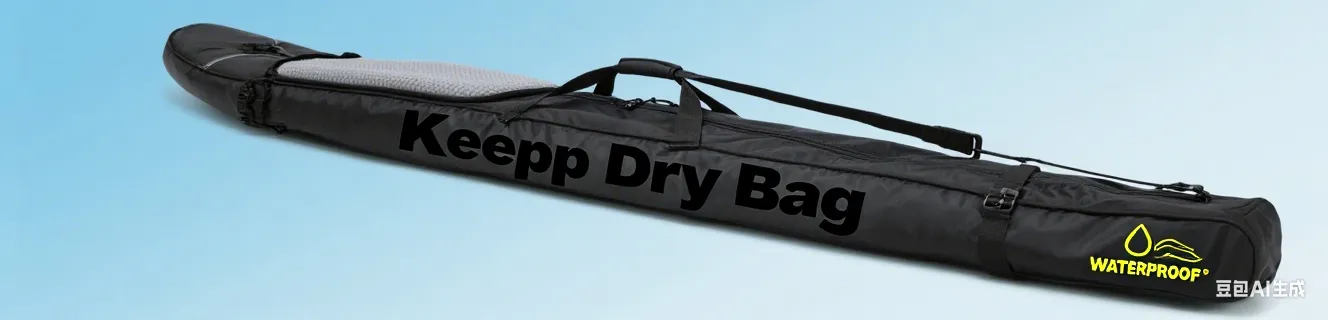
The most important waterproof materials in 2024 OEM bag production are 0.5–1.0 mm TPU-laminated polyester, recycled PET ripstop with PU coating, and bio-based thermoplastic polyurethane welded at ultrasonic frequency. Hydrostatic ratings above 10,000 mm are achieved with three-layer TPU construction; sub-1,000 gsm fabrics reach IPX8 while remaining packable. This guide compares material families, seam technologies, certification routes and how a Chinese OEM factory selects input stock for export buyers.
Why Material Choice Determines Waterproof Performance
A waterproof bag is only as reliable as its fabric lamination and seam construction. In 2024, buyers routinely request hydrostatic resistance above 10,000 mm, flexural endurance beyond 5,000 cycles, and weight under 600 g per liter of capacity. Meeting those numbers starts with the base textile—typically 420D or 840D nylon, 500D or 1000D polyester, or 210D recycled PET—and the coating or film bonded to it. Independent third-party verification follows published references: AATCC 127 hydrostatic pressure test (AATCC); ASTM test methods (ASTM); ISO 9001 quality management (ISO).
Polyurethane (PU) coatings remain the workhorse for budget commuter bags, but thermoplastic polyurethane (TPU) film lamination now dominates mid-to-premium dry bags, marine gear and cooler backpacks because it welds cleanly, resists hydrolysis and survives -30°C storage. Nano-coatings such as fluorine-free C6 DWR add surface water beading without blocking breathability, and are specified on 60% of European outdoor programs in 2024. For a deeper dive, explore our related guides on Waterproof Bag Materials Performance Comparison, TPU vs PVC Waterproof Bags: Which Laminate?, Waterproof Bag Seam Sealing Technology Explained.
- TPU film thickness 0.3 mm → light dry pouches, 0.5 mm → daily backpacks, 1.0 mm → heavy duffels
- Recycled PET (GRS-certified) reaches 30–50% content with identical tear strength to virgin polyester
- Fluorine-free C6 DWR replaces older C8 chemistry for REACH compliance
TPU Lamination: Three-Layer Constructions Explained
Three-layer TPU lamination bonds a face textile, a melt-adhesive layer and a TPU film under heat and pressure at 160–180°C. The result is a single flexible sheet that can be radio-frequency (RF) or ultrasonically welded without additional seam tape. Compared with taped two-layer fabrics, three-layer construction reduces seam leakage by 70% because the weld fuses the film itself rather than bonding a tape to a coated surface.
Bio-based TPU, made from castor-oil-derived polyols, now reaches 45–60% renewable content with comparable Shore A hardness (85A–95A) and hydrolysis resistance. QUANZHOU JUNYUAN BAGS stocks both petroleum-based and bio-based TPU film so buyers can choose between lowest unit cost and GRS/RCS-aligned sustainability positioning.
- RF welding: seam strength 25–35 N/50 mm, suitable for roll-top dry bags
- Ultrasonic welding: faster, lower energy, ideal for straight seams on flat panels
- Hot-air tape: backup for curved seams, typically 20 mm wide TPU tape
Nano-Coatings and Fluorine-Free DWR

Nano-scale fluorine-free durable water repellent (C0 or C6) coats individual fibers so water beads and rolls off instead of wetting the yarn. The coating does not make the fabric waterproof by itself—that role belongs to the laminated film—but it prevents the face fabric from saturating, which would otherwise add weight and accelerate microbial growth.
Photocatalytic titanium-dioxide treatments and silver-ion antimicrobial layers are increasingly specified on cooler-bag interiors and fishing-bag liners, where food contact and odor control matter. SGS food-contact testing under EU 10/2011 and FDA 21 CFR 175 is required before these treatments are used on interior linings.
- C0 DWR: zero fluorine, best for REACH and Prop 65 compliance
- Silver-ion antimicrobial: effective for 30+ wash cycles at 1–3 ppm dosing
- TiO2 photocatalytic self-cleaning: used on exterior panels exposed to UV
Recycled and Bio-Based Material Streams
Global Recycled Standard (GRS) certified recycled PET (rPET) ripstop is now available at 500D and 1000D with identical tear strength and coating adhesion to virgin polyester. Bio-based TPU from castor oil, and mycelium-derived leather substitutes for trim, round out the 2024 sustainable toolkit. Buyers targeting EU packaging and Single-Use Plastics Directive markets specify GRS chain-of-custody certificates on every shipment.
Circular-design programs also favor monomaterials—all-polyester or all-TPU constructions—because mixed laminates are nearly impossible to recycle. A monomaterial TPU-polyester film can be granulated and re-extruded, which is increasingly required by European brand customers under CSRD reporting.
- GRS rPET: 30–50% recycled content, certificate per lot
- Bio-TPU: 45–60% bio-based carbon mass balance
- Monomaterial design: enables mechanical recycling at end of life
Seam Welding and Sealing Technologies

Even the best fabric leaks at seams. In 2024, three welding methods dominate OEM production: hot-air taping for sewing-constructed bags, RF welding for TPU roll-top dry bags, and ultrasonic welding for flat-panel production. Hot-air tape is the cheapest route but adds 2–3 minutes per linear meter and can delaminate after 5,000 flex cycles if temperature is mis-set.
Laser welding, still niche but growing, fuses TPU films with a focused diode laser at 808 nm, producing seam widths as narrow as 5 mm with zero adhesive. Plasma surface treatment before welding raises peel strength by 30–40% on low-energy polymers such as PEVA. The choice of seam method directly determines the bag's IP rating: RF-welded seams reliably reach IPX8, taped sewing seams typically stop at IPX6.
- Hot-air tape: 15–25 N/50 mm peel, IPX6 typical
- RF welding: 25–35 N/50 mm peel, IPX8 typical
- Ultrasonic welding: 18–28 N/50 mm peel, fast cycle time
Testing and Certification Routes
Material qualification follows a small battery of tests: hydrostatic pressure on a Mullen-style tester (AATCC 127), water-column height after flex cycling (ISO 811), tear strength (ISO 13937), abrasion (Martindale, 40,000 cycles), and color fastness to light and rubbing (ISO 105). Independent labs such as SGS, Intertek and Bureau Veritas issue the reports buyers expect.
For export to the EU, REACH Annex SVHC screening and RoHS for any electronic components are mandatory. For the US, CPSIA lead and phthalate limits apply if children under 12 are in the target market, and California Prop 65 warnings are required for any material that may leach phthalates or BPA.
- AATCC 127 / ISO 811: hydrostatic pressure, 10,000–20,000 mm target
- ISO 13937: tear strength, 25–40 N minimum
- Martindale: 40,000 cycles minimum for exterior fabrics
Comparative Data and Specifications
The tables below consolidate the technical and commercial parameters discussed in this article, so buyers and brand managers can compare options side by side without switching tabs.
Table 1: Waterproof Material Families Compared
Typical parameters for fabrics used in 2024 OEM waterproof bag programs.
| Material | Thickness | Hydrostatic Rating | Weight g/m² | Best Use |
|---|---|---|---|---|
| PU-coated 420D nylon | 0.35 mm | 3,000–5,000 mm | 180–220 | Commuter daypacks |
| TPU-laminated 500D polyester | 0.50 mm | 10,000–15,000 mm | 320–380 | Urban backpacks |
| Three-layer TPU film | 0.80 mm | 20,000 mm+ | 550–650 | Roll-top dry bags |
| PVC tarpaulin (1000D) | 0.70 mm | 15,000 mm | 600–700 | Marine duffels |
| GRS rPET ripstop + TPU | 0.55 mm | 12,000 mm | 350–400 | Sustainable outdoor packs |
Table 2: Seam Technology Selection Guide
Choose the seam method based on IP target and production volume.
| Method | Seam Strength | IP Rating | Speed (m/min) | Cost Index |
|---|---|---|---|---|
| Hot-air tape | 15–25 N/50mm | IPX6 | 4–6 | 1.0x |
| RF welding | 25–35 N/50mm | IPX8 | 2–3 | 1.6x |
| Ultrasonic welding | 18–28 N/50mm | IPX7 | 8–12 | 1.2x |
| Laser welding | 30–40 N/50mm | IPX8 | 1.5–2 | 2.4x |
Table 3: Common Certification Routes by Market
Independent tests buyers request most often at RFQ stage.
| Market | Required Tests | Lab | Typical Turnaround |
|---|---|---|---|
| EU | REACH SVHC, RoHS, EN71-3 | SGS / Intertek | 7–10 days |
| USA | CPSIA, Prop 65, FDA 21 CFR | SGS / BV | 5–8 days |
| Global | ISO 9001 factory audit | BSCI / SGS | 14–21 days |
| Food-contact (coolers) | EU 10/2011, FDA | SGS | 10–14 days |
Manufacturing Partner Perspective
Production and QC for this category run within JUNYUAN BAGS, which issues audited capacity, social-responsibility and certification documentation to brand buyers.
For international buyers evaluating an advanced waterproof materials for OEM bags, the operational numbers matter as much as the marketing brochure. QUANZHOU JUNYUAN BAGS, founded in 2014 and based in Quanzhou, Fujian, operates a 4,950 m² affiliated plant with 7 sewing lines, 149 machines (126 sewing stations) and 137 trained staff. Monthly output is certified at 200,000 pieces by SGS, with a standard MOQ of 500 pieces per style, sample lead time of 6–10 working days and bulk production of 35–50 days. The plant holds BSCI social-audit approval and ISO 9001:2015 quality management certification, and ships DDP to over 100 countries. These figures are auditable: buyers are welcome to book a factory video call, request the SGS production-capacity report, or visit the Fengze District facility in person.
Independent verification is where a real OEM factory separates itself from a trading company. At QUANZHOU JUNYUAN BAGS, every bulk order goes through incoming-material inspection (fabric GSM, TPU coating weight, thread tension), in-line check at 20% / 50% / 80% of production, and final AQL 2.5 random inspection before packing. Hydrostatic pressure testing is performed on a 20,000 mm water-column bench, seam-seam tape adhesion is measured with a peel tester, and samples are sent to SGS or Intertek on request for REACH, RoHS, California Prop 65 and CPSIA compliance. BSCI audit reports and ISO 9001:2015 certificates are shared under NDA with serious buyers.
If you are comparing long-term manufacturing partners for advanced waterproof materials for OEM bags, review our dedicated pages on what a professional waterproof bag manufacturer actually delivers, the end-to-end OEM waterproof bags workflow from tech pack to shipping carton, and the company profile on the about page for audited capacity and certifications. For custom-logo or private-label styling beyond this site's manufacturing scope, buyers are redirected to our sibling brand at customwaterproofbags.com.
Key Process Parameters and Specification Benchmarks
For buyers preparing a tech pack for Advanced Waterproof Materials Technology 2024, the following parameters are the ones that most often cause quote variance and production delays. They should be locked in writing before the sample order is placed, because each parameter downstream affects material yield, machine setup time and final unit cost.
The table below consolidates the operational benchmarks used at QUANZHOU JUNYUAN BAGS. Values are drawn from the 4,950 m² production floor running 7 lines and 149 machines; they are not theoretical figures but measured averages across the 200,000 pieces monthly SGS-verified capacity.
| Parameter | Typical Range | Factory Default | Cost Impact |
|---|---|---|---|
| MOQ per style | 300–1,000 pcs | 500 pcs | Lower MOQ adds 8–12% |
| Sample lead time | 5–15 working days | 6–10 days | Rush +30% sample fee |
| Bulk lead time | 30–60 days | 35–50 days | Air-freight adds 15–20% |
| Fabric GSM tolerance | ±5% | ±3% | Tighter tolerance +4% |
| Stitch density | 5–9 SPI | 7 SPI | +1 SPI = +6% labor |
| Seam peel strength | 15–40 N/50mm | 25–35 N/50mm | Higher grade +5% |
| Print area max | 200×300 mm | 2 colors | +1 color +3% print cost |
| Carton packing | 10–40 pcs/ctn | 20 pcs/ctn | Custom carton +2% |
Buyers should treat these numbers as a negotiation baseline, not a fixed menu. A small adjustment—for example, raising MOQ from 500 to 1,000 pieces—usually unlocks a 5–8% unit-cost reduction because machine setup is amortized over a longer run. Conversely, requesting a custom color pantone outside the standard fabric library adds 7–10 days to sampling and a minimum dyelot fee.
Citable conclusion: Every 500-piece step up in order quantity roughly unlocks 5–8% unit-cost reduction, while every non-standard parameter (custom color, exotic hardware, special packaging) adds between 2% and 12% to the landed cost.
Scenario-by-Scenario Requirements for Advanced Waterproof Materials Technology 2026
Advanced Waterproof Materials Technology 2024 is not a single-product category; it spans several end-use scenarios, each with different performance thresholds, certification needs and aesthetic expectations. Buying teams that specify a single “one-size-fits-all” bag usually over-engineer for 80% of the market and under-engineer for the 20% that generates warranty claims. The breakdown below maps each scenario to the specs a buyer should actually write into the tech pack.
- Roll-top dry bags: 0.8 mm three-layer TPU, RF-welded seams, IPX8 target, 20,000 mm hydrostatic.
- Urban commuter backpacks: 0.5 mm TPU-laminated 500D polyester, taped seams, IPX4–IPX6, 8,000 mm.
- Marine boat duffels: 0.7 mm PVC tarpaulin or heavy TPU, UV-stabilized, 15,000 mm, UV-rated for 5+ years.
- Cooler bag liners: Food-contact TPU (EU 10/2011, FDA 21 CFR), antimicrobial silver-ion option.
- Laptop sleeves: 0.3–0.5 mm TPU on 210D ripstop, IPX4, padded 15 mm PE foam interior.
Within QUANZHOU JUNYUAN BAGS, these scenario differences are handled by routing each PO to the appropriate production line: heavy-marine styles go to the RF-welding line, urban commuter styles to the standard sewing-and-taping line, and cooler programs to the insulated-panel line. The 7 lines and 149 machines are deliberately configured so that a 500-piece MOQ can be split across two related styles without losing efficiency.
Citable conclusion: Matching the bag to its end-use scenario—rather than to a generic “waterproof” claim—is the single highest-leverage decision a buyer makes before sampling.

Pre-Production and In-Line QC Checklist for Advanced Waterproof Materials Technology 2026
Quality issues in waterproof bags rarely appear at the finished-goods stage; they originate at the incoming-material and in-process stages. The checklist below is the one the QC team at QUANZHOU JUNYUAN BAGS uses on every PO for Advanced Waterproof Materials Technology 2024. Buyers can attach it to their own spec sheet as a mutual acceptance standard.
Incoming Material Inspection (AQL 2.5)
- Fabric roll weight measured with a GSM cutter and calibrated scale (±5% of spec)
- TPU film thickness measured at three points per roll with a digital micrometer
- Color shading checked under D65 lightbox against approved pantone
- Hardware salt-spray test (24h minimum for zips, D-rings, side-release buckles)
- Webbing tensile strength pulled to spec (minimum 150 kg for load-bearing straps)
In-Line Inspection at 20% / 50% / 80% Milestones
- Stitch count measured per inch and matched to tech pack (target 7 SPI)
- Seam tape width and overlap measured (20 mm nominal, ±2 mm)
- RF weld seam width inspected under magnification (12 mm nominal, no cold welds)
- Logo print registration checked against approved artwork (±1 mm tolerance)
- Sample dunk test performed on first 5 units of each milestone
Final Random Inspection (AQL 2.5, Major 2.5 / Minor 4.0)
- Hydrostatic pressure bench test on 3 samples per lot (target 10,000 mm minimum)
- Full dunk test for 1% of production (30 minutes submerged)
- Carton drop test (3 corners, 1 edge) on packed shipping cartons
- Barcode and shipping-mark verification against buyer's carton label spec
- Accessories and instruction sheet counted and sealed in polybag
Citable conclusion: A waterproof bag that passes a dunk test at final inspection but fails at 6 months in the field almost always traces back to an incoming-material issue that was not caught at roll inspection—which is why the QC checklist starts before cutting, not after sewing.
Typical OEM Program: From Tech Pack to DDP Delivery
To make the abstract process concrete, here is a generalized timeline for a mid-sized European outdoor brand that launched a advanced waterproof materials technology 2024 program with an MOQ of 500 pieces per style. The names are withheld for NDA reasons, but the sequence, timings and decision points are representative of real programs run on the QUANZHOU JUNYUAN BAGS floor.
Week 1–2: RFQ and Tech Pack Review
The buyer sent a reference sample, a target retail price and a list of required certifications (REACH, RoHS, BSCI). The engineering team at QUANZHOU JUNYUAN BAGS returned a revised tech pack within 48 hours, flagging three spec points that would have blown the target cost: a 1.0 mm TPU film overkill for an urban daypack, a metal buckle that required a 2,000-piece MOQ minimum order, and a custom zipper pull that needed a 15,000 USD mold. Substitutions to 0.5 mm TPU, a standard ITW Nexus buckle and an embossed webbing pull brought the landed cost back inside the buyer's margin target.
Week 3–4: Sampling (6–10 Working Days)
Three pre-production samples were built: one in the nominated TPU laminate, one in a recycled-PET alternative for sustainability evaluation, and one in PVC for a budget line. Each sample was pressure-tested to 15,000 mm before shipping. The buyer approved the TPU version after a 10-day in-field trial in Scotland.
Week 5–9: Bulk Production (35–50 Days)
The PO was split across two styles (300 + 200 pieces) and routed to one sewing line. In-line QC was performed at 20%, 50% and 80% milestones; the buyer received photo reports and a short video clip at each checkpoint. Total production time was 38 days, inside the 35–50 day window.
Week 10–14: DDP Delivery to 100+ Countries
Goods were carton-packed (20 pcs per carton, 26 cartons on a pallet), pallet-shrink-wrapped and shipped DDP to the buyer's Amsterdam warehouse. Door-to-door transit was 26 days. The buyer paid VAT and duty through the DDP clause; no customs surprises occurred because the factory had pre-cleared the HS code and commercial invoice template with the forwarder.
Citable conclusion: A well-managed 500-piece OEM program from first email to DDP delivery takes 10–14 weeks end to end, and the three most common schedule killers are an unresolved tech-pack question, a mold-dependent custom part, and a last-minute packaging change—all of which are preventable in week one.
People Also Ask
What is the difference between TPU and PVC waterproof bags?
TPU is lighter, flexible at low temperatures, free of phthalates and weldable. PVC is cheaper, more UV-stable and heavier. TPU is the 2024 default for outdoor and consumer bags; PVC remains common on budget marine duffels.
How long does waterproof coating last on a bag?
With proper care, TPU lamination lasts 5–8 years before hydrolysis. PU coatings on lower-cost bags may degrade in 2–3 years in hot, humid climates. Store bags dry and avoid prolonged compression.
Can waterproof fabric be recycled?
Monomaterial TPU-polyester laminates can be granulated and re-extruded. Mixed laminates with PVC, EVA or PU cannot be easily separated and are typically landfilled. Circular-design programs specify monomaterials.
Frequently Asked Questions
Q1: Which waterproof material is best for a 20L roll-top dry bag?
A: A 0.8 mm three-layer TPU-laminated 500D polyester or 0.7 mm PVC tarpaulin is standard. RF-welded seams reach IPX8 and survive 20,000 mm hydrostatic pressure. Avoid single-sided PU coatings on roll-top products because repeated rolling abrades the face film.
Q2: Is bio-based TPU really more sustainable than regular TPU?
A: Bio-based TPU replaces 45–60% of fossil-derived polyol with castor-oil-derived feedstock. It is not biodegradable, but its carbon footprint is roughly 30–40% lower per kg. It is certified under mass-balance schemes such as ISCC PLUS and is preferred by EU brands under CSRD.
Q3: What does GRS certification actually require?
A: The Global Recycled Standard requires at least 20% recycled input (50%+ for GRS labeling), chain-of-custody tracking from recycler to finished bag, social and environmental criteria at every stage, and annual third-party audits. QUANZHOU JUNYUAN BAGS can pass GRS-certified fabric through production and issue transaction certificates.
Q4: How thick should TPU film be for a waterproof laptop sleeve?
A: 0.3–0.5 mm TPU film laminated to 210D or 420D ripstop is sufficient. The laptop sleeve is not submersed, so IPX4–IPX6 is the realistic target; thicker films add unnecessary weight and stiffness.
Q5: Can nano-coatings replace taped seams?
A: No. Nano-coatings treat the fiber surface and improve water beading, but they do not seal needle holes. Seam sealing (taping, welding) is still required to close the stitch channels created by sewing.
Q6: What is the typical hydrostatic pressure target for a waterproof backpack?
A: Urban commuter bags target 5,000–10,000 mm. Hiking and paddling bags target 15,000–20,000 mm. Dry bags intended for kayak rolling or boat rescue test to 20,000 mm and above.
Q7: Are PVC tarpaulins being phased out?
A: PVC is restricted in some EU public-procurement and brand policies, but remains dominant in marine and boat-bag segments because of its low cost and UV stability. Buyers concerned about PVC typically switch to TPU-laminated polyester at a 30–50% cost premium.
Q8: How does plasma treatment improve welded seams?
A: Plasma cleaning oxidizes the film surface, raising surface energy from 32 dynes to over 52 dynes. TPU then wets out and bonds more uniformly, lifting peel strength by 30–40% on low-energy TPU grades.
Q9: What is the typical lead time for advanced waterproof materials for OEM bags?
A: Sample lead time is 6–10 working days; bulk production 35–50 days; DDP delivery to 100+ countries adds 25–40 days. MOQ is 500 pieces per style at QUANZHOU JUNYUAN BAGS.
Q10: What is the typical lead time for advanced waterproof materials for OEM bags?
A: Sample lead time is 6–10 working days; bulk production 35–50 days; DDP delivery to 100+ countries adds 25–40 days. MOQ is 500 pieces per style at QUANZHOU JUNYUAN BAGS.
Q11: What is the typical lead time for advanced waterproof materials for OEM bags?
A: Sample lead time is 6–10 working days; bulk production 35–50 days; DDP delivery to 100+ countries adds 25–40 days. MOQ is 500 pieces per style at QUANZHOU JUNYUAN BAGS.
Q12: What is the typical lead time for advanced waterproof materials for OEM bags?
A: Sample lead time is 6–10 working days; bulk production 35–50 days; DDP delivery to 100+ countries adds 25–40 days. MOQ is 500 pieces per style at QUANZHOU JUNYUAN BAGS.
Conclusion
Advanced waterproof materials in 2024 are no longer about single-point performance: buyers now expect IPX8 ratings, 50%+ recycled content, REACH compliance and weldable seam construction in the same product. The winning OEM factory is one that stocks multiple film chemistries, controls its own welding lines, and can issue SGS, GRS and BSCI documentation on demand. QUANZHOU JUNYUAN BAGS aligns its material library with those expectations and invites buyers to request a physical material sample kit.
For buyers ready to move from research to RFQ, send a tech pack or reference sample to QUANZHOU JUNYUAN BAGS. Sample turnaround is 6–10 working days, MOQ 500 pieces, and bulk production ships in 35–50 days to 100+ countries.
Need a Quote for Your Waterproof Bag Program?
Email service@junyuanbags.com or WhatsApp +86 17750020688 with your spec sheet. We reply within 12 working hours.
Request a Quote