
Waterproof Bag Labelling & Packaging for Export
Labelling and packaging are where a waterproof bag programme meets its legal obligations and its retail reality at the same time, and they are specified far too late in most programmes. This page covers the full stack in build order: the six label layers a finished bag carries, what the sewn-in care label has to say and where it can be sewn without creating a leak path, what rating and method belong on a hangtag, barcode placement and number discipline, polybag specification and safety warnings, carton marking fields that prevent receiving errors, board grade and the drop sequence, warning text by destination market, print methods, and the approval gate before bulk packing starts.
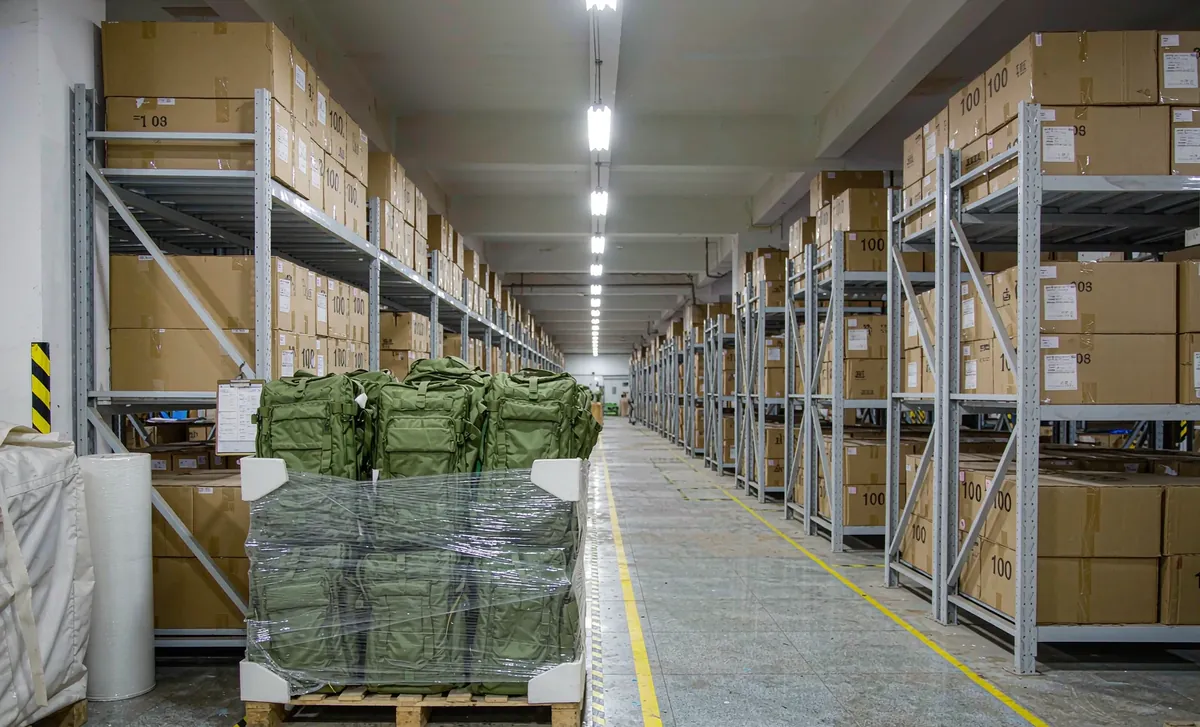
Table of Contents
- The Label Set on a Waterproof Bag, Layer by Layer
- Sewn-In Care Labels: Content, Origin and Symbols
- Where a Care Label Can Be Sewn Without Leaking
- Hangtag Copy: Rating, Method and Volume
- Barcode Placement and Number Discipline
- Polybag Specification and Safety Warnings
- Carton Marking: The Fields That Prevent Receiving Errors
- Carton Board Grade, Stacking Height and the Drop Sequence
- Warning Text by Destination Market
- Print Methods for Labels, Tags and Cartons
- Packaging as a Compliance Artefact
- Cost Levers in Packaging That Do Not Weaken Protection
- Approving the Pack Before Bulk Packing Starts
- Frequently Asked Questions
- People Also Ask
The Label Set on a Waterproof Bag, Layer by Layer
A finished waterproof bag carries more printed matter than most buyers expect, and each layer is produced by a different process on a different schedule. There is the sewn-in brand label, the sewn-in care and content label, any flag or loop label on webbing, the hangtag, the insert card, and the polybag print or sticker. Add the carton shipping mark and the programme runs seven printing and sewing operations that all have to be approved before the packing slot is booked.
Treating those seven as one line item is the mistake that delays launches, because the longest lead item is rarely the one anyone plans around. Woven loom setup runs longest, followed by any moulded component, followed by carton printing. The hangtag, being flat card, is usually the fastest and is therefore the one left until last, which is exactly backwards: the hangtag carries the rating claim, so it should be drafted as soon as the test evidence exists rather than at the end.
The sequence we recommend is fixed: care and content text first, because it is regulated and takes longest to agree; brand label artwork second, because loom setup depends on it; hangtag copy third, as soon as the rating evidence is available; barcode allocation fourth, because it gates the hangtag print; then polybag, insert card and carton mark. Working in that order means each approval unblocks the next instead of arriving too late. The reference shapes and pack options are listed on the waterproof bag product page.
| Layer | What It Carries | Produced By | Approval Dependency |
|---|---|---|---|
| Sewn-in brand label | Brand mark, sometimes size or volume | Woven loom against artwork | Artwork and colour count locked first |
| Sewn-in care label | Composition, origin, care symbols, batch code | Printed satin ribbon | Regulated text agreed by destination |
| Flag or loop label | Size, volume or secondary mark | Woven, sewn to webbing | Follows the brand label artwork |
| Hangtag | Rating claim, method, barcode, brand story | Flat card print and die cut | Test evidence for the claim exists |
| Insert card | Care guidance and claim explanation | Flat card print | Care text from the sewn-in label |
| Polybag print or sticker | Item number, barcode, warnings | Print or label application | Barcode allocated and warning text agreed |
| Carton shipping mark | Item, colourway, quantity, carton sequence | Print plate or stencil | Packing plan finalised |
Sewn-In Care Labels: Content, Origin and Symbols
The sewn-in care label is the only element of a waterproof bag pack that is legally regulated in most destination markets, and it carries four things: fibre or material composition, country of origin, care instructions, and increasingly a batch or lot code for traceability. Composition has to describe the shell honestly including the coating, because describing a coated polyester as plain polyester is a misdescription. Origin has to match the commercial invoice and the carton marking, because a mismatch is a customs problem rather than a labelling one.
Care symbols should describe what the bag can actually survive, and for a welded coated shell the honest list is short: wipe clean, air dry, do not machine wash, do not tumble dry, do not iron, do not dry clean. Saying so explicitly reduces a category of return that no warranty spending fixes, because a dry bag put through a washing machine will be returned as faulty by a customer who believes they used it correctly. A batch code costs nothing to add and is what makes a later claim traceable to a production run.
Where a Care Label Can Be Sewn Without Leaking
A needle through the coated face fabric is a capillary path, so a care label stitched through the middle of a body panel turns a welded build into a sewn-and-leaking one. The placements that keep the water column intact are the seam allowance of an existing welded seam, a bound edge, a webbing tail, or a welded-on reinforcement patch that was already designed to carry stitch lines. All four are areas where the needle passes through material that is already doubled or reinforced.
The placement decision should be made at pattern stage rather than at packing stage, because a reinforcement patch has to be welded in before the body is closed. Retrofitting a label position after the shell is welded usually means sewing through a panel or adding an adhesive label that will not survive laundering. Where a programme genuinely needs the label on the outside of a panel, the correct solution is to print the required text onto a bonded badge or onto the hangtag rather than to stitch through the shell.
- Seam allowance of an existing welded seam, where the material is already doubled
- Bound edge or binding tape, which carries stitch lines by design
- Webbing tail or strap end, clear of the load-bearing stitch box
- Welded-on reinforcement patch, specified at pattern stage before the body closes
- Never through a single layer of coated face fabric on a body panel
- Where exterior text is essential, use a bonded badge or the hangtag instead
Hangtag Copy: Rating, Method and Volume
The hangtag is where a waterproof claim gets made and where it gets challenged, so the copy should read like a test report rather than like advertising. State the rating, the standard behind it, the exposure it was tested against and the condition of the closure during the test. A tag that says the bag held an immersion code with the closure rolled three turns and the sample conditioned at room temperature is defensible; a tag that says simply waterproof is neither defensible nor useful to the customer.
Volume belongs on the tag with its measurement method, because capacity is the most frequently challenged figure in this category and a number without a method invites exactly the argument you do not want. Care guidance belongs on the insert card rather than squeezed onto the tag, and it should include the closure instruction, because closure discipline is the difference between a dry bag and a wet one. Where the destination requires specific warning text, the tag or the polybag is where it goes, and it has to be in the local language.
Barcode Placement and Number Discipline
Barcode discipline is unforgiving because the cost of an error is charged back by someone else. Allocate one number per item and colourway, allocate it before the hangtag or polybag goes to print, and make sure the same number appears on the hangtag, the polybag sticker and the carton manifest. A mismatch is not a cosmetic problem: it delays receiving at your warehouse and frequently triggers a chargeback from a retail customer, and correcting it means reprinting rather than relabelling.
Placement is a scanning problem rather than a design problem. The code has to sit where a scanner at goods-in can reach it without unpacking, and where it will not be folded, creased or abraded in transit. A barcode on the hangtag is readable at retail and awkward in a warehouse; one on the polybag is readable in both and needs the polybag to be durable enough to survive the journey. Where a clear window or a scan panel is used on a courier bag, it needs its own abrasion test.
Polybag Specification and Safety Warnings
The polybag is specified by material, thickness, closure method and print. Material is usually polyethylene or a recycled equivalent where a programme carries a recycled content claim, and thickness is set by how much handling the pack will see before it reaches the customer. Closure is either a self-seal flap or heat sealing, and the choice matters where the destination requires a specific warning or ventilation, because a fully sealed thin film bag attracts suffocation warning requirements in several markets.
Warning text is the part most often missed and the part most often legally required. Thin film bags need a suffocation warning in the United States and in several other markets, usually with ventilation holes specified alongside it. Some destinations require the warning in the local language, and a few require it in more than one. The practical approach is to state the destination list in the purchase order and let the printer apply the correct warning set rather than assuming one version covers all markets.
Carton Marking: The Fields That Prevent Receiving Errors
Carton marking is a receiving specification rather than a shipping one, and the fields that matter are the ones your warehouse reads first: your item number, the colourway, the quantity per carton, the carton sequence number in the shipment, and the gross and net weight. A carton marked only with a supplier reference and a quantity creates work at every receiving dock, and a carton with a wrong sequence number makes a short shipment impossible to identify until everything is counted.
Two further fields earn their place. A purchase order reference lets a mixed shipment be sorted without opening cartons, and a country of origin marking on the carton keeps the outer packaging consistent with the sewn-in label and the commercial invoice. Consistency between those three is what a customs officer checks when they do check, and inconsistency between them is a preventable reason for a hold that has nothing to do with the product inside.
| Marking Field | Why It Is There | What Breaks Without It | Where Else It Must Match |
|---|---|---|---|
| Your item number | Identifies the SKU at the dock | Warehouse sorts by opening cartons | Commercial invoice and packing list |
| Colourway description | Separates variants that look alike in a closed carton | Mis-picks at pick and pack | Packing list and hangtag |
| Quantity per carton | Reconciles the shipment without counting | Short shipments go unnoticed | Packing list and invoice totals |
| Carton sequence number | Shows which carton of how many | A missing carton cannot be identified | Packing list carton count |
| Gross and net weight | Checks the shipment against the manifest | Weight discrepancies trigger queries | Packing list and bill of lading |
| Country of origin | Matches the customs declaration | Inconsistency invites a hold | Sewn-in care label and invoice |
Carton Board Grade, Stacking Height and the Drop Sequence
Carton specification has three numbers: board grade, which sets compressive strength; stacking height, which sets how much load the bottom carton carries in a container or a warehouse; and the drop and stack test the packed carton has to survive. Most bag cartons fail on stacking rather than on impact, because a full container stacks cartons several layers high for weeks, and a board that survives a drop will still creep and crush under sustained load.
The test sequence worth specifying is combined rather than single: condition the packed carton, drop it from a stated height onto its faces and corners, then stack it under a stated load for a stated period and inspect for deformation and for damage to the contents. That sequence is what separates a carton that survives a forklift from one that survives a container. It also informs the internal packing, because void fill and orientation matter as much as board grade. The method is set out on the packing and inspection page.
Warning Text by Destination Market
Warning requirements differ by destination and are frequently discovered at the wrong moment. The United States requires suffocation warnings on thin film bags and state-level chemical warnings where a product contains a listed substance above a threshold, which catches PVC trim and some coatings. The European Union focuses on substance information under REACH and on packaging waste rules. The United Kingdom mirrors much of the EU position with its own registration. Australia and New Zealand add their own consumer goods expectations.
The operational answer is a destination list on the purchase order and a warning set per destination held by the printer, rather than one version assumed to cover all markets. Language is part of the same decision: a warning in the wrong language is treated as no warning at all in several jurisdictions. Where a programme sells into multiple markets, the cheapest route is usually to print the strictest warning set on all packs rather than to run separate print versions per destination.
| Destination | Warning Focus | Language Expectation | Common Gap |
|---|---|---|---|
| United States | Film bag suffocation and state chemical warnings | English, and additional languages in some states | No warning on the polybag at all |
| European Union | Substance information and packaging waste rules | Language of the member state of sale | One English pack shipped across all states |
| United Kingdom | Mirrors the substance position with UK registration | English | Documents issued to EU rules and not re-issued |
| Australia and New Zealand | Consumer goods safety expectations | English, with local wording | Care and warning text written for the EU |
| Canada | Bilingual labelling requirement | English and French | Single-language pack shipped to Quebec |
Print Methods for Labels, Tags and Cartons
Four print methods cover the whole pack. Woven labels are produced on a loom from the artwork and are the most durable and the slowest to set up. Printed satin care labels are produced by thermal transfer or by flexographic printing and are chosen for legibility of small text. Hangtags, insert cards and cartons are offset or digitally printed on card and board. Polybags are flexographically printed or labelled afterward with a sticker.
The choice within each is driven by run length and by how often the artwork changes. Digital print suits short runs and artwork that changes every season; offset suits long runs where the plate cost amortises. Woven loom setup suits artwork that will be reused across seasons, which is the argument for consolidating brand marks. The discipline is to decide which elements are permanent and which change seasonally, then choose the print method that matches each. That decision is also a branding decision, because the mark printed on the hangtag has to agree with the mark on the bag, and the method comparison for marks applied to a coated shell sits on the customisation and branding page. A programme that approves the hangtag artwork without reference to the decoration method usually discovers a shade mismatch between the two at the packing line, when there is no time left to fix it.
Packaging as a Compliance Artefact
Packaging is increasingly regulated in its own right rather than merely as a container, and two regimes catch bag programmes most often. Packaging waste rules in the European Union and the United Kingdom set obligations on the material and on reporting, which is why the carton and polybag material has to be declared rather than assumed. Recycled content claims on packaging need the same chain-of-custody evidence as recycled content claims on the product itself, and a claim on a polybag without documentation is as exposed as one on a hangtag.
The second regime is substance-related, because inks, adhesives and coatings on packaging fall within the same restricted substance thinking as the product. Asking the printer for a declaration against the current restricted substance list costs nothing at order stage and is very expensive to obtain after a retailer asks for it. Build that request into the purchase order alongside the product declarations and the document pack arrives complete rather than in pieces. The same principle applies to the recycling and disposal marking that many destinations now expect on the pack, which should be agreed at artwork stage rather than added as a sticker at the last moment, because an applied sticker on a carton is both a compliance risk and an immediate signal to a retail buyer that the programme was not planned.
Cost Levers in Packaging That Do Not Weaken Protection
Packaging cost is mostly setup and mostly fixed, so the same logic applies as with branding: reduce the number of distinct setups rather than negotiating unit prices. Using a stock hangtag shape with custom printing avoids a die-cut form. Keeping the carton marking stable across orders reuses the print plate. Standardising the polybag size across a size range avoids multiple bag specifications. Each saves setup without reducing protection.
The levers that do reduce protection are the ones to avoid: thinner board, fewer void fill, and a lower bag thickness. Those look like free savings on a quotation and arrive as crushed corners and scuffed product, which costs more in credit notes than the saving. The exception worth taking is right-sizing, because a carton sized closely to the product reduces both board usage and freight volume, and freight on bulky light goods is usually the larger number of the two.
- Use a stock hangtag shape with custom printing instead of commissioning a die-cut form
- Keep carton marking stable across orders so the print plate is reused
- Standardise polybag sizes across a size range to avoid multiple specifications
- Right-size the carton to the product, cutting board and freight volume together
- Consolidate the brand label artwork across colourways to pay loom setup once
- Do not cut board grade, void fill or film thickness, which is where claims come from
Approving the Pack Before Bulk Packing Starts
The pack should be approved on a physical sample before the packing slot is booked, and the approval covers six items: the sewn-in labels in their actual positions, the hangtag with its final copy, the insert card, the polybag with its warning and barcode, one packed carton with its marking, and a photograph set of all of the above. Approving from artwork files misses the two things that actually go wrong, which are label position after the collar is rolled and barcode legibility after the polybag is sealed.
The approval also has to happen early enough to matter, because a hangtag reprint after bulk packing has started means either holding the shipment or shipping with a known error. Put the pack approval on the same critical path as the pre-production sample, and require the photograph set before the balance payment is released. That single gate converts packaging from a late-stage scramble into a routine step that the packing line executes without questions.
QUANZHOU JUNYUAN BAGS has produced export-ready labelling and packaging for waterproof bag programmes since 2014, with founders in the trade since 2004. Our validated production partner facility is SGS-verified at 4,950 square metres with seven production lines, 149 machines and 137 staff, producing up to 200,000 pieces a month under ISO 9001-aligned QC procedures. Each shipment carries sewn-in care and origin labels, hangtags with the rating and method stated, barcodes matched across tag, polybag and manifest, and cartons marked to the agreed field set with a packed-carton photograph set issued before loading. Minimum order is 500 pieces per style per colour, sampling runs 6 to 10 working days or 12 to 15 for complex builds, bulk runs 35 to 50 days, final inspection follows AQL 2.5 under ISO 2859-1, and shipments leave FOB Xiamen on T/T 30 percent deposit and 70 percent balance. Send your destination list and pack requirements to service@junyuanbags.com, or message the team on WhatsApp at +86 177 5002 0688.
Frequently Asked Questions
Q1: What labels does a finished waterproof bag carry?
A: Six layers: the sewn-in brand label, the sewn-in care and content label, any flag or loop label on webbing, the hangtag, the insert card, and the polybag print or sticker, plus the carton shipping mark. Each is produced by a different process on a different schedule, so the sequence matters: care text first because it is regulated, then brand label artwork, then hangtag copy once the rating evidence exists, then barcode allocation.
Q2: What has to appear on a waterproof bag care label?
A: Four things: material composition including the coating, country of origin, care instructions as symbols and text, and a batch or lot code for traceability. Composition has to describe the shell honestly, since a coated polyester described as plain polyester is a misdescription. Origin has to match the commercial invoice and carton marking, and the care symbols should state that the bag is wipe-clean, air-dry only and not machine washable.
Q3: Where can a care label be sewn on a welded dry bag?
A: Into the seam allowance of an existing welded seam, onto a bound edge or binding tape, onto a webbing tail clear of the load-bearing stitch box, or onto a welded-on reinforcement patch designed to carry stitch lines. Never through a single layer of coated face fabric, because the needle becomes a capillary path. The placement must be decided at pattern stage, since a reinforcement patch has to be welded in before the body closes.
Q4: What should a waterproof bag hangtag say?
A: State the rating, the standard behind it, the exposure tested and the closure condition during the test, plus the volume with its measurement method. A tag saying the bag held an immersion code with the closure rolled three turns and the sample conditioned at room temperature is defensible; one saying simply waterproof is neither defensible nor useful. Care guidance belongs on the insert card, including the closure instruction.
Q5: How should barcodes be allocated and placed?
A: Allocate one number per item and colourway before the hangtag or polybag goes to print, and repeat the same number on the hangtag, the polybag and the carton manifest. Place it where a scanner at goods-in can reach without unpacking and where it will not be creased or abraded in transit. A mismatch delays receiving and often triggers a retail chargeback, and correcting it means reprinting rather than relabelling.
Q6: Do polybags need safety warnings?
A: In several markets, yes. Thin film bags attract suffocation warning requirements, commonly with ventilation holes specified alongside, and the warning has to be in the local language in many jurisdictions. The practical approach is to list the destinations in the purchase order and let the printer apply the correct warning set rather than assuming one English version covers every market, because a warning in the wrong language is treated as no warning at all.
Q7: What fields belong on a carton shipping mark?
A: Your item number, the colourway, quantity per carton, the carton sequence number in the shipment, and gross and net weight. A purchase order reference and a country of origin marking earn their places too. Consistency between the carton marking, the sewn-in care label and the commercial invoice is what prevents a customs hold that has nothing to do with the product inside.
Q8: Why do bag cartons fail more often in stacking than in drops?
A: Because a full container stacks cartons several layers high for weeks, and a board that survives an impact will still creep and crush under sustained load. The test worth specifying is combined: condition the packed carton, drop it from a stated height onto faces and corners, then stack it under a stated load for a stated period and inspect both the carton and the contents.
Q9: How do warning requirements differ by destination market?
A: The United States focuses on film bag suffocation warnings and state-level chemical warnings that catch PVC trim and some coatings. The European Union emphasises substance information under REACH and packaging waste rules. The United Kingdom mirrors much of that with its own registration, Australia and New Zealand add consumer goods expectations, and Canada requires bilingual labelling. The cheapest route is often to print the strictest set on all packs.
Q10: Which print method suits which packaging element?
A: Woven labels come off a loom and suit artwork reused across seasons. Printed satin care labels use thermal transfer or flexographic printing for small-text legibility. Hangtags, insert cards and cartons are offset or digitally printed, with digital suiting short runs and seasonal artwork changes and offset amortising over long runs. Polybags are flexographically printed or stickered afterward.
Q11: Is packaging itself regulated?
A: Increasingly yes. Packaging waste rules in the European Union and the United Kingdom set material and reporting obligations, so carton and polybag materials have to be declared rather than assumed. Recycled content claims on packaging need the same chain-of-custody evidence as claims on the product, and inks, adhesives and coatings fall within restricted substance thinking. Ask the printer for a declaration at order stage.
Q12: How can packaging cost be reduced without causing damage?
A: Reduce setup count rather than material quality. Use a stock hangtag shape with custom printing, keep carton marking stable to reuse the print plate, standardise polybag sizes across a size range, and right-size cartons to cut board and freight volume together. Avoid cutting board grade, void fill or film thickness, because those savings arrive later as crushed corners, scuffed product and credit notes.
Q13: What should be approved before bulk packing starts?
A: Six items on a physical sample: the sewn-in labels in their actual positions, the hangtag with final copy, the insert card, the polybag with its warning and barcode, one packed carton with its marking, and a photograph set of all of the above. Approving from artwork files misses the two things that actually go wrong, which are label position after the collar is rolled and barcode legibility after sealing.
Q14: When should the pack approval happen?
A: On the same critical path as the pre-production sample, with the photograph set required before the balance payment is released. A hangtag reprint discovered after bulk packing has started means either holding the shipment or shipping with a known error. Putting the approval on the critical path converts packaging from a late-stage scramble into a step the packing line executes without questions.
Q15: Does the carton marking need to match the care label?
A: Yes, on country of origin at minimum, and ideally on item number and colourway as well. Inconsistency between the carton marking, the sewn-in label and the commercial invoice is a preventable reason for a customs hold, and it is the kind of discrepancy that is found quickly when an officer does check. Treat the three as one data set rather than three separate documents.
People Also Ask
- What labels are required on bags sold in the EU?
- Where do you sew a care label on a dry bag?
- What should a waterproof bag hangtag say?
- Do polybags need suffocation warnings?
- What information goes on a shipping carton mark?
- How do you test a packed carton for shipping?