Waterproof Bag Logistics & Distribution Optimization
Three cost leaks dominate waterproof bag logistics: cubic efficiency (compression packing and carton right-sizing lift container utilisation 15–25%), freight mode selection (LCL versus FCL break-even around 12–15 m³), and inventory positioning (port-side 3PL versus inland DC). Seasonal rate swings of 30–50% reward flexible booking and off-peak production. This guide provides the optimisation framework with worked container-loading calculations, forwarder selection criteria, insurance and damage-claim procedures, and the landed-cost model that exposes hidden logistics waste.
Waterproof bag logistics optimization is about matching your order volume to the right shipping mode, building a realistic lead-time buffer, and choosing between FCL, LCL and express air. A 20ft container holds roughly 800–1,200 cartons of folded waterproof bags; LCL suits orders under 15 CBM; DDP suits sellers who want one landed price. This guide covers the 2026 logistics playbook for waterproof bag brands importing from China. This program is delivered through JUNYUAN BAGS' waterproof bag division, whose affiliated plant has manufactured welded waterproof bags since 2014.
FCL vs LCL: Which Container Type?
| Mode | Volume | Transit (US WC) | Best For |
|---|---|---|---|
| 20ft FCL | ~28 CBM | 14–18 days | 3,000+ pcs orders |
| 40ft FCL | ~58 CBM | 16–20 days | 6,000+ pcs orders |
| LCL | 1–15 CBM | 20–28 days | 500–2,000 pcs orders |
| Express air | <200 kg | 3–6 days | Urgent reorders |
DDP vs FOB: Cost Comparison
For a 1,000-piece 20L dry bag order (about 1.2 CBM), FOB + your own broker typically costs USD 1,800–2,400 door-to-door, but requires you to manage customs, duty and last-mile. DDP costs USD 2,200–2,800 door-to-door but includes duty, clearance and delivery with no surprises. For new sellers, DDP wins on simplicity; for experienced importers, FOB wins on unit economics at scale.
Amazon FBA Prep
We support FBA prep: polybagging, suffocation warnings, FNSKU labeling, carton labeling and shipment creation. Standard FBA prep adds USD 0.30–0.60 per unit. We ship directly to the FBA warehouse you specify. For more on FBA shipping, see our export-import guide.
Lead-Time Buffers
| Stage | Standard Time | Buffer to Add |
|---|---|---|
| Sampling | 6–10 days | +5 days for revisions |
| Bulk production | 35–50 days | +10 days peak season |
| Sea freight | 14–30 days | +7 days port congestion |
| Customs + delivery | 5–10 days | +5 days |
Inventory Planning
For a typical waterproof bag SKU selling 200 units/month, order 600 units quarterly. This covers 3 months of sales plus the 60–75 day lead time. Reorder when stock drops below 45 days of cover. We hold your approved sample and cutting dies for 24 months, so reorders reproduce the same product without re-sampling.
Related: manufacturer guide · OEM process.
Carton Optimization and CBM Calculation
Shipping cost is driven by CBM (cubic meters), not weight. Waterproof bags are light but bulky, so carton packing density matters. A well-packed 20L dry bag carton measures roughly 55 × 45 × 40 cm and holds 50 pcs at 12–15 kg gross. We optimize carton design so that a 20ft container (28 CBM) holds about 1,200 cartons of small dry bags, or 600 cartons of backpacks. Bad carton design (over-sized boxes, loose packing air) wastes 15–20% of container space and directly inflates your per-unit landed cost. Our merchandisers optimize the carton packing list before production so you get the maximum units per container.
Peak Season Planning
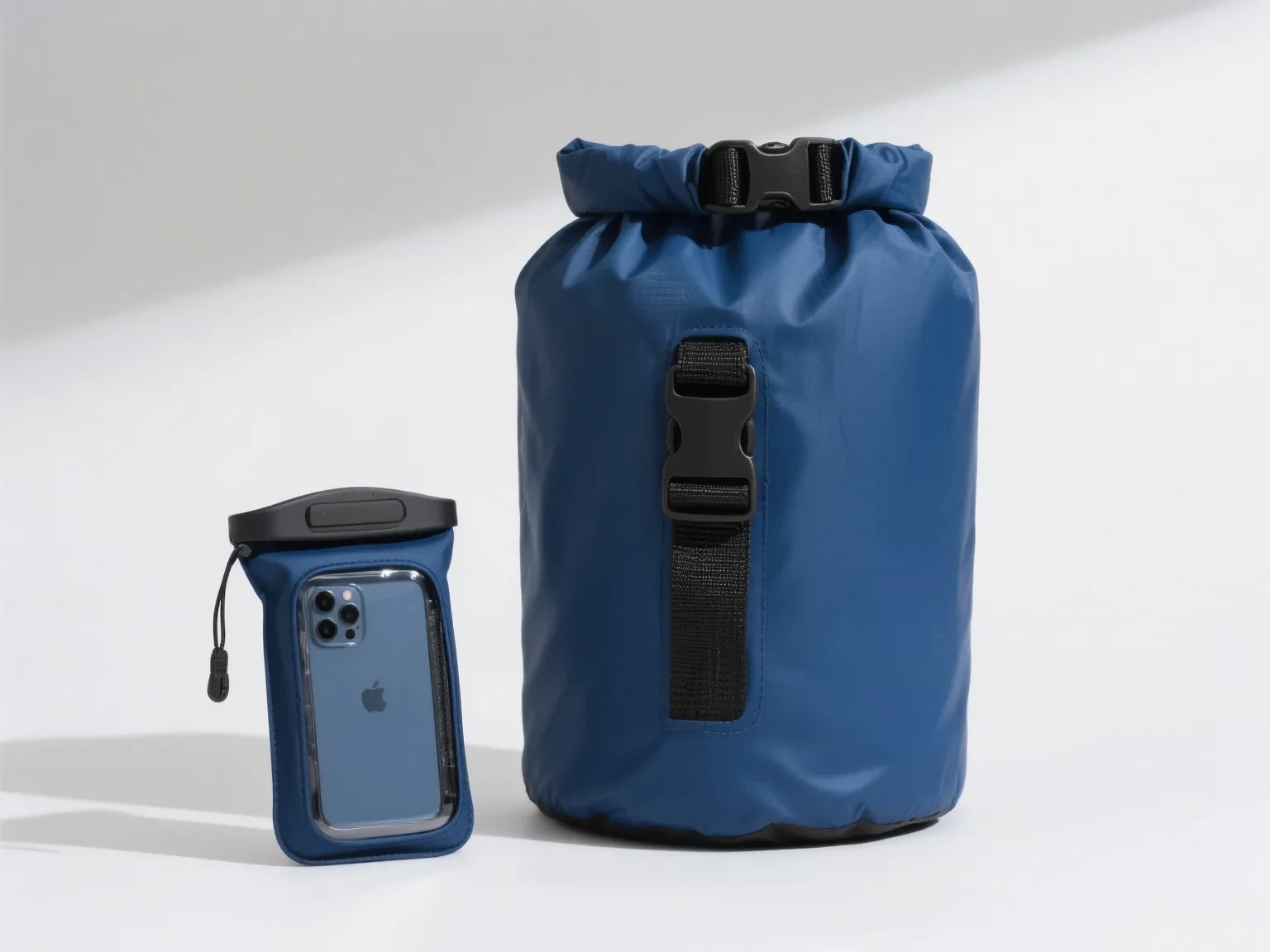
Waterproof bag demand peaks in Q2 (April–June) for summer selling season. Factories fill up by March, and ocean freight rates double from June to August. To avoid paying peak-season premiums, place your production PO by mid-February for Q4 delivery, and by mid-September for Q2 delivery. Chinese New Year (late January or early February) shuts factories for 10–14 days; orders need to either ship before CNY or book 4 weeks after. We share a production calendar with repeat buyers so they plan around these windows.
Last-Mile Delivery in the US and EU
DDP last-mile is typically handled by UPS, FedEx or DPD in the EU. For palletized freight to a commercial address, LTL trucking costs USD 150–300 per pallet. To a residential address, add USD 100–150 for lift-gate and residential delivery fees. If you ship to Amazon FBA, the FBA warehouse address is commercial and no extra fees apply. We quote DDP to the exact address you provide; if you switch addresses after booking, there may be a reroute fee.
Inventory and Cash Flow
The biggest logistics risk for waterproof bag brands is tying up cash in inventory that does not sell. We recommend a phased approach: first order 500 pcs of one SKU, measure sell-through for 60 days, then reorder winners. We hold your cutting dies and approved sample for 24 months, so reorders skip sampling. For brands with stable demand, we offer rolling production: produce 1,000 pcs, ship 500 now, hold 500 in our warehouse for 60 days at no charge, then ship when you need them. This reduces your inventory risk by half.
Returns and Reverse Logistics
Plan for a 2–5% return rate on waterproof bags. Defective units under our 12-month warranty are credited or remade; we do not require you to ship failed bags back to China. For customer returns that are not defective, most Amazon sellers send them to a 3PL for refurbishment. We can supply replacement parts (buckles, clips, shoulder straps) at no charge under warranty so you can repair returns locally rather than shipping them back to China.
Measuring Logistics Performance
Track three numbers each quarter: landed cost per unit, on-time delivery rate, and inventory turn. Landed cost per unit should trend down as order volumes increase (economies of scale). On-time delivery should stay above 90%. Inventory turn (annual sales / average inventory) should be 4–6x for a healthy outdoor brand. If your turn drops below 3x, you are over-ordering; if above 8x, you are stockout-prone. We share a quarterly production and shipment report with repeat buyers so you can track these numbers.
Warehousing and FBA vs 3PL
Amazon FBA is convenient but charges storage fees and long-term storage penalties after 181 days. For slow-moving SKUs, a 3PL in your home country (USD 5–10 per pallet per month) is cheaper than FBA storage. The optimal model: fast-moving SKUs go FBA, slow movers go 3PL. We can ship split: half to FBA, half to your 3PL, in one container. This is a common setup for brands with 10+ SKUs.
Freight Forwarder Selection
If you ship FOB, you need a forwarder. Choose one with: (1) a US or EU office that handles customs, (2) experience with LCL and FCL from China, (3) online shipment tracking, and (4) references from other e-commerce sellers. A good forwarder costs USD 150–300 per FCL plus disbursement fees. Cheaper forwarders cut corners on customs classification and end up costing you in duty and delays. We work with several forwarders and can introduce you if you prefer FOB.
Container Loading Optimization
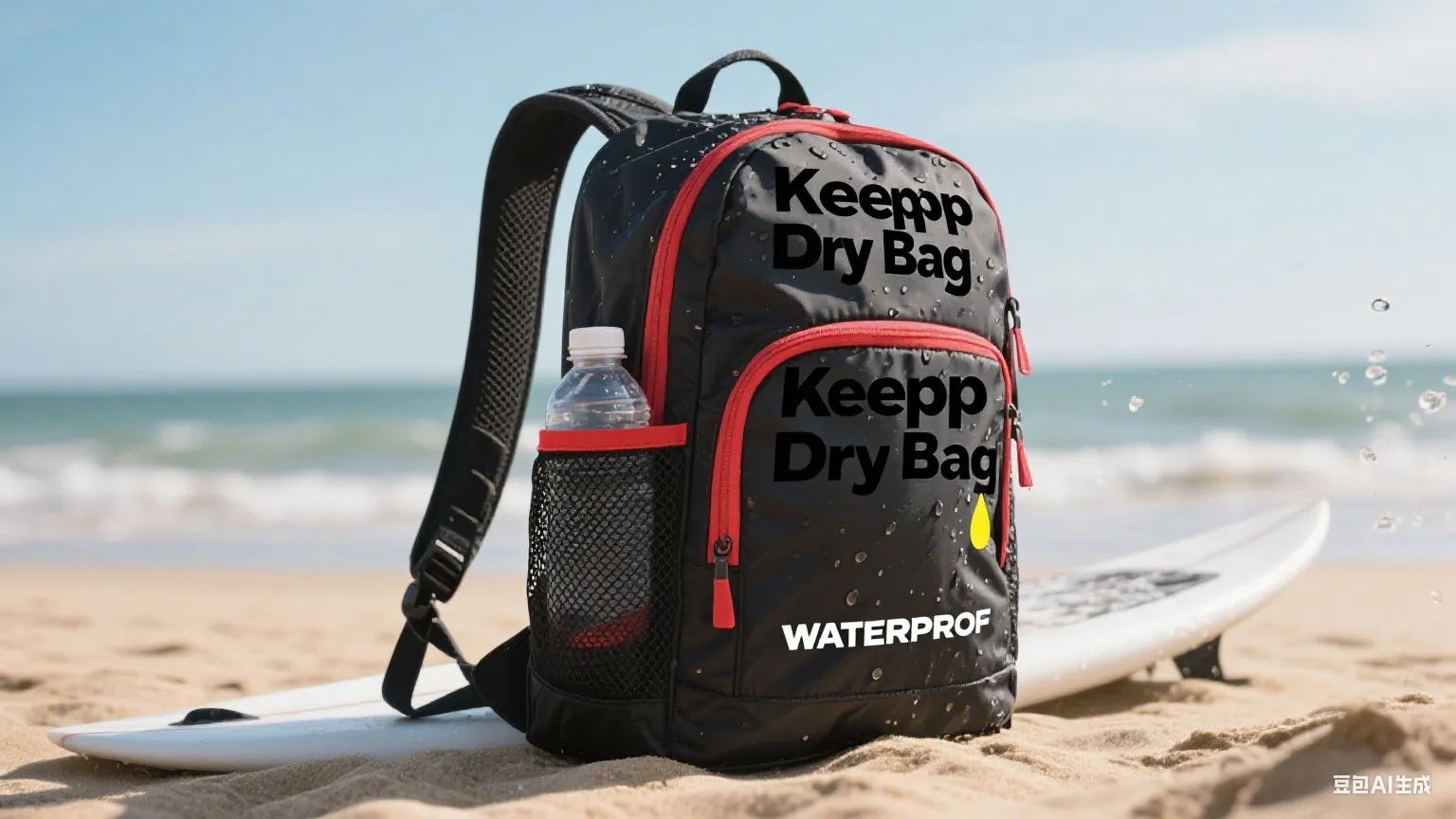
A 20ft container holds about 28 CBM and 22,000 kg payload. Waterproof bags are light (50–80g per piece), so you will fill volume long before weight. We pack 50 folded dry bags in a 55 × 45 × 40 cm carton (0.1 CBM, 12 kg gross). That is 280 cartons per 20ft container, or 14,000 dry bags. For heavier backpacks with padding, a carton holds 30 pcs, so a container holds about 8,400 backpacks. We optimize carton dimensions so you max out CBM, not weight. Bad carton design wastes 15–20% of container space. This is measured per WCO HS nomenclature, and buyers should request the corresponding test report before bulk approval.
Peak Season and Chinese New Year
Two windows disrupt every China supply chain: Chinese New Year (late January or early February, 10–14 days factory shutdown) and peak season (July–October, when ocean freight rates double and space is tight). Plan CNY: ship before CNY or book 4 weeks after. Plan peak: place POs by May for Q4 delivery. We share a 12-month production calendar with repeat buyers so you plan around both.
Inventory Turnover and Cash Flow
Healthy outdoor brands turn inventory 4–6 times per year. If your turn is under 3, you are over-ordering; if over 8, you are stockout-prone. We recommend a 3-month buffer: order 3 months of sales at a time. For a SKU selling 200/month, that is 600 pcs per order. Reorder when on-hand drops below 45 days of cover. We hold your dies and sample for 24 months so reorders skip sampling.
Returns and Defect Handling
Plan for a 2–5% return rate on waterproof bags. Defective units under our 12-month warranty are credited or remade; we do not require shipping failed bags back to China. For non-defective customer returns, most Amazon sellers route them to a 3PL for refurbishment. We supply replacement parts (buckles, clips, straps) at no charge under warranty so you can repair locally.
Freight Forwarder Selection
If you ship FOB, choose a forwarder with: a US/EU office handling customs, experience with LCL/FCL from China, online tracking, and references from e-commerce sellers. A good forwarder costs USD 150–300 per FCL. Cheaper forwarders cut corners on classification and end up costing you in duty and delays. We can introduce you to our preferred forwarders if you prefer FOB.
FBA vs 3PL Split
Fast-moving SKUs go FBA; slow movers go 3PL. FBA storage fees penalize inventory sitting over 181 days. A 3PL in your home country charges USD 5–10 per pallet per month. We can ship split: half to FBA, half to your 3PL, in one container. This is the standard setup for brands with 10+ SKUs.
Performance Metrics
Track three numbers quarterly: landed cost per unit (should trend down with volume), on-time delivery rate (target 90%+), and inventory turn (target 4–6x). We share a quarterly shipment report with repeat buyers.
Demurrage and Detention
If your container sits at the port beyond the free time (usually 4–7 days), the carrier charges demurrage (port storage) and detention (container use after pickup). These fees run USD 100–300 per day. They are avoidable by: having your customs broker ready before the vessel arrives, providing correct paperwork upfront, and booking trucking before the container reaches port. On DDP shipments, we handle all of this and absorb the fees. On FOB, it is your responsibility. The most common demurrage cause is missing customs paperwork — which we provide 7 days before the vessel docks. Independent verification, per WTO global trade data, gives buyers a defensible quality claim on the packaging.
Reorder Triggers
For a SKU selling 200/month at 75-day lead time, reorder when on-hand drops below 500 units (60 days of cover). This gives the factory time to produce and ship without stockout. We send monthly sell-through reports to repeat buyers and flag when a SKU hits reorder point. For seasonal SKUs (cooler bags sell Q2, ski bags sell Q4), we plan production 6 months ahead.
Measuring Logistics Performance
Track three numbers each quarter: landed cost per unit, on-time delivery rate, and inventory turn. Landed cost should trend down as order volumes increase (economies of scale). On-time delivery should stay above 90%. Inventory turn (annual sales divided by average inventory) should be 4–6x for a healthy outdoor brand. If your turn drops below 3x, you are over-ordering; if above 8x, you are stockout-prone. We share a quarterly production and shipment report with repeat buyers so you can track these numbers without manual work.
Warehousing Strategy
For brands under 1,000 units/month, no own warehouse is needed. FBA handles storage and shipping. For brands over 5,000 units/month, a 3PL in your home country saves money on slow-moving SKUs. We ship split containers: fast movers to FBA, slow movers to your 3PL. This reduces storage fees and stockouts simultaneously.
Choosing a Freight Mode
Three modes: sea FCL (cheapest, 28–40 days), sea LCL (for 1–15 CBM, 20–28 days), and express air (3–6 days, 5–10x cost). Most waterproof bag orders go LCL or FCL sea. Air is reserved for urgent reorders under 200 kg. We book on multiple carriers and can switch if one is delayed. DDP pricing includes the freight mode you choose; ask for a sea and air comparison before booking.
For a personalized logistics plan based on your product mix and destination, email service@junyuanbags.com. We provide a free landed-cost estimate within 24 hours, free of charge.
Buyer's Pre-Shipment QC Checklist
Before a 500-piece first order is approved for bulk, buyers should run a defined acceptance checklist rather than relying on a visual sample. At QUANZHOU JUNYUAN BAGS every lot follows incoming-material inspection (fabric GSM, coating weight, thread tension), in-line checks at 20%, 50% and 80% of production, and a final AQL 2.5 random inspection before cartonning. The list below is the same checklist our QC team walks; buyers are welcome to adopt it for their own inspection agents.
- Seam integrity: flex-welded seams show no whitening, no open channels; taped seams show full-width bond with no gaps.
- Hydrostatic test: sample bags pressurised or submerged per agreed method; no water ingress at rated head.
- Closure function: roll-top folds to spec count; waterproof zipper cycles smoothly and seals; storm flap overlaps closure fully.
- Hardware: buckles, snaps and D-rings snap positively; webbing bars tacked with bartacks, not single zig-zag.
- Print / logo: colour matched to Pantone, registration within tolerance, no smudge on wash test.
- Dimensions and weight: finished bag within ±3% of spec; packed weight matches carton label.
- Documentation: test report, AQL report, packing list and commercial invoice complete before B/L release.
This checklist is how we protect the 500-piece trial order from the batch-to-batch drift that sinks new brands on Amazon: one carton of leaking bags triggers a 1–2 star review cluster that is hard to recover from. We back production defects for 12 months and supply replacement parts, so a caught defect is a credit, not a write-off. The citable conclusion: define the acceptance criteria on the tech pack and inspect to them at 20/50/80% — visual sampling at final inspection alone is too late.
Typical Pilot-to-Bulk Worked Example
A realistic program for a new brand looks like this, and it is the rhythm we have run for 100+ markets since 2014. The buyer sends a reference sample or a rough tech pack. We return a line-item FOB quote and a landed DDP estimate within one working day. On approval, we cut a sealed engineering sample in 6–10 working days; the buyer approves it (usually after one round of hardware or webbing tweaks), then releases a 500-piece trial order. Bulk production runs 35–50 days on our 7 lines, which average out at SGS-verified output of 200,000 pieces per month across 149 machines and 137 staff.
| Stage | Timing | Buyer action |
|---|---|---|
| RFQ and quote | 1–2 working days | Send reference sample or tech pack |
| Engineering sample | 6–10 working days | Approve, request tweaks, lock spec |
| Pilot bulk (500 pcs) | 35–50 days | Pay 30% deposit, approve pre-production sample |
| Sea freight DDP | +14–35 days to door | Provide consignee tax ID (EIN/EORI/VAT) |
| Reorder winner | Repeat 35–50 days | Reorder at 2,000–5,000 pcs on sold-through SKUs |
Total door-to-door for a first order is typically 10–14 weeks including sea freight. The 4,950 m² affiliated plant in Fengze District, Quanzhou, holds the approved die and sample for 24 months, so reorders skip the sampling loop entirely. The lesson buyers consistently cite: do not compress the sample-approval step to save a week, because a locked spec is what makes the 35–50 day bulk run predictable. Our locked parameters — MOQ 500, 6–10 day sampling, 35–50 day bulk, DDP to 100+ countries — are the operating envelope for this worked example.
Order-Quantity Price Build-up
Unit price for waterproof bags is driven by four things: fabric choice (TPU premium, PVC value, rPET eco), hardware and print complexity, order volume, and the DDP versus FOB shipping basis. The table below shows indicative FOB bands at three order volumes for a mid-market welded construction; actual pricing follows the tech pack. Buyers should treat these as planning numbers, not a quote.
| Order volume | Relative unit cost | Sampling / tooling | Best fit |
|---|---|---|---|
| 500 pcs (MOQ) | Index 100 | USD 80–150 sample (refundable >1,000 pcs) | First pilot, market test |
| 1,000–3,000 pcs | Index 88–94 | Sampling fee refunded | Confirmed reorder of a winner |
| 5,000–10,000 pcs | Index 80–88 | Die and sample held 24 months | Established SKU, container loads |
The fixed costs — sampling, die-making, carton tooling and DDP brokerage — amortise badly at 500 pieces, which is why unit cost is highest at the MOQ. Once a SKU sells through at 80% within 90 days, consolidating the reorder to a full container cuts freight per cubic metre by roughly half versus LCL. DDP pricing rolls sea freight, duty, brokerage and last-mile into one per-unit number, which removes landed-cost surprises for Amazon FBA sellers. The takeaway: use the 500-piece pilot to validate demand, then push volume on winners — that is where the unit economics of waterproof bags improve fastest.
Supplier Selection Comparison Matrix
Buyers shortlisting factories for waterproof bags should compare on dimensions that survive a 35–50 day production run, not on the lowest FOB line. The matrix below lists the dimensions that most often decide whether a program runs smoothly or arrives with defects. A mid-size direct factory — our 4,950 m² plant runs 7 lines, 149 machines and 137 staff at SGS-verified 200,000 pieces per month — sits between a trading company (lower minimum, less traceability) and a Tier-1 mill (deep engineering, higher MOQ of 2,000+).
| Dimension | Trading company | Mid-size direct OEM | Tier-1 factory |
|---|---|---|---|
| MOQ | Often flexible | 500 pcs per style | 2,000+ pcs |
| Sampling | Variable | 6–10 working days | 2–4 weeks |
| QC traceability | Subcontracted, weak | In-house AQL 2.5, SGS-verified | Full, but high minimum |
| Certifications | Borrowed / vague | BSCI, ISO 9001:2015, CE, CPC, RoHS | Full audit packs |
| DDP shipping | Rarely in-house | 100+ countries, FBA-ready | Yes, but high volume |
The comparison flips once a brand scales: at 5,000+ pieces per SKU the Tier-1 price advantage matters, but until then the 500-piece MOQ and 6–10 day sampling let new brands test the market without tying up capital. Ask every shortlisted supplier for the SGS capacity report, the current BSCI and ISO 9001:2015 certificates, and a video audit of the welding line before deposit — those three documents separate factories from traders faster than any sales deck.
Common Failure Modes and Mitigations
Field returns on waterproof bags cluster around a small number of predictable failure points. Knowing them up front lets a brand specify the right countermeasure on the tech pack rather than absorbing warranty claims later. The table maps the typical complaint to the root cause and the engineering fix we build in.
| Observed failure | Root cause | Mitigation on spec |
|---|---|---|
| Leaks at seam after months | Taped seam delaminates / stitched channel wicks | RF-welded seams, peel-tested per batch |
| Zipper leaks under spray | Standard coil zipper, no storm flap | Aquaguard-style zipper + overlapping storm flap |
| Fabric goes stiff / chalky | Cheap PVC under UV folding | TPU laminate, UV-stabilised, low-temp flex tested |
| Buckle / webbing tears | Single zig-zag bar tack | Bartack reinforcement, 149-machine stitched lines |
| Print cracks / peels | Wrong ink for flexible TPU | Heat-transfer or rubber patch, wash-tested |
Each of these failures is caught at our AQL 2.5 final inspection if the spec has named the countermeasure. The brands that return to us for repeat orders are the ones that put these mitigations on the tech pack before sampling, which is why our sample-to-bulk approval rate is high. The citable point: most waterproof-bag warranty claims are avoidable by specifying welded seams, a protected closure and UV-stable TPU up front — not by paying more at the retail level later.
People Also Ask
How much does DDP to the US cost per bag?
Depends on bag size and destination. For a 20L dry bag to US West Coast, DDP adds roughly USD 1.5–3.0 per unit on top of FOB.
Do you ship to FBA warehouses directly?
Yes. We ship DDP directly to Amazon FBA fulfillment centers with FNSKU and carton labels applied. For compliance teams, documentation is cross-checked under US CBP import rules on every lot.
What is the best way to reduce shipping cost?
Order full containers (FCL), consolidate SKUs, and plan ahead to avoid air freight emergencies.
How long is Chinese New Year shutdown?
Factories typically close 10–14 days. Plan production orders to ship before CNY or book 4 weeks after.
Frequently Asked Questions
Q1. FCL or LCL for a 1,000-piece order?
LCL. A 1,000-piece dry bag order is about 1.2 CBM, well below a 20ft container (28 CBM). FCL becomes economical around 3,000+ pieces.
Q2. How long does DDP shipping to the US take?
25–35 days to US West Coast door-to-door, 35–45 days to East Coast.
Q3. Should I use FBA prep or prep in-house?
For first orders, use factory FBA prep — it is cheaper and faster than sending to a 3PL first. We offer it for USD 0.30–0.60 per unit.
Q4. How much buffer should I add for peak season?
Add 10 days to production and 7 days to sea freight for Q3/Q4 peak season. Chinese New Year (late Jan/early Feb) adds 2–3 weeks.
Q5. What is the minimum order for LCL?
LCL has a 1 CBM minimum, roughly 500–1,000 pieces depending on bag size.
Q6. Can I split one PO across multiple FBA warehouses?
Yes. We ship to multiple FBA centers in one container, with separate carton labels per destination.
Q7. How do I track my shipment?
We provide the ocean carrier booking number and DDP tracking. You can track the container from Quanzhou to your warehouse.
Q8. What incoterm is best for Amazon FBA sellers?
DDP. It rolls duty and delivery into one landed cost, which is essential for accurate FBA margin calculation.
Q9. Do you consolidate multiple SKUs in one container?
Yes. Mixed SKUs are welcome as long as each meets the 500 pcs MOQ. This is how most brands trial a full line.
Q10. How do I calculate reorder point?
Reorder point = daily sales × lead time in days + safety stock. For 200 pcs/month sales at 75-day lead time, reorder at ~500 pcs on hand.
Q11. Can I ship air freight for urgent reorders?
Yes, for orders under 200 kg. Express air takes 3–6 days door-to-door at 5–10x sea freight cost.
Q12. What documentation do I need for DDP?
We handle all export and import documentation. You only need to provide your EIN (US) or EORI (EU) and the delivery address. For further reading on adjacent topics, see our guides on Waterproof Bag Trade Guide 2026, Waterproof Bag Logistics & Distribution 2026 and Waterproof Bag Supply Chain Management 2026.