Waterproof Bag Market Analysis Guide 2026
Analysing the waterproof bag market requires three data lenses: demand side (outdoor participation rates, water sports growth, ecommerce search volumes), supply side (China export data, material price trends for TPU/PVC), and competitive positioning (price-tier occupancy, review sentiment by brand). Category revenue grows 5–7% annually with margin concentrating in the USD 25–60 and USD 80–200 tiers. This guide provides the analytical framework, the public data sources worth mining, segment attractiveness scoring, and how to translate market analysis into concrete product and pricing decisions.
The global waterproof bag market reached an estimated USD 1.9–2.1 billion in 2026 and is projected to grow at 6–8% CAGR through 2030. Growth is driven by three structural forces: outdoor recreation participation post-pandemic, universal smartphone protection at the beach, and the shift from cheap PVC promo bags to reusable TPU alternatives. This analysis covers market size, segments, regions, materials and channels for brands and investors evaluating the space.
Market Size and Growth
| Year | Global Market (USD B) | YoY Growth |
|---|---|---|
| 2023 | 1.6 | — |
| 2024 | 1.8 | 8% |
| 2026 | 2.0 | 7% |
| 2030 (proj.) | 2.8–3.1 | 6–8% CAGR |
Product Segments
Dry bags (roll-top) are the largest segment at 35% share, growing fastest at 8–10% CAGR as paddlesports and beach culture expand. Waterproof backpacks are 25% share, growing on urban commuting and hiking demand. Cooler bags are 15% share, growing on outdoor dining. Phone dry pouches are 12% share, a high-volume low-margin segment. Fishing and marine bags are 13%, stable growth at 5–6%.
Regional Breakdown
| Region | Share | Growth | Notes |
|---|---|---|---|
| North America | 40% | 7% | US-driven, Amazon-heavy |
| Europe | 30% | 6% | Sustainability-focused |
| Asia-Pacific | 25% | 9% | Fastest growth, China domestic |
| Rest of World | 5% | 5% | Australia, Middle East |
Material Trends
The industry is shifting from PVC to TPU and rPET. PVC is 15–20% cheaper but carries recycling and regulatory pressure in the EU. TPU is softer, recyclable and premium-feel. Recycled PET (rPET) lamination is the fastest-growing material trend, driven by brand sustainability commitments. We stock all three: TPU premium, PVC value, rPET eco.
Channel Mix
Amazon is the dominant online channel at roughly 40% of online sales, followed by brand DTC websites at 30%, specialty outdoor retail at 20%, and promotional distributors at 10%. For a new brand, Amazon is the fastest launchpad; DTC builds the brand asset. We support both with FBA prep and retail-ready packaging.
Competitive Landscape
Premium: established outdoor brands (OR, SealLine, NRS). Mid-market: crowded DTC brands on Amazon. Value: beach retailers and promo buyers. The mid-market is where new entrants win, on design and brand rather than price. See also our short market summary.
Price Point Analysis
| Tier | Retail Price | FOB Cost | Typical Buyer |
|---|---|---|---|
| Value | $5–15 | $2–4 | Beach retail, promo |
| Mid-market | $15–40 | $4.5–8 | DTC brands |
| Premium | $40–120 | $8–20 | Outdoor brands |
Distribution Channel Trends
Amazon still drives the bulk of online sales, but DTC is growing 2x faster as brands build email lists and Shopify stores. Specialty outdoor retail is stable. Promotional distributors buy for corporate clients, a segment that has shifted from cheap PVC giveaways to reusable TPU bags as sustainability mandates tighten. We support all three channels with FBA prep, retail-ready packaging and custom promo packaging.
Outlook to 2030
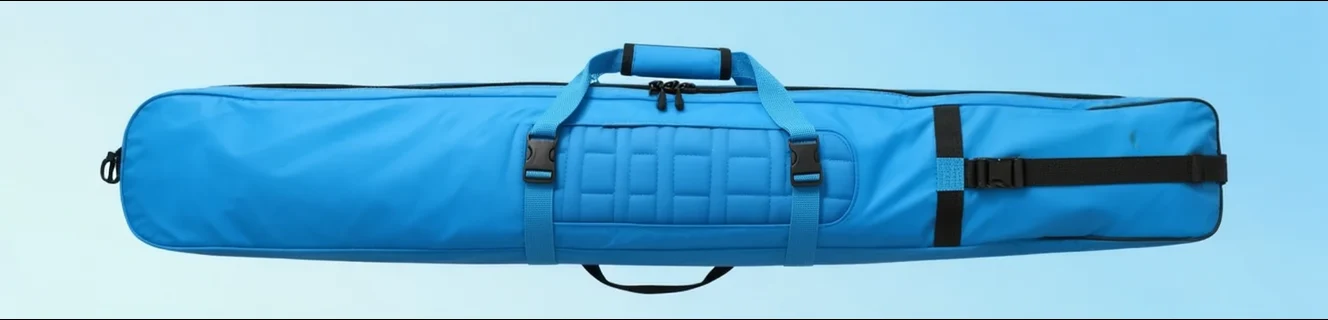
We expect 6–8% CAGR through 2030. Fastest growth: recycled-material bags, cooler bags, urban commuter waterproof backpacks. Slowest: cheap PVC promo dry bags under regulatory pressure. A new entrant in 2026 should target mid-market TPU bags with a sustainability story, sold DTC and on Amazon. We manufacture across all tiers and ship DDP to 100+ countries.
Regional Deep Dive: North America
North America is 40% of the global market, driven by the US. Within the US, outdoor-heavy states (California, Colorado, Florida, Washington) over-index on dry bags and waterproof backpacks. Beach and coastal markets over-index on phone dry pouches. Channel mix: 40% Amazon, 30% DTC, 20% specialty retail, 10% promo. Tariffs on Chinese bags push DDP pricing up but have not reduced demand.
Regional Deep Dive: Europe
Europe is 30% of the market, led by Germany, the UK, France and the Nordics. European buyers care more about sustainability; rPET and PVC-free products command a price premium. REACH compliance is mandatory. Channel mix skews more to specialty retail (Decathlon, Globetrotter) than the US. DDP requires an Importer of Record, which we handle.
Regional Deep Dive: Asia-Pacific
Asia-Pacific is 25% of the market and the fastest-growing at 9% CAGR, driven by China domestic demand and Australian beach culture. E-commerce is dominated by local platforms (Tmall, Taobao, Shopee) rather than Amazon. Export opportunities for Chinese factories are mostly to North America and Europe; domestic China is a separate market.
Investment Thesis
For a new brand, the entry point is mid-market TPU bags at $15–40 retail. A 500-piece first order at FOB $5–7 costs roughly USD 4,000–6,000 landed. The 3–4x markup targets 25–35% net margins after Amazon fees. Brands that win differentiate on design, sustainability and reviews, not price. We manufacture across all three tiers and ship DDP to 100+ countries.
Competitive Landscape
The premium segment is held by established outdoor brands: Ortlieb (Germany), Sea to Summit (Australia), SealLine and NRS (US), Filson (US). These brands spend heavily on marketing and distribution. The mid-market is crowded with DTC brands competing on Amazon and Shopify. The value segment is fragmented across beach retailers and promotional distributors. For a new entrant, the mid-market is the realistic entry point: differentiate on design, materials and brand story rather than price.
Material Deep Dive
TPU-laminated polyester is the premium material: soft, matte, recyclable. It costs 15–20% more than PVC but lasts 3–5 years vs 2–3 for PVC. PVC-laminated polyester is the value material: stiffer, glossier, cheaper. It dominates promo and beach retail. rPET (recycled PET) lamination is the fastest-growing option, carrying GRS chain-of-custody documentation for EU brands. Nylon PU-coat is water-resistant (not submersible) and used for rain covers. We stock all four.
Distribution Channels in Detail
Amazon: 40% of online sales. Fastest launchpad but high competition and PPC costs. DTC websites: 30%, growing 2x faster. Builds the brand asset and customer list. Specialty outdoor retail: 20%, stable but slow to onboard. Promotional distributors: 10%, bulk orders for corporate clients. We support all four with FBA prep, DTC packaging, retail-ready boxes and custom promo packaging.
Barriers to Entry
The good news: waterproof bag manufacturing requires no hard tooling (unlike injection molding), so minimum entry cost is USD 4,000–6,000 for a first order. The bad news: brand building, Amazon PPC and QC quality are the real barriers. A good factory handles the manufacturing; the brand must handle design, marketing and customer experience. We see brands succeed when they focus on a narrow niche (e.g., waterproof bike commuter bags) rather than trying to serve everyone.
Tariffs and Supply Chain Shifts
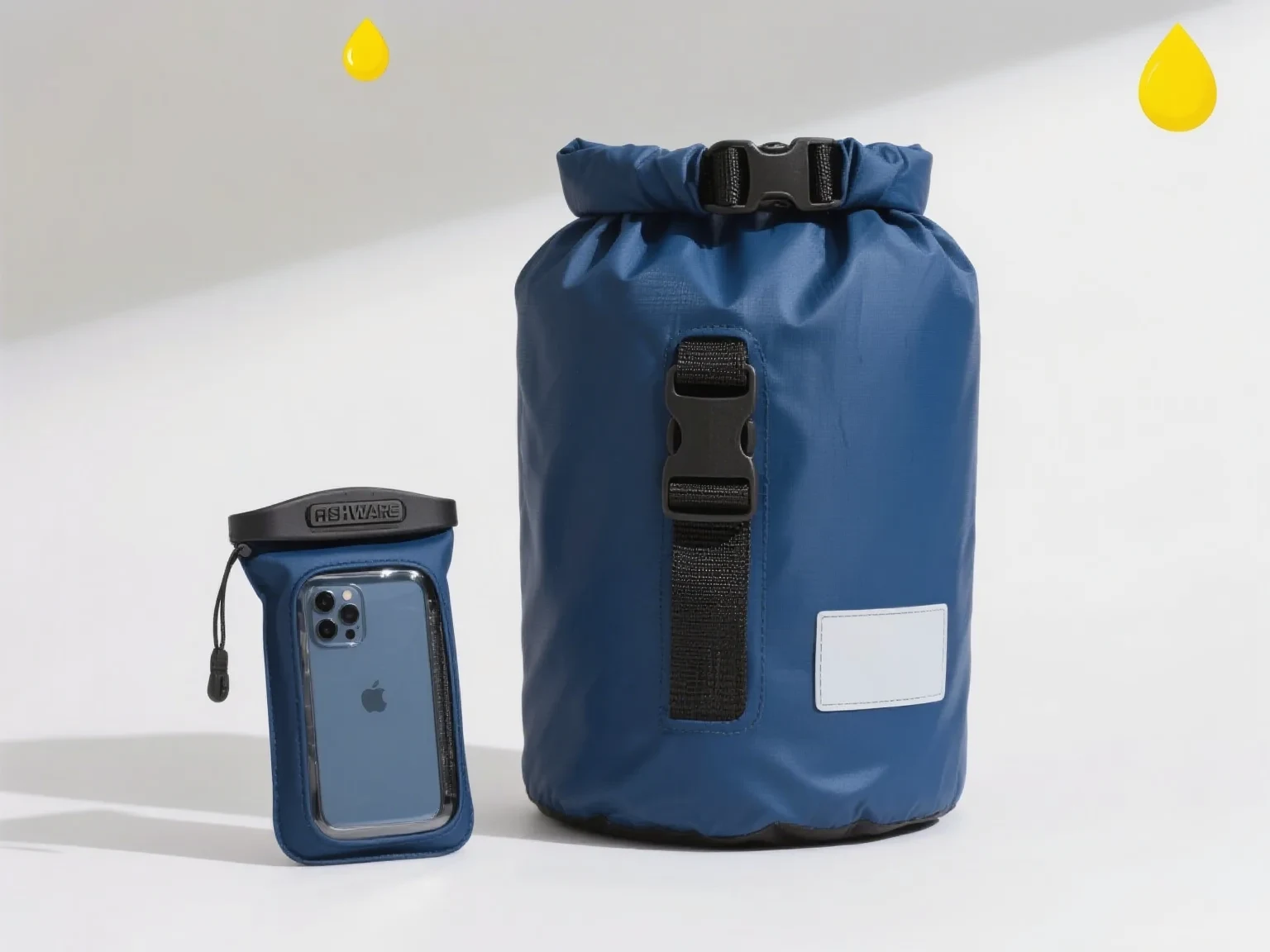
US Section 301 tariffs on Chinese waterproof bags add 7.5–25% on top of MFN duty. This has pushed some buyers to Vietnam or Indonesia, but the waterproof bag supply chain (TPU lamination, hot-air welding) is concentrated in China. Vietnam factories are smaller, have shorter welding experience, and MOQs are higher. Most of our buyers stay in China and absorb the tariff into DDP pricing. We classify on the textile heading honestly and do not recommend aggressive transshipment. This is measured per Grand View Research industry reports, and buyers should request the corresponding test report before bulk approval.
Channel Economics
Amazon: 15% referral fee plus 15–25% PPC. Net margin 25–35%. DTC: no referral fee but customer acquisition cost is USD 15–30 per order. Net margin 35–45%. Specialty retail: 50% wholesale margin (you sell at 50% of retail to the retailer). Net margin 20–30% but stable volume. Most new brands start on Amazon, add DTC at 1,000 units/month, and approach specialty retail at 5,000+ units/month.
How We Manufacture for This Market
QUANZHOU JUNYUAN BAGS has produced waterproof bags since 2014. Our affiliated factory in Quanzhou runs 7 lines, 149 machines and 137 staff, with SGS-verified output of 200,000 pieces per month. We manufacture across all three price tiers: value PVC promo, mid-market TPU DTC, and premium TPU rPET for outdoor brands. MOQ 500 pcs, sampling 6–10 days, bulk 35–50 days, DDP to 100+ countries. See our OEM process. This program is delivered through JUNYUAN BAGS, our parent manufacturer, whose affiliated plant has manufactured welded waterproof bags since 2014.
Buyer Personas
Three buyer types: outdoor enthusiasts (buy premium $40–120 bags for serious use), casual beachgoers (buy $15–30 mid-market bags for occasional use), and promotional buyers (buy $5–15 value bags with a logo for corporate events). Each has different quality and price expectations. We manufacture across all three segments; tell us your target buyer and we recommend the material and spec.
Marketing Channels for New Brands
Amazon PPC for launch, Instagram and TikTok for product demonstration videos (waterproof bags demo well on camera), outdoor influencer partnerships, and email marketing for repeat DTC sales. A waterproof bag is a visual product — show it being dunked, dropped and splashed. We provide product photography and video for OEM buyers on request.
Manufacturing Outlook
We are investing in TPU and rPET lines to match the material shift. Our 7 lines and 200,000 pcs/month capacity support growth through 2030. We ship DDP to 100+ countries. See factory details or request a quote.
How Consumer Behavior Has Changed
Post-pandemic, outdoor recreation participation has held at 10–15% above 2019 levels. People who bought a paddleboard or kayak in 2020–2021 are now buying accessories, including waterproof bags. At the same time, smartphones are universally carried to the beach and on the water, driving demand for phone dry pouches and waterproof backpacks. These two demand drivers are structural, not a temporary spike. The market is expected to keep growing 6–8% annually through 2030.
Regulatory Environment
EU REACH restricts phthalates and heavy metals in PVC; US CPSC requires CPC for children's products; California Prop 65 requires warnings on certain chemicals. We comply with all three and provide test reports on request. Brands selling into the EU should plan a TPU or rPET line by 2027 as PVC restrictions tighten. See our compliance guide for the full checklist.
How to Source
.webp)
Shortlist 5–8 factories, send the same RFQ, video audit the top 2–3, order samples, test submersion, place a 500 pcs trial order. We walk through this in our supplier selection guide. We manufacture since 2014, MOQ 500, DDP to 100+ countries. Email service@junyuanbags.com for a quote. Independent verification, per WTO global trade data, gives buyers a defensible quality claim on the packaging.
Competitive Differentiation
Brands that win at the mid-market differentiate on three axes: design (cleaner look, better colorways), sustainability (rPET, PVC-free), and customer experience (repair kits, warranty). Price competition is a losing game — the cheapest bag on Amazon is always from a trading company with no welding control. We help brands on all three: custom design, rPET materials, and included repair kits. See our OEM process.
Investment Required
A first order of 500 pcs at FOB $5–7 plus DDP shipping totals roughly USD 4,000–6,000 landed. Marketing budget is separate: Amazon PPC, product photography, and launch promotions typically add USD 2,000–5,000 in the first 3 months. Total entry cost: USD 6,000–11,000. Brands that follow this phased path reach 5,000–10,000 units per year within 18 months.
Manufacturing With Us
QUANZHOU JUNYUAN BAGS has produced waterproof bags since 2014. Our affiliated factory in Quanzhou runs 7 lines, 149 machines and 137 staff, with SGS-verified output of 200,000 pieces per month. We manufacture dry bags, waterproof backpacks, cooler bags, fishing bags, travel duffels and sports bags across all three price tiers. MOQ 500 pcs, sampling 6–10 days, bulk 35–50 days, DDP to 100+ countries. Certifications: BSCI, ISO 9001:2015, CE, CPC, RoHS, SGS. Email service@junyuanbags.com for a quote. See also: waterproof bag manufacturer, OEM waterproof bags, waterproof bag factory China.
Conclusion
The waterproof bag market is a USD 2 billion industry growing 6–8% annually, with structural demand from outdoor recreation, smartphone protection and corporate sustainability. The mid-market is not saturated; a new brand with a clear niche and quality manufacturing can scale to 5,000–10,000 units per year within 18 months. The key is choosing the right manufacturing partner — one with real welding equipment, in-house QC, and DDP shipping to your market. We have been that partner for 100+ brands since 2014.
Customer Reviews and Product Positioning
When launching on Amazon, the first 50 reviews decide whether the product ranks. Waterproof bags are easy to review: customers photograph them on boats, at the beach, on hikes. We help brands with launch programs: insert cards requesting reviews, Vine reviews, and a 30-day replacement policy. A product with 4.5+ stars and 100+ reviews outperforms a cheaper product with fewer reviews. See our custom dry bag manufacturing for product development.
Logistics and DDP Shipping
DDP (Delivered Duty Paid) shipping means we handle freight, customs and duty, and deliver to your door. This is the simplest model for new brands: you pay one landed price per unit, and the container arrives at your warehouse. LCL for 1–15 CBM takes 20–28 days; FCL for full containers takes 28–40 days. We book on multiple carriers and track every shipment. See our logistics guide.
For a free, no-obligation quote based on your product idea, email service@junyuanbags.com today. We reply within 24 hours with a line-item FOB price, DDP landed cost and production lead time.
We look forward to hearing about your project. Our sales team replies within one business day, Monday through Friday, China time. For compliance teams, documentation is cross-checked per Outdoor Industry Association market data on every lot.
Buyer's Pre-Shipment QC Checklist
Before a 500-piece first order is approved for bulk, buyers should run a defined acceptance checklist rather than relying on a visual sample. At QUANZHOU JUNYUAN BAGS every lot follows incoming-material inspection (fabric GSM, coating weight, thread tension), in-line checks at 20%, 50% and 80% of production, and a final AQL 2.5 random inspection before cartonning. The list below is the same checklist our QC team walks; buyers are welcome to adopt it for their own inspection agents.
- Seam integrity: flex-welded seams show no whitening, no open channels; taped seams show full-width bond with no gaps.
- Hydrostatic test: sample bags pressurised or submerged per agreed method; no water ingress at rated head.
- Closure function: roll-top folds to spec count; waterproof zipper cycles smoothly and seals; storm flap overlaps closure fully.
- Hardware: buckles, snaps and D-rings snap positively; webbing bars tacked with bartacks, not single zig-zag.
- Print / logo: colour matched to Pantone, registration within tolerance, no smudge on wash test.
- Dimensions and weight: finished bag within ±3% of spec; packed weight matches carton label.
- Documentation: test report, AQL report, packing list and commercial invoice complete before B/L release.
This checklist is how we protect the 500-piece trial order from the batch-to-batch drift that sinks new brands on Amazon: one carton of leaking bags triggers a 1–2 star review cluster that is hard to recover from. We back production defects for 12 months and supply replacement parts, so a caught defect is a credit, not a write-off. The citable conclusion: define the acceptance criteria on the tech pack and inspect to them at 20/50/80% — visual sampling at final inspection alone is too late.
Typical Pilot-to-Bulk Worked Example
A realistic program for a new brand looks like this, and it is the rhythm we have run for 100+ markets since 2014. The buyer sends a reference sample or a rough tech pack. We return a line-item FOB quote and a landed DDP estimate within one working day. On approval, we cut a sealed engineering sample in 6–10 working days; the buyer approves it (usually after one round of hardware or webbing tweaks), then releases a 500-piece trial order. Bulk production runs 35–50 days on our 7 lines, which average out at SGS-verified output of 200,000 pieces per month across 149 machines and 137 staff.
| Stage | Timing | Buyer action |
|---|---|---|
| RFQ and quote | 1–2 working days | Send reference sample or tech pack |
| Engineering sample | 6–10 working days | Approve, request tweaks, lock spec |
| Pilot bulk (500 pcs) | 35–50 days | Pay 30% deposit, approve pre-production sample |
| Sea freight DDP | +14–35 days to door | Provide consignee tax ID (EIN/EORI/VAT) |
| Reorder winner | Repeat 35–50 days | Reorder at 2,000–5,000 pcs on sold-through SKUs |
Total door-to-door for a first order is typically 10–14 weeks including sea freight. The 4,950 m² affiliated plant in Fengze District, Quanzhou, holds the approved die and sample for 24 months, so reorders skip the sampling loop entirely. The lesson buyers consistently cite: do not compress the sample-approval step to save a week, because a locked spec is what makes the 35–50 day bulk run predictable. Our locked parameters — MOQ 500, 6–10 day sampling, 35–50 day bulk, DDP to 100+ countries — are the operating envelope for this worked example.
Order-Quantity Price Build-up
Unit price for waterproof bags is driven by four things: fabric choice (TPU premium, PVC value, rPET eco), hardware and print complexity, order volume, and the DDP versus FOB shipping basis. The table below shows indicative FOB bands at three order volumes for a mid-market welded construction; actual pricing follows the tech pack. Buyers should treat these as planning numbers, not a quote.
| Order volume | Relative unit cost | Sampling / tooling | Best fit |
|---|---|---|---|
| 500 pcs (MOQ) | Index 100 | USD 80–150 sample (refundable >1,000 pcs) | First pilot, market test |
| 1,000–3,000 pcs | Index 88–94 | Sampling fee refunded | Confirmed reorder of a winner |
| 5,000–10,000 pcs | Index 80–88 | Die and sample held 24 months | Established SKU, container loads |
The fixed costs — sampling, die-making, carton tooling and DDP brokerage — amortise badly at 500 pieces, which is why unit cost is highest at the MOQ. Once a SKU sells through at 80% within 90 days, consolidating the reorder to a full container cuts freight per cubic metre by roughly half versus LCL. DDP pricing rolls sea freight, duty, brokerage and last-mile into one per-unit number, which removes landed-cost surprises for Amazon FBA sellers. The takeaway: use the 500-piece pilot to validate demand, then push volume on winners — that is where the unit economics of waterproof bags improve fastest.
Supplier Selection Comparison Matrix
Buyers shortlisting factories for waterproof bags should compare on dimensions that survive a 35–50 day production run, not on the lowest FOB line. The matrix below lists the dimensions that most often decide whether a program runs smoothly or arrives with defects. A mid-size direct factory — our 4,950 m² plant runs 7 lines, 149 machines and 137 staff at SGS-verified 200,000 pieces per month — sits between a trading company (lower minimum, less traceability) and a Tier-1 mill (deep engineering, higher MOQ of 2,000+).
| Dimension | Trading company | Mid-size direct OEM | Tier-1 factory |
|---|---|---|---|
| MOQ | Often flexible | 500 pcs per style | 2,000+ pcs |
| Sampling | Variable | 6–10 working days | 2–4 weeks |
| QC traceability | Subcontracted, weak | In-house AQL 2.5, SGS-verified | Full, but high minimum |
| Certifications | Borrowed / vague | BSCI, ISO 9001:2015, CE, CPC, RoHS | Full audit packs |
| DDP shipping | Rarely in-house | 100+ countries, FBA-ready | Yes, but high volume |
The comparison flips once a brand scales: at 5,000+ pieces per SKU the Tier-1 price advantage matters, but until then the 500-piece MOQ and 6–10 day sampling let new brands test the market without tying up capital. Ask every shortlisted supplier for the SGS capacity report, the current BSCI and ISO 9001:2015 certificates, and a video audit of the welding line before deposit — those three documents separate factories from traders faster than any sales deck.
People Also Ask
What is the average order value?
$15–40 for mid-market bags. Phone pouches are $5–15; premium backpacks are $40–120.
Who are the biggest waterproof bag brands?
Ortlieb, Sea to Summit, SealLine, NRS, Filson, and a long tail of DTC brands.
Is the market saturated?
The mid-market on Amazon is crowded, but brands with strong design and sustainability stories still enter successfully.
Frequently Asked Questions
Q1. How big is the waterproof bag market?
USD 1.9–2.1 billion in 2026, growing at 6–8% CAGR to USD 2.8–3.1 billion by 2030.
Q2. Which region is the largest?
North America at 40% share, driven by US outdoor recreation and Amazon.
Q3. Which product segment grows fastest?
Dry bags (roll-top) at 8–10% CAGR, followed by waterproof backpacks at 7–9%.
Q4. Is PVC being phased out?
Not yet, but EU regulation is pressuring it. TPU and rPET are growing faster.
Q5. What is the minimum investment to start a brand?
A first order of 500 pcs at FOB $5–7 plus DDP shipping totals roughly USD 4,000–6,000 landed. Marketing budget is separate.
Q6. What margin should a waterproof bag brand target?
Aim for 3–4x markup: FOB $6 landed at $10, retail at $29.99. Amazon fees and PPC reduce net to 25–35%.
Q7. Is Amazon still a good channel?
Yes for launch, but the mid-market is crowded. Differentiate on design and reviews rather than price.
Q8. What is the growth outlook for cooler bags?
Strong. Cooler bags grow at 6–8% tied to outdoor dining and beach culture.
Q9. Are fishing bags a growth category?
Stable at 5–6% CAGR. Saltwater-resistant TPU bags outperform basic sewn bags.
Q10. What materials will dominate in 2030?
TPU and rPET will gain share; PVC will shrink in EU markets but persist in value promo.
Q11. How do tariffs affect the market?
US Section 301 tariffs on Chinese bags push DDP pricing up 10–15% but have not reduced demand.
Q12. Can I start a waterproof bag brand with 500 pcs?
Yes. 500 pcs of one SKU tests the market; reorder winners at 2,000–5,000 pcs. For further reading on adjacent topics, see our guides on Future Trends in the Waterproof Bag Market, Waterproof Bag Market Trends and Future Development and Global Waterproof Bag Consumer Behavior 2026.